


Article update 14:15 on 24/05/26 after an SPFL club got in touch.
Update is highlighted within article.
Rangers are reportedly close to agreeing a deal to sign Hearts Captain Lawrence Shankland this week, before Scotland fly out to the World Cup. The rumours state that Shankland has a 1-year break clause in his 3 year deal at Tynecastle, which allows him to leave this summer on a free transfer.
If this deal does happen, then the date on which any new contract at Rangers starts could be financially key, for both clubs. This article will explain how the club benefits programmes work, with recent examples, and why the start date of any new Shankland contract would matter.
UEFA Example
As explained in previous articles on this website, such as the financial analysis of Motherwell’s annual report, football’s governing bodies financially compensates clubs for making their players available for international football, including the World Cup.
This is referred to by both UEFA and FIFA as their ‘club benefits programme’.
It is sometimes referred to as a ‘solidarity fund’, but it is totally separate to UEFA’s solidarity payments - which have nothing to do with international football. Those solidarity payments are distributed to all clubs in the Premiership that don’t play in a league phase.

Last year, UEFA revealed the details of their club benefits programme for the latest 4-year cycle, which detailed that around €2.7m flowed to Scottish players for payments covering two Nations League campaigns, all European Qualifiers and Euro 2024. Celtic were the main beneficiaries of this, due to the number of players they had representing Scotland in that period.
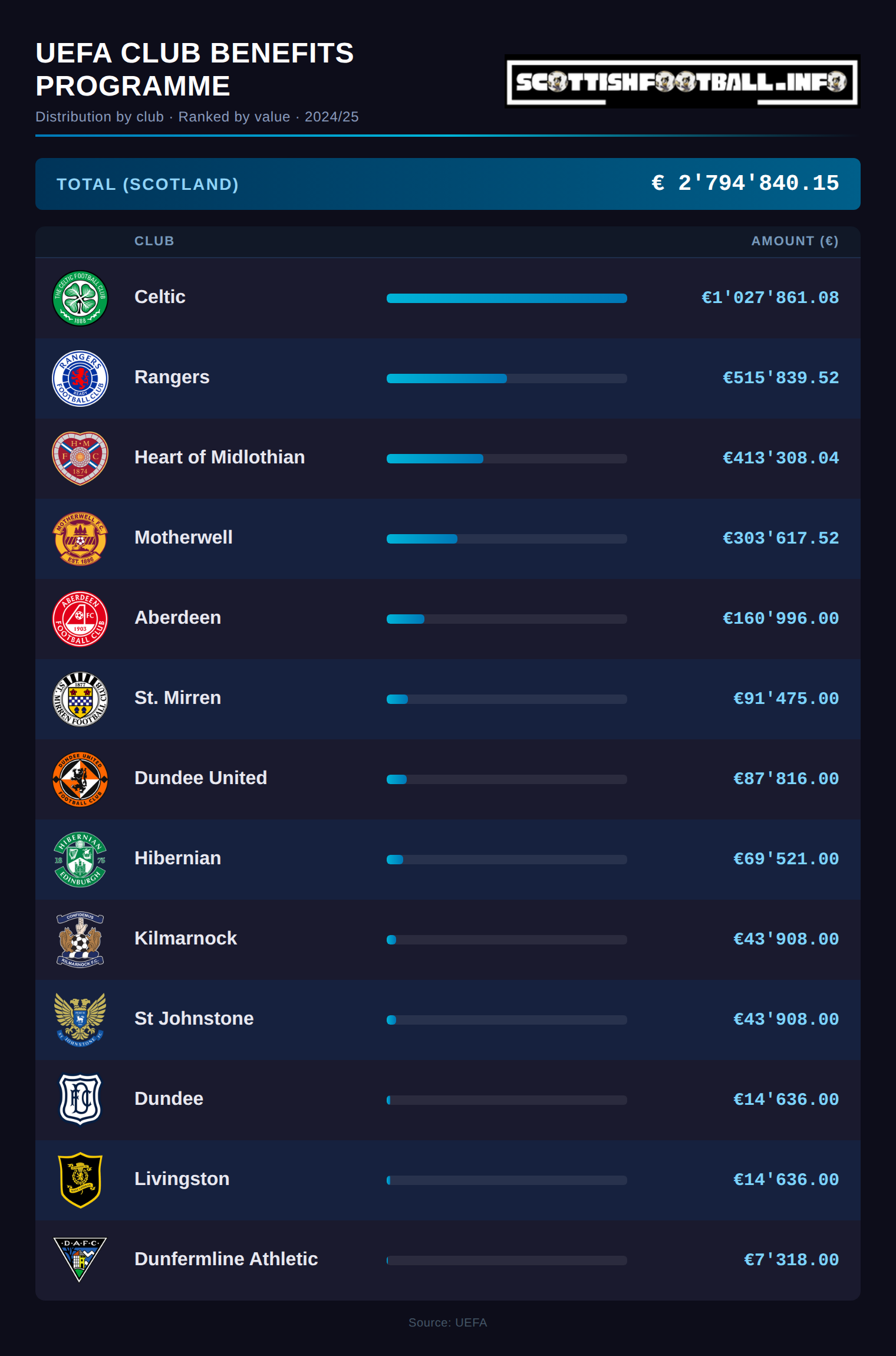
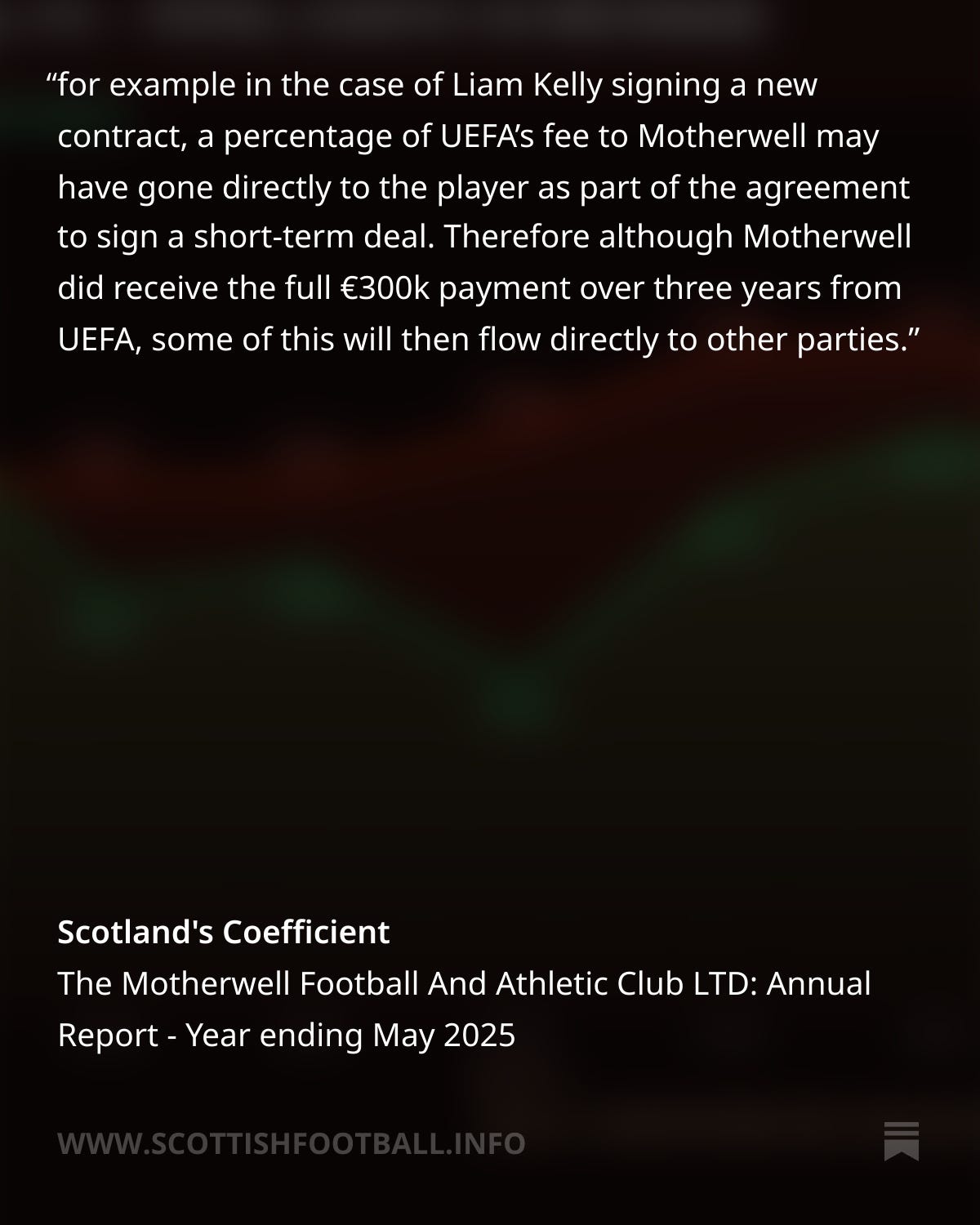
Prior to Motherwell - or any of the clubs - releasing their annual accounts, I was able to estimate the payment each club would receive from UEFA after Euro 2024. As part of this, I calculated a payment of €174k to Motherwell, thanks to Liam Kelly signing a short-term contract before re-joining Rangers, to ensure Motherwell would receive the UEFA compensation.
However, when a player, or a player’s agent, negotiates a deal like this, it is highly likely that the contract would involve a decent percentage of the UEFA payment flowing directly to the player and their representatives.
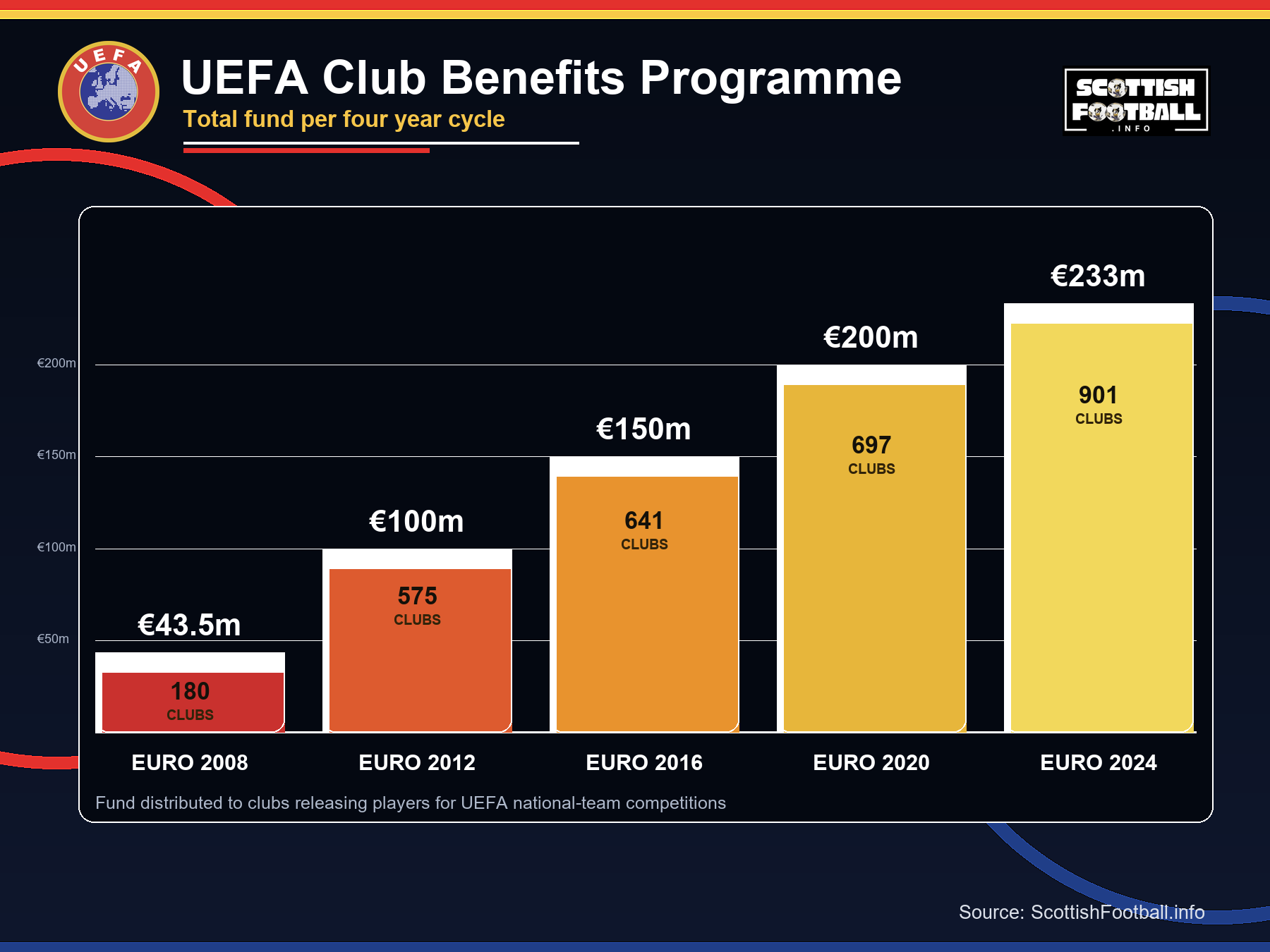
The various bodies that represent European football clubs have made steady progress in their lobbying of the governing bodies to increase all solidarity funds that are shared with the clubs. We’ve seen record levels of UEFA solidarity payments (to all clubs in the Premiership that don’t participate in a league phase), while the “UEFA club benefits programme” for releasing players to the national teams have increased over time too.
Now a look at the FIFA equivalent, before we look at the specifics of the Shankland transfer and the payments all relevant Scottish clubs can expect to receive this summer.
FIFA Club Benefits Programme
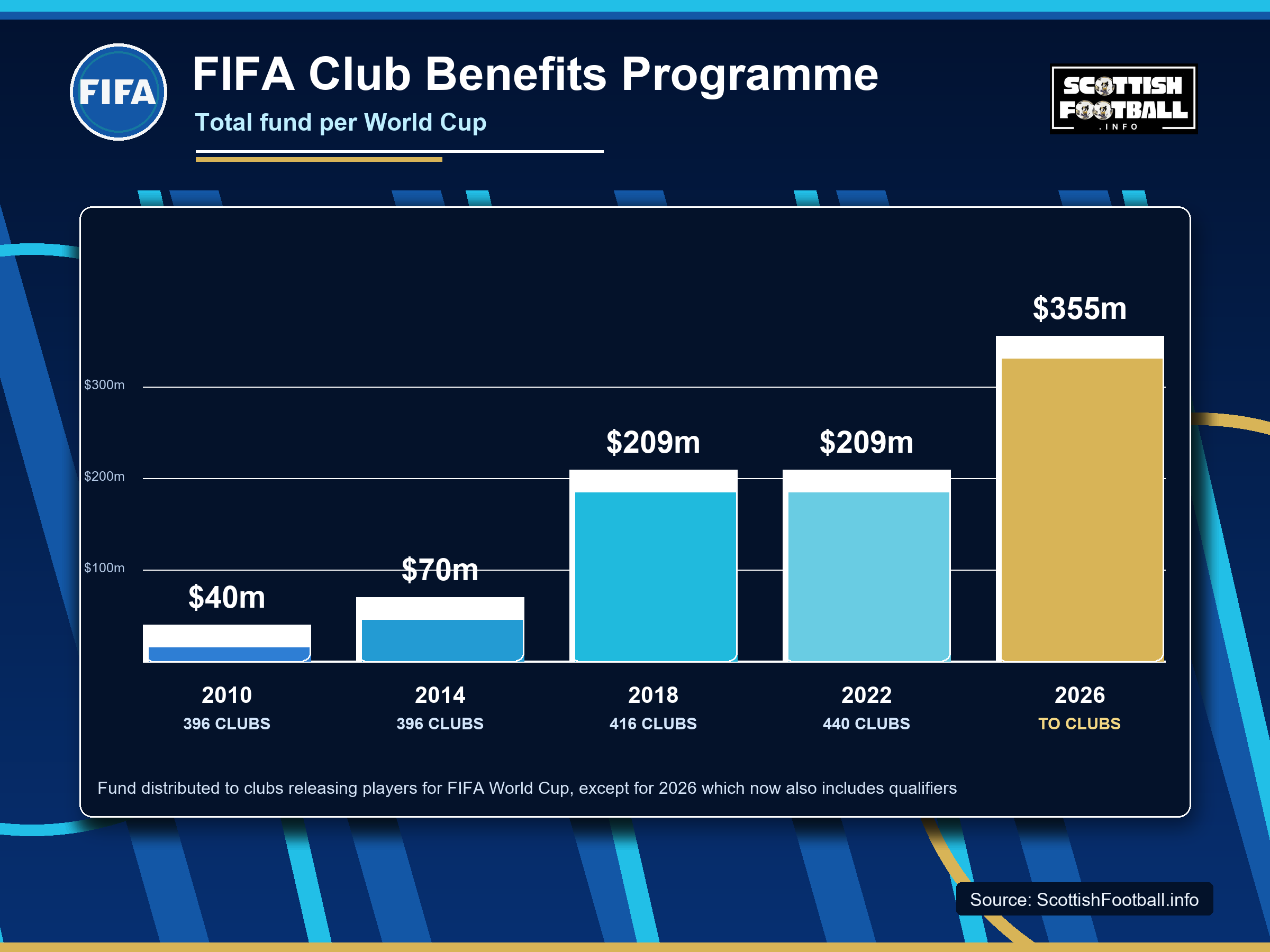
FIFA confirmed last year that the 2026 World Cup will see a record $355 million distributed to clubs, which is a near 70% increase from the previous World Cup. The programme follows UEFA’s lead in that it now also compensates clubs for players released in qualifiers, when previously it was only the World Cup tournament itself.
Like the UEFA equivalent, the FIFA programme has grown over the last 10-15 years, meaning more money filtering down to the clubs that actually hold the contracts that pay the national team players.
This is great news for clubs of players who don’t make the final World Cup squad after appearing in qualifiers. When the programme previously was only shared with the clubs who released players for the final squad, you could have a player involved in every qualifier before getting injured and missing the tournament - and the club received nothing.
