

Law changes in football for 2026/27
A summary of IFAB's law changes that come into force this summer

Every year, a new edition of the Laws of the Game are published, and a document describing any changes is released. The next edition takes effect from 1 July 2026, but competitions that begin before that date can either implement the changes early or delay them until the start of their next competition.
The 2026 World Cup starts tomorrow, a few weeks before this date, and FIFA have confirmed they will implement the changes, and so we will see these new laws in effect at this tournament.
Annual changes to the laws can sometimes be confusing for fans as the changes are often not well communicated. Those watching a match might expect a certain outcome from the referee, based on what they remember seeing in previous seasons. But actually a change in the law has occurred meaning a new outcome would be expected.
An example of this from last season would be that previously it was an automatic red card for denying a goal with a handball offence. An example of this law being followed was in May 2024, as Kilmarnock’s Joe Wright was shown a straight red card for a handball on the goal line - preventing a goal, as seen in the Sky Sports Video:

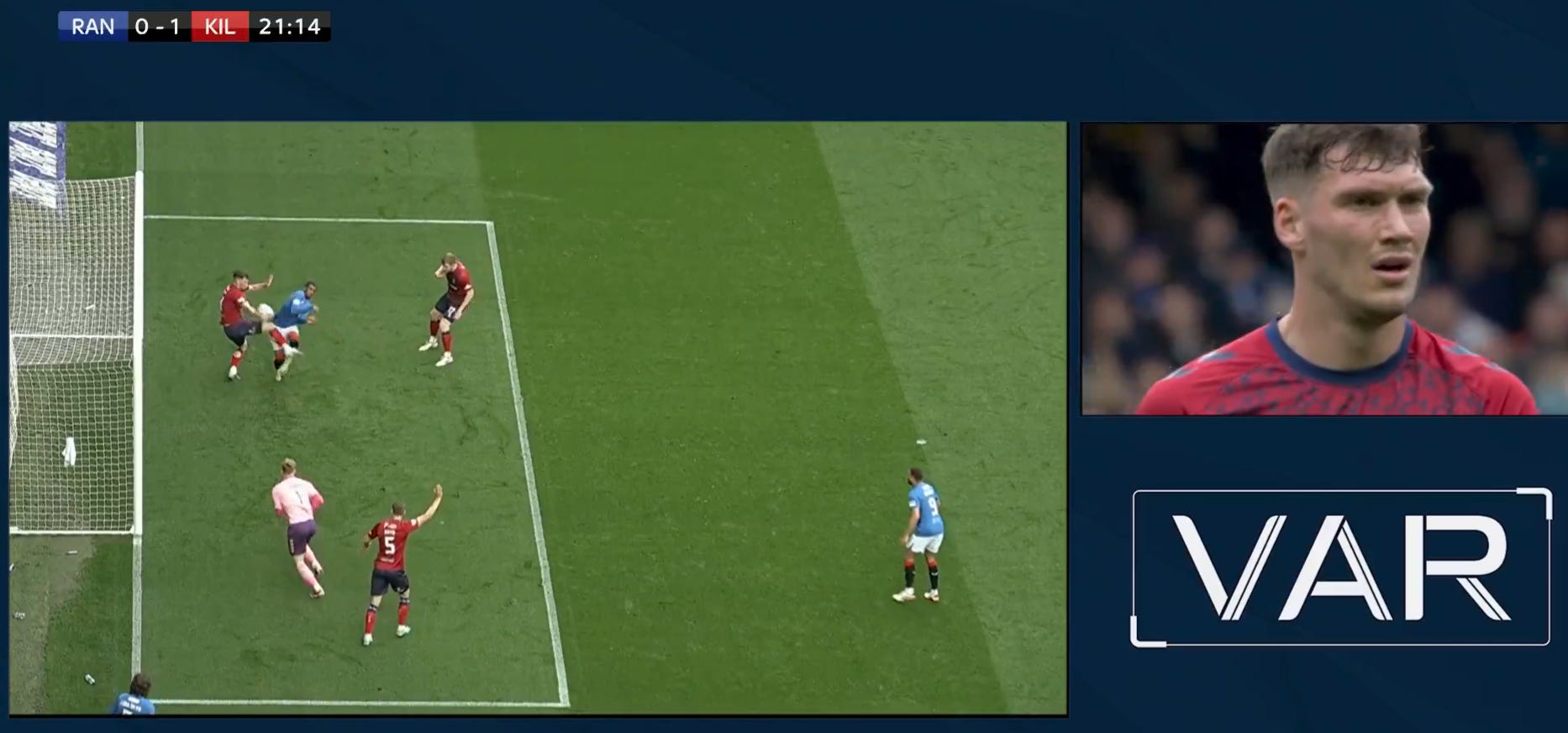
To most that watch football, this punishment seems harsh, as although he has stopped a goal, it was completely accidental. The lawmakers agreed, and so for season 2024/25 the laws were changed and an offence like Joe Wright’s (a non-deliberate handball, denying a goal) was no longer a sending off.
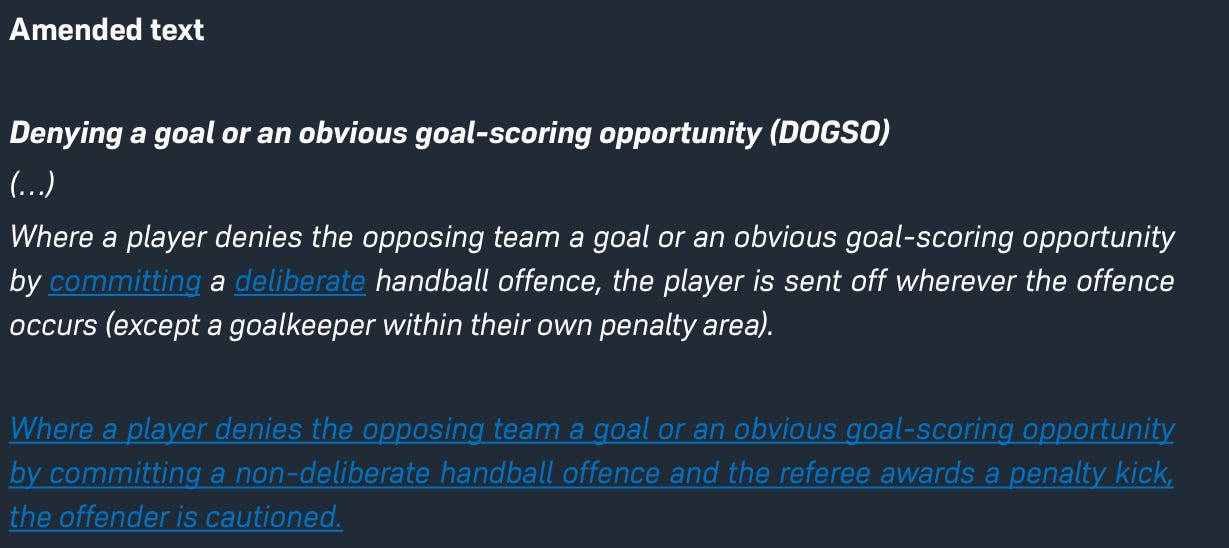
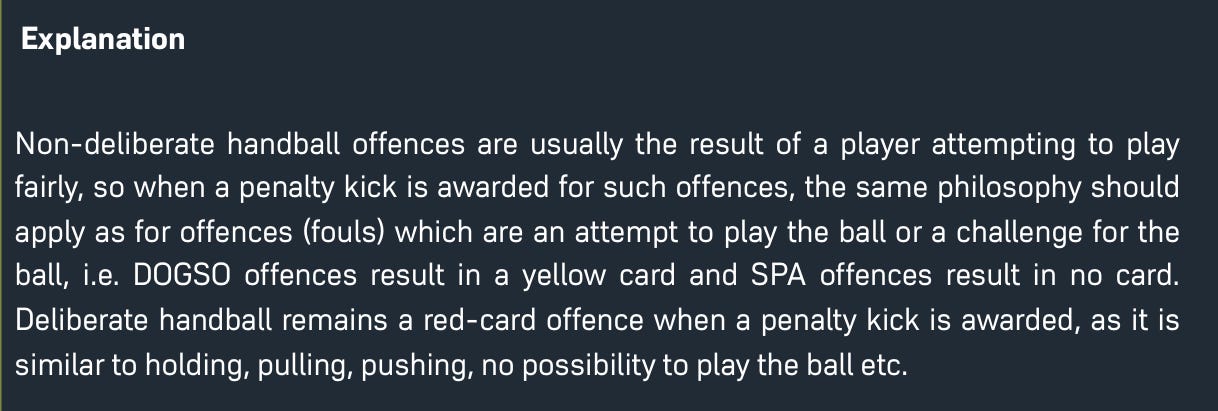
Therefore those that were calling for Dujon Sterling to receive a red card for denying a goal with a non-deliberate handball against Celtic in March, were likely unaware of the law change at the beginning of last season. A penalty award then was correct, but a sending off would have been incorrect - even though it would have been correct less than 12 months prior.
This is where fans, or even pundits, can sometimes fail to get their point across properly regarding refereeing decisions. There is a difference between “that should not be a red card, because the referee has misinterpreted the law” and “that should not be a red card, because I personally believe the law is too harsh, and would like to see it changed so it isn’t a red card in future”.
This article will be an annual preview, detailing any impending changes. I’ll start by explaining who implements the change, before discussing what changes are coming in the new season.
These changes will be implemented from tomorrow’s Mexico match onwards, and there is a video at the end of the article summarising the changes.
Who Implements Change?
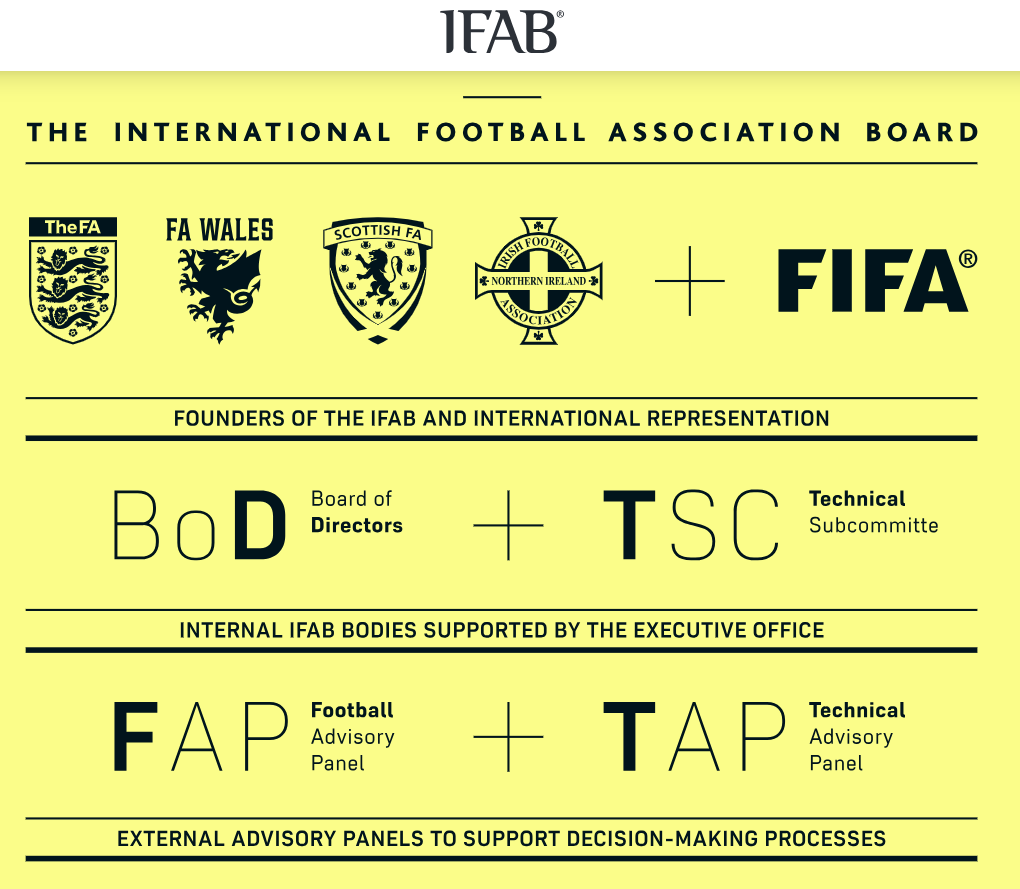
The International Football Association Board (IFAB) is the organisation that writes and updates the Laws of the Game, essentially the official rulebook for football worldwide. IFAB was founded in 1886 by the four British football associations, The FA (England), The SFA (Scotland), the FAW (Wales) and the IFA (was Ireland, now Northern Ireland).
IFAB is still comprised of those four British football associations - who have one vote each, and FIFA, covering the remaining 207 national associations, who have four votes total.
In this way, all five bodies ensure that Laws are preserved “respecting football’s traditions” as well as its “international reality”.
Passing a motion requires a three-quarters majority (6/8 votes)
As a matter of principle, the Laws are global - the same Laws apply everywhere, and they must not be altered except where The IFAB permits modifications (for example, certain “organisational” changes at youth, disability, veterans, and grassroots level). However it is of course possible to see variations in how the laws are applied from country to country, for subjective decisions like a penalty for a handball or for forceful tackles - “you just don’t get away with those in Europe”.
Actual changes to the Laws can only be introduced during the AGM. Any football association or football body can propose a law change, but for a proposal to get to the stage where a law is presented at an AGM it must be assessed and approved by the The Board of Directors (BoD). The BoD includes the CEOs of the four FA’s plus FIFA’s secretary general.
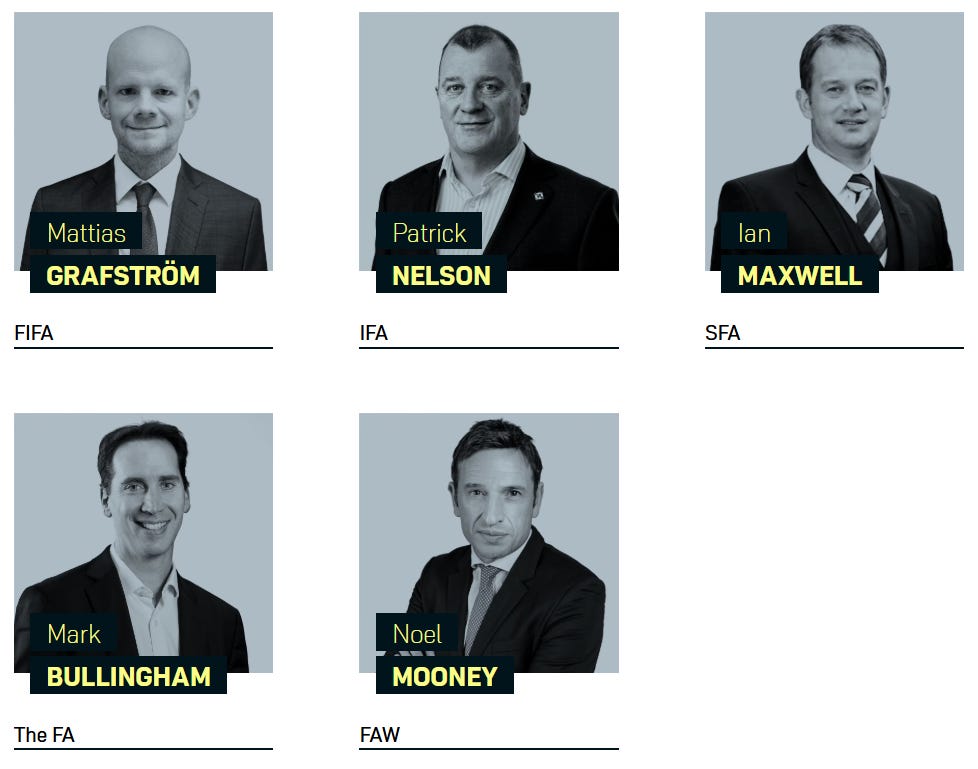
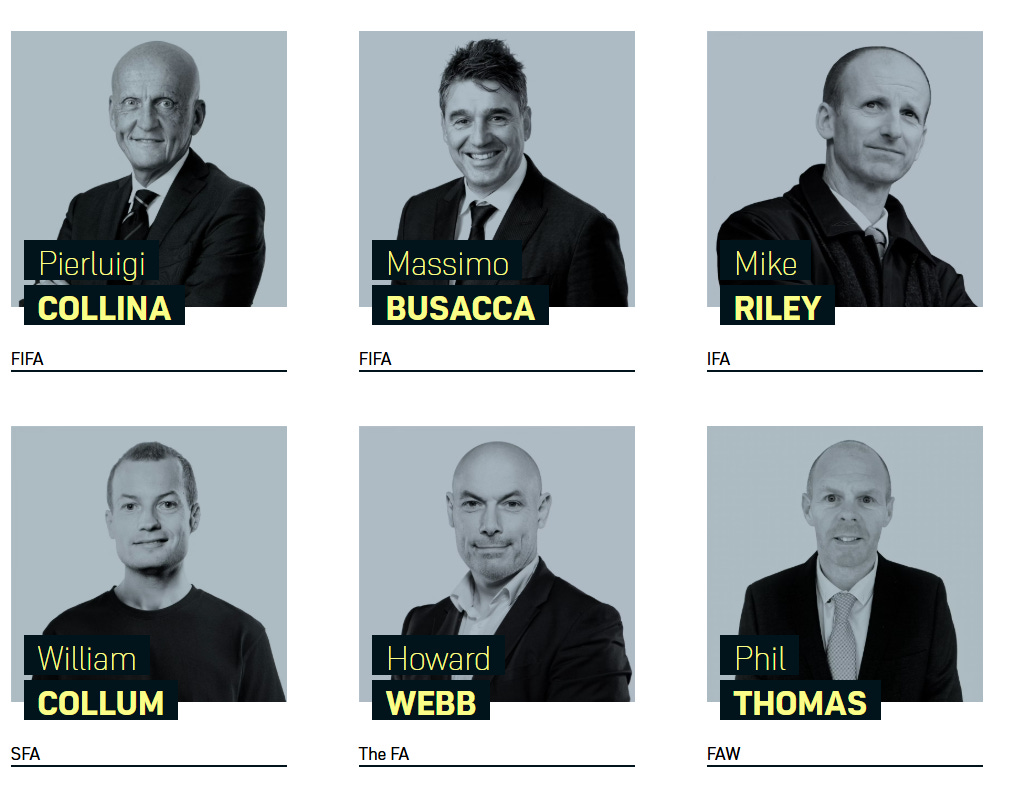
As the yellow graphic at the start shows, The BoD are supported by the Technical Subcommittee (TSC), which includes “former renowned international referees”, including Pierluigi Collina, Mike Riley, Howard Webb and Willie Collum.
The TSC assesses and analyses potential Law changes and interpretations proposed, as well as overseeing experiments and trials approved by the Board of Directors (BoD).
Lastly, there are external advisory panels, the The Football and Technical Advisory Panels (FAP and TAP), which bring together experts from across the world of football. The FAP consists of former football players as well as former and current coaches. Their purpose is to bring expertise and knowledge to the discussions of footballing issues and the sporting aspects of potential Law changes.


That’s why we hear of “Wenger’s offside law” in the media, as he is in a position where he is able to recommend law changes - however any change would still need to be approved by the BoD.
Next Season’s Law Changes
These are the key changes that have been approved and published and will take effect next season. As fans we will first see them implemented at the World Cup, starting on Thursday!
Change 1.)
MATCH TEMPO
The IFAB approved a set of measures which build on last season’s visible countdown to enforce the goalkeeper 8-second restriction for holding on to the ball for too long, which would result in a corner to the opposition.
This will now be extended to include throw-ins and goal-kicks
THROW-INS
If the referee judges a team is unfairly delaying a throw-in, they whistle, signal the restart, then run a five second visual countdown (raised hand). If the throw-in is not taken by the end of the countdown, the throw-in is awarded to the opponents.
The referee does not need to wait for the player to have the ball before starting the countdown - it can begin if the team is delaying by, for example, slowly retrieving the ball or taking an incorrect position. If the player is already in the act of throwing as the countdown ends, the protocol says they should not be penalised.
GOAL KICKS
The goal kick version is the same mechanism: whistle, signal, then a five second visual countdown. If the kick is not taken in time, the punishment is more severe - the opponents receive a corner kick.
The feedback from 400+ trial matches before the implementation of the goalkeeper countdown last season said that there very few offences but the game was faster and that the countdown was helpful. So although we may not see many throw-ins or corners awarded to the opposition team, this is because the countdown itself has been shown to reduce time wasting.
Change 2.)
