

Panini Sticker Albums Through The Years
How Accurate Were Panini’s Scotland World Cup Squads?

Before the wall charts are filled in, before the first national anthem, long before England have lost on penalties, the World Cup often begins with a packet of stickers.
For generations of football fans, the Panini album has been the unofficial start of the tournament. The crinkle of a foil packet before you tear it open, revealing either the unbridled joy of getting a ‘shiny’, or the frustration of finding the same South American full back - who you assume to be shite - for the fourth time. It is football reduced to its simplest playground thrill: got, got, got, need!
Panini’s story began in Modena, Italy, where Giuseppe and Benito Panini turned a newspaper distribution business into a sticker empire in 1961, later joined by brothers Franco and Umberto. They produced the first World Cup sticker album for Mexico 1970. Since then, the 'Panini’ album has become part of the tournament’s furniture, passed from one generation to the next. The children who once begged for another packet at RS McColl’s are now the adults, buying the overpriced stickers for their own children. The adults of course find themselves just as invested in completing the album as the kids - if not more invested. “Get to school and don’t come back without a Haaland shiny, wee man.”
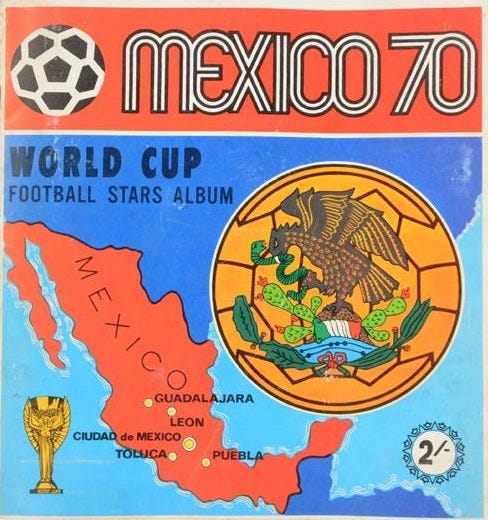
Over time, the size of the books has naturally increased with the size of the tournament, and the 2026 World Cup collection reflects the largest ever 48-team format, with 980 stickers to collect, including 68 special stickers. That’s a 263% increase in number of stickers from the 270 stickers in the first edition.
What was once a modest childhood habit has become a global collecting phenomenon, with adult collectors, online trading groups and completed vintage albums now commanding serious money. It’s estimated it could cost up to £1,300 to complete this years book, as buying the seven-sticker packs at £1.25 would mean at least 140 packets are needed, but the likelihood of duplicates increases the minimum cost dramatically. That’s why swaps wth other collectors are so important, meaning you could complete the book for ‘only’ a couple of hundred quid.
The collection in its current guise will end soon though, as this World Cup tradition approaches the end of an era. FIFA has agreed a long-term exclusive collectibles deal with ‘Fanatics’, with products to be produced under the ‘Topps’ brand from 2031. That means Panini’s official World Cup sticker run will finish after the 2030 tournament, bringing down the curtain on a 60-year partnership that began in 1970.
By then, Panini will have covered 16 men’s World Cups across seven decades, with Scotland featuring in seven of those albums so far, and hopefully eight by the time 2030 comes around. A 50% participation rate in the Panini era feels almost hard to believe, given our near 30-year drought means you’d need to be in at least your mid 40s to have been able to legally buy alcohol at the last one!
Thanks to a colleague of mine, a Panini-head from Switzerland called Izzie, I can bring you to the main point of this article, involving numbers and pictures. Izzie has her own personal collection of every Panini book in existence, completed and in its original beauty. She has very kindly sent me pictures of the Scotland squads from her collection, to share with you all, and from that I of course had to analyse Panini’s success rate when it comes to the Scotland players they have chosen for each album over time. Enjoy.
Mexico ‘70 - Did not Qualify
Germany ‘74
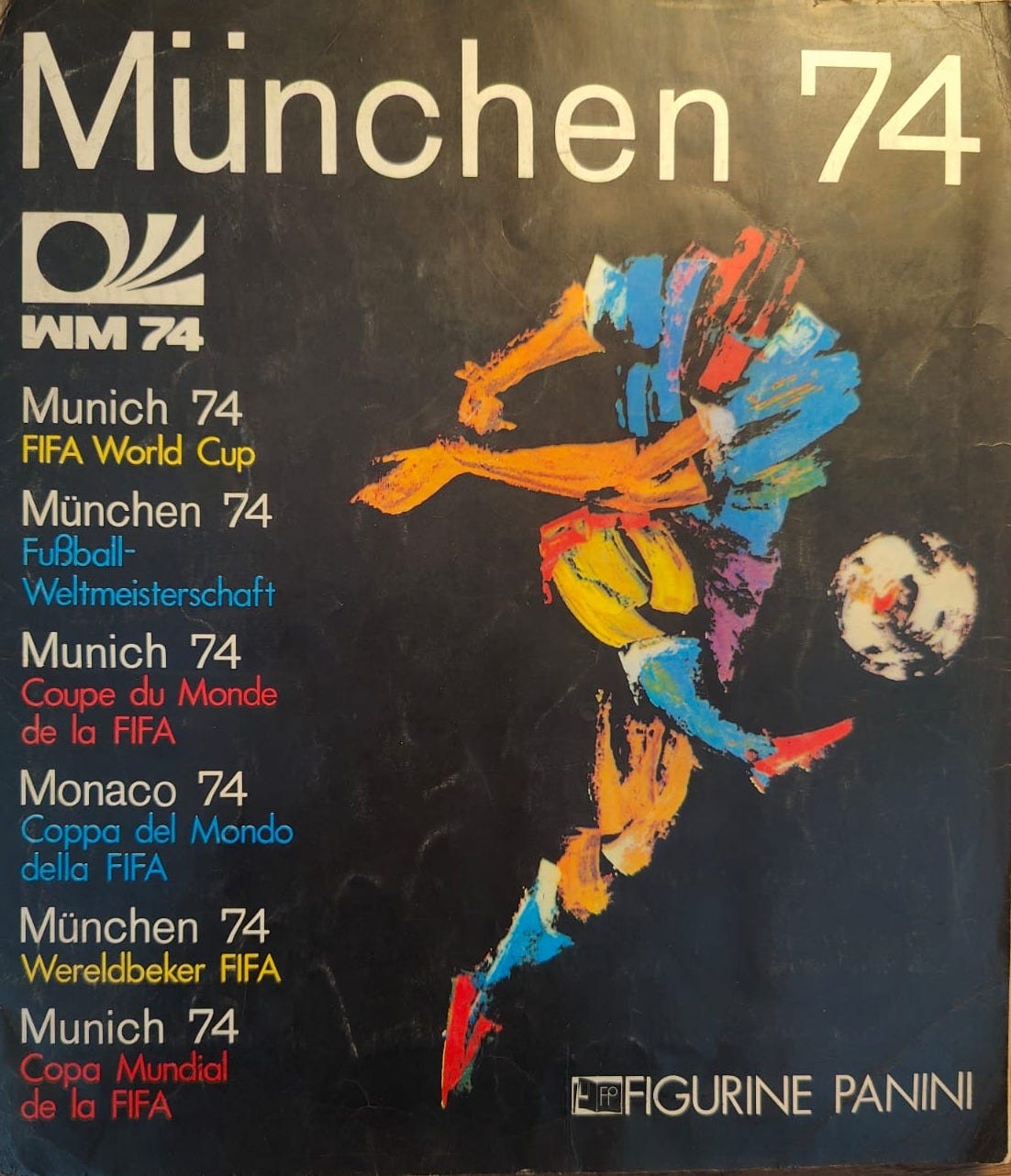
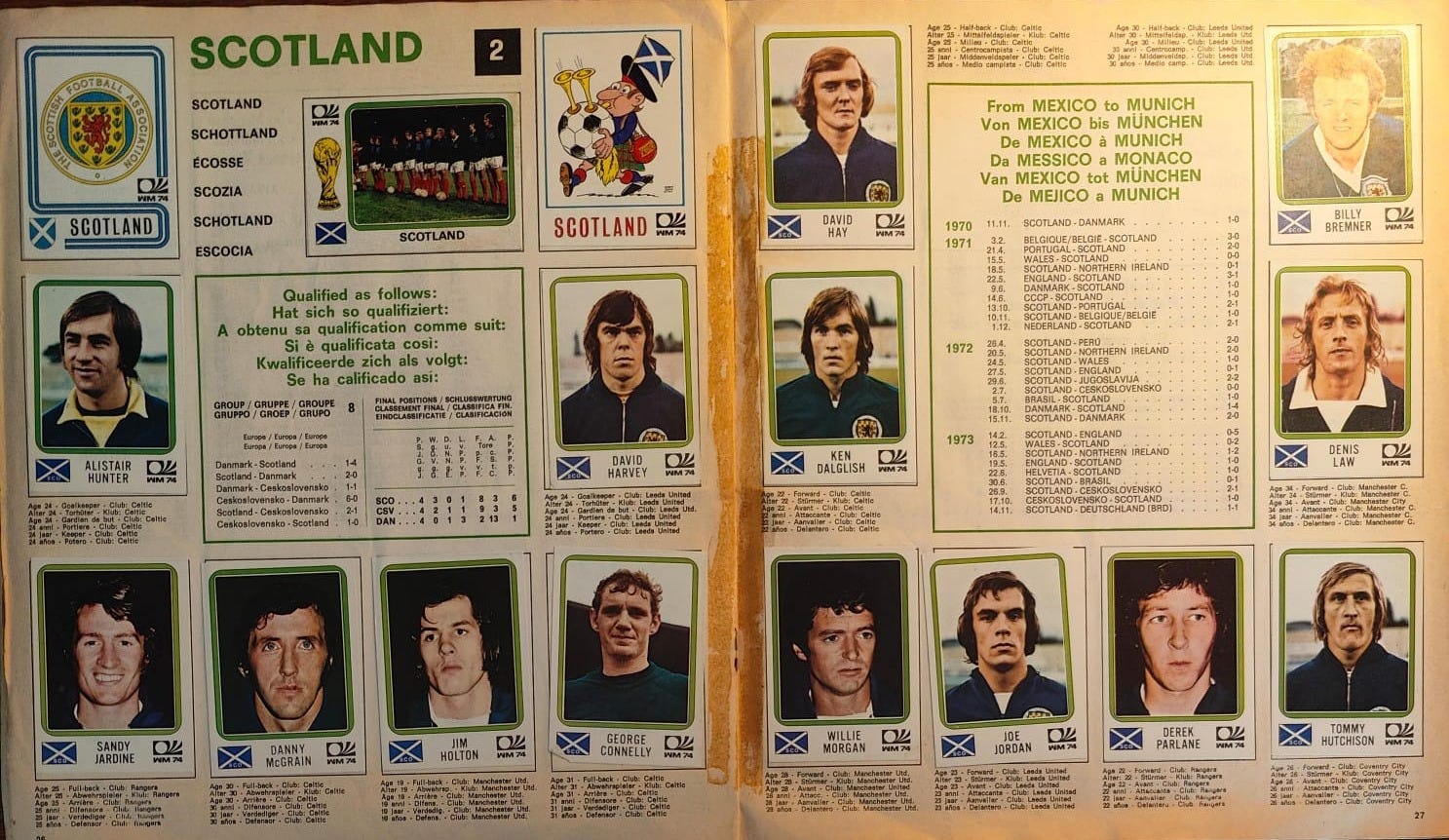
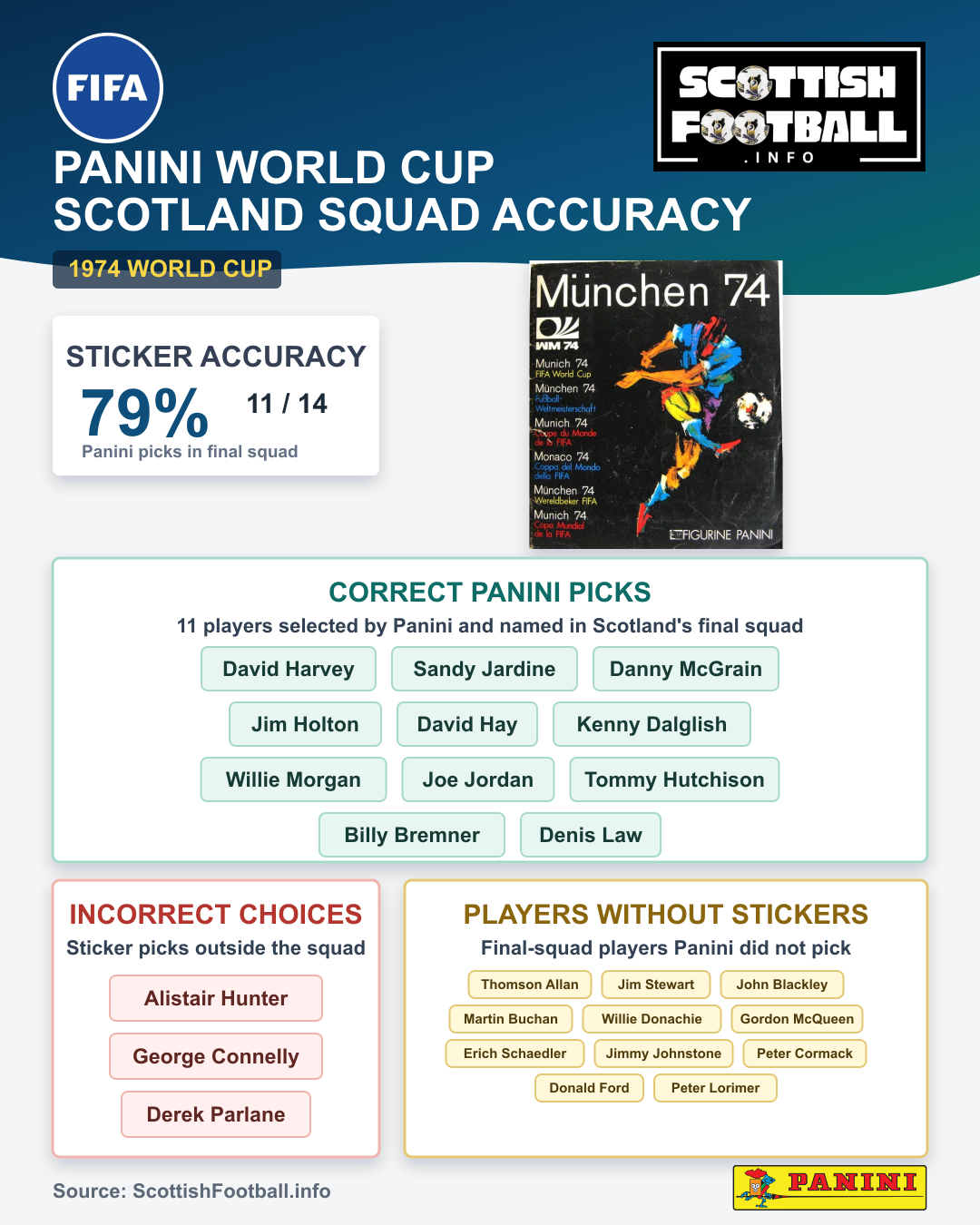
In 1974, Panini had 79% accuracy in their sticker selection, with three of their 14 chosen players not making the final squad. Alistair Hunter and Derek Parlane were chosen by Panini but not by manager Willie Ormond, while George Connelly missed the World Cup through injury, suffered during Celtic’s European Cup tie against Basel.
Argentina ‘78
Keep reading with a 7-day free trial
Subscribe to Scotland's Coefficient to keep reading this post and get 7 days of free access to the full post archives.