

Sébastien Pocognoli - Scotland Manager
The 39-year old has been announced by the SFA

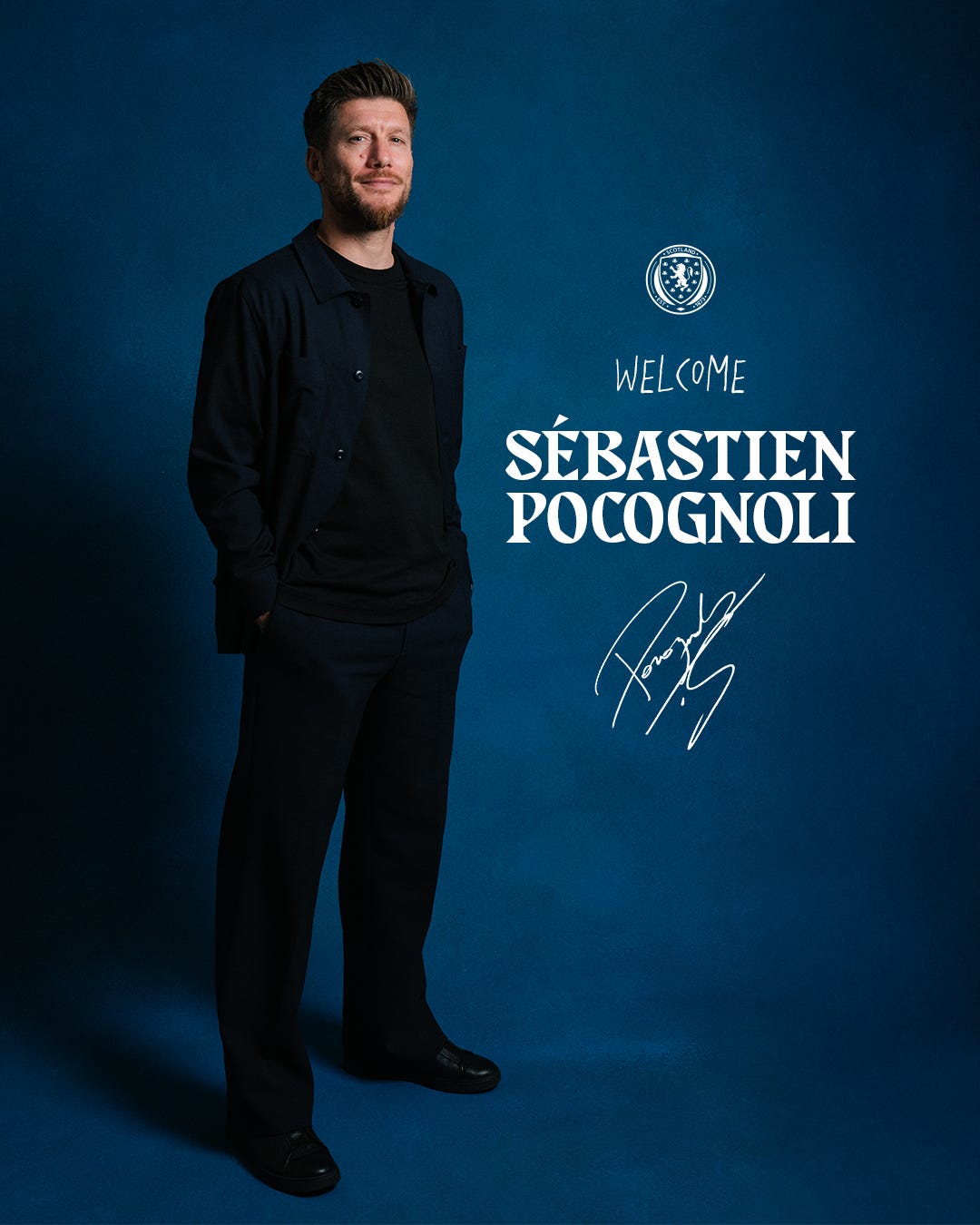
Scotland have appointed only the second overseas manager in the national team’s history, and the first since Berti Vogts left by mutual consent after 32 matches, almost 22 years ago. Sébastien Pocognoli joins on an initial two-year contract, bringing 38-year-old Kevin Mirallas with him as assistant manager. Steven Naismith is likely to remain involved, providing some continuity from the previous regime and, crucially, a former Scotland international within the overseas coaching staff. Pocognoli is widely viewed as an ‘outside the box’ appointment, with most fans seemingly satisfied given the lack of credible Scottish alternatives.
Pocognoli is best known for leading Union Saint-Gilloise to their first Belgian title since 1935, so I am going to look at how managers from prominent data-led clubs have fared after moving into different environments. How much of the success belongs to the coach, and how much comes from working inside an exceptional football operation?
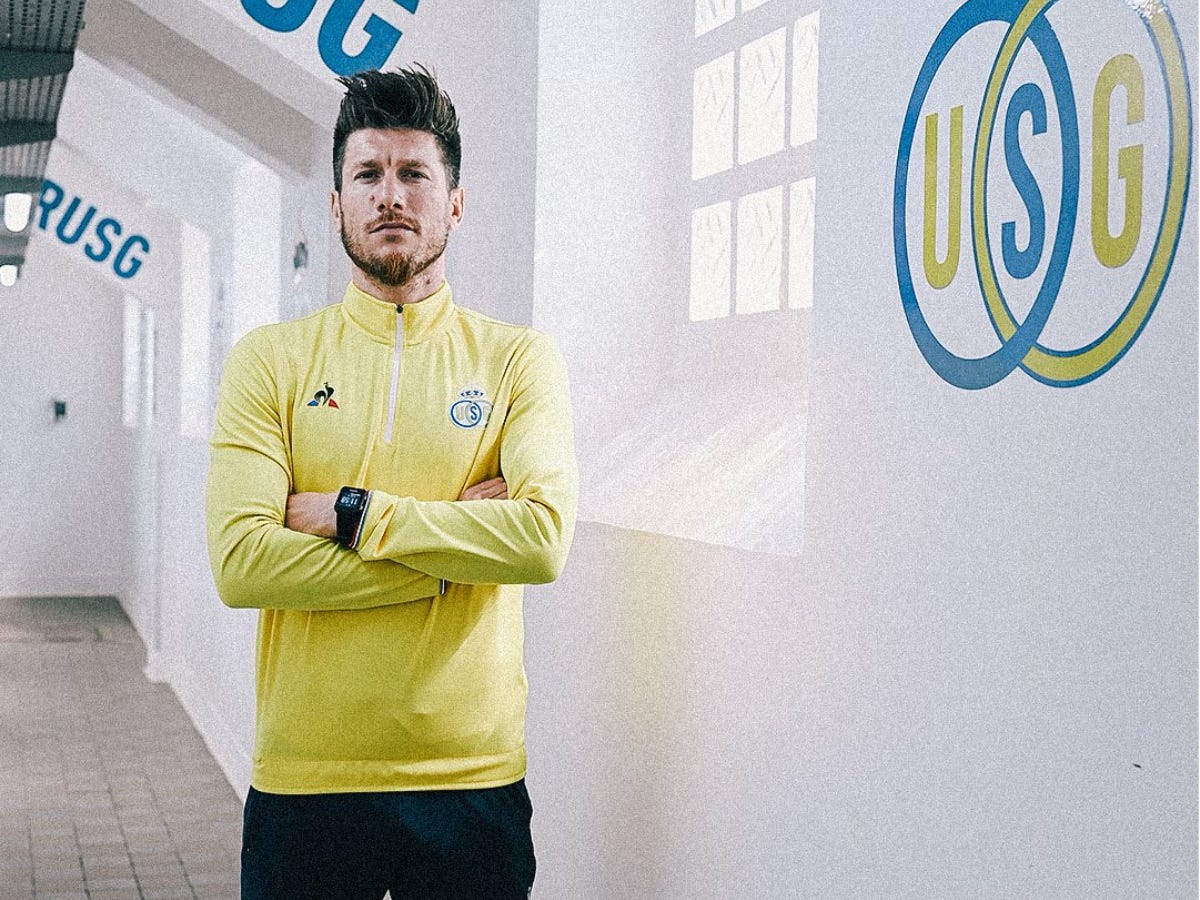
Pocognoli, 39, has already experienced both sides of that argument during his short senior coaching career. In his first season (!) as a first-team manager, he led Union Saint-Gilloise to their first Belgian championship in nearly 90 years. His side recovered from taking 14 points from their opening 10 league games to collect 28 from a possible 30 in the Champions’ Play-offs. They entered the split 13 points behind Genk, before that weird Belgian format, that they changed for the upcoming season, halved the totals and reduced the gap to six. Union then produced the results that mattered most to take the title. Pocognoli also won the Belgian Super Cup in his first competitive match and was named Pro League Coach of the Season.

Pretty impressive for a first season, so Monaco subsequently paid compensation to take him from Union in October 2025. Eight months later, he was out on his arse. Monaco finished seventh in Ligue 1, outside the Champions League qualification places, which amounts to mission failure for a club with those ambitions. Pocognoli’s final record in France was 16 wins, nine draws and 13 defeats from 38 matches, although he did take Monaco into the Champions League knockout phase, where they lost 5-4 on aggregate to Paris Saint-Germain.
So, how much credit is due to Pocognoli for the success in Belgium, and how much blame is due for the failure in France? The answer is impossible to prove, although Pocognoli was a league winner at 37 in a top-10 European league and has managerial experience in one of the traditional top five. Managers with a CV like that who are willing to step into international football are few and far between. From that point of view, the appointment makes sense, especially given the lack of viable alternative candidates. The careers of other coaches after leaving these superbly run, data-led clubs provide useful context.
The Union System
Pocognoli will be described as a Jamestown Analytics coach because he coached a club whose recruitment is powered by Jamestown’s information. Union’s agreement gives them exclusive access in Belgium to private predictive analysis designed to identify players whose future value exceeds their current reputation. USG’s majority owner, Alex Muzio, told The Independent that the analysis attempts to establish “what they think will happen next”, rather than simply describing previous performance.
Recruitment is only one part of the operation. USG have also remained fairly consistent in how they play, building around a back three and players signed specifically for high-intensity, ‘vertical’ football. When one coach leaves, his successor inherits a squad assembled for recognisable roles. When players are sold, ready-made replacements who fit those roles come in.
This has meant that USG’s results have remained consistent, despite repeated managerial departures. Felice Mazzu won promotion in 2021 and took Union to second place during their first season back in Belgium’s top division. Karel Geraerts followed with third place and a Europa League quarter-final. Alexander Blessin won the Belgian Cup and finished second. Pocognoli won the league, and was replaced by David Hubert who guided Union to another runners-up finish and won the 2026 Belgian Cup.
All four managers later encountered setbacks after leaving Union:
Mazzu lasted less than five months at Anderlecht and has since bounced about Belgian clubs and now manages in the second tier.
Geraerts was dismissed by Schalke within a year and later left Reims after failing to win promotion.
Blessin kept St Pauli in the Bundesliga during his first season, but they finished bottom in his second and they parted ways after relegation.
Pocognoli then lasted eight months at Monaco, before replacing Steve Clarke as Scotland national manager.
Meanwhile, USG continued to compete for trophies, regardless of who was in charge. The sample is small, yet the pattern supports the argument that Union provide an unusually favourable environment in which managers can succeed.
What about the other famous data-heavy clubs?
Brighton & Brentford - A similar story
Brighton are the highest-profile club associated with the Jamestown model and have received hundreds of millions of pounds in financial support from lifelong supporter Tony Bloom. A 2024 Guardian examination of data-led managerial recruitment called Brighton the “benchmark for succession planning”, highlighting the quick moves from Graham Potter to Roberto De Zerbi and then Fabian Hürzeler.
An earlier Independent analysis reported that Brighton maintained around 25 potential replacements for every individual in the organisation. Succession planning is therefore embedded across the club, reducing its dependence on any one coach, scout, player or executive.
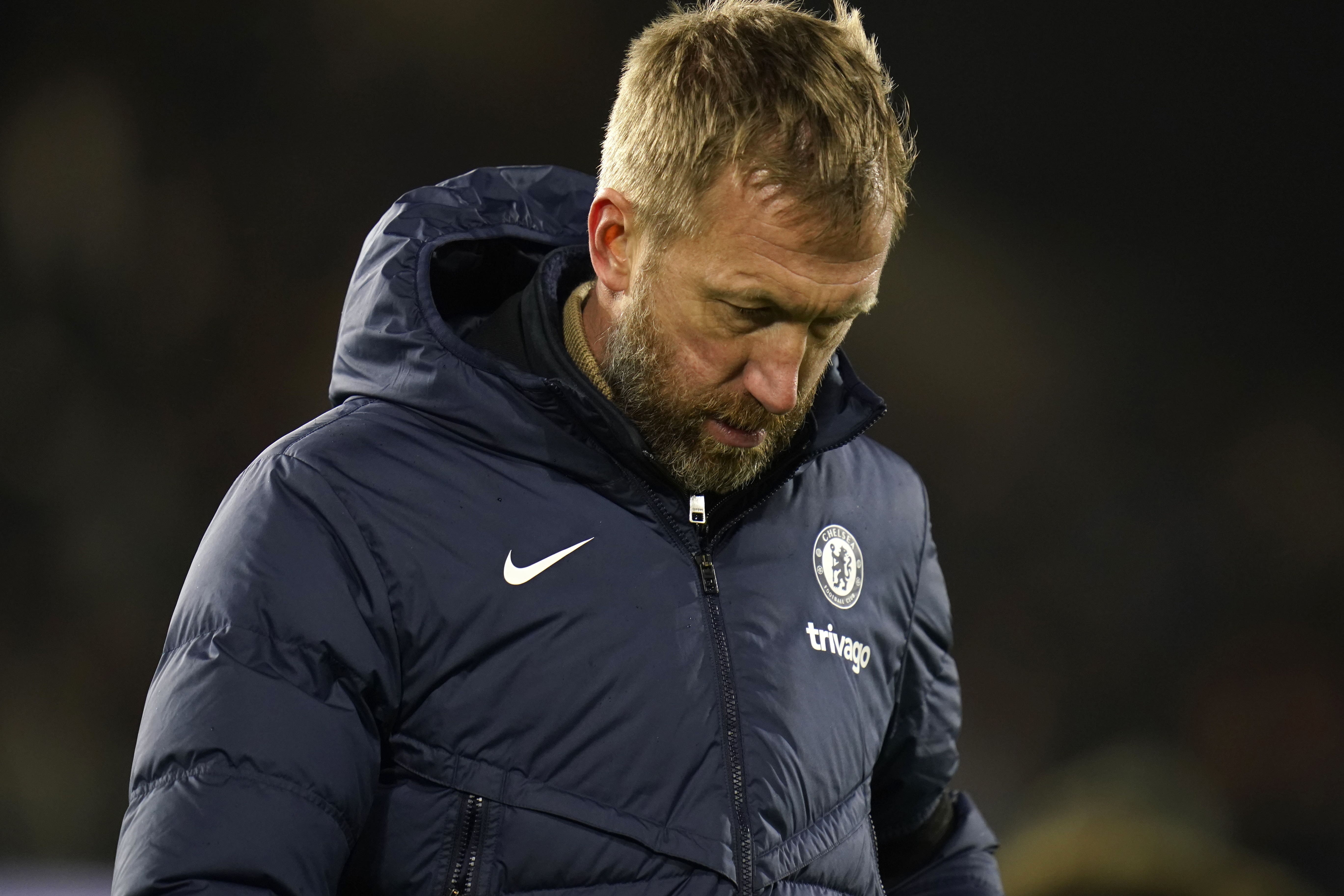
Graham Potter delivered Brighton’s highest ever top-flight finish at the time, before Chelsea paid £23 million in compensation for him and several members of his staff in September 2022. He lasted seven months at Stamford Bridge and eight at West Ham. He now manages Sweden, whom he took to the last 32 of the World Cup through the back door Nations League play-off route.
De Zerbi then came in and improved Potter’s Brighton side, delivering sixth place and European qualification. After two years he left by mutual consent, and took Marseille to second in Ligue 1 during his first season, although he left the following February after results deteriorated. Tottenham appointed him in March 2026, and he kept them up by two points.
After De Zerbi, Brighton kept progressing through and appointed a 31(!) year-old Fabian Hürzeler in 2024. He has since produced consecutive eighth-place finishes, and has taken Brighton back into Europe.
Looking at Brentford, Mark Warburton was highly rated before departing at the end of his contract to join Rangers. Dean Smith came in and established them near the top of the Championship before leaving for Aston Villa, where he did achieve promotion and then an 11th-place Premier League finish with Aston Villa. Thomas Frank was promoted internally to replace Smith and was able to take Brentford into the Premier League - keeping them there for four seasons.
Frank left for Tottenham in 2025 and was dismissed eight months later, with Spurs 16th and five points above relegation. Brentford again looked internally, promoting set-piece coach Keith Andrews into his first senior management role. They sold Bryan Mbeumo, Yoane Wissa and Christian Nørgaard, yet still finished ninth, equalling their best Premier League position and narrowly missing out on the European spots.
From this we can see that the strongest analytical clubs appear particularly good at facing no drop-off in results after a succesful manager leaves, and in fact often do better - even if appointing a young unproven manager.
Why Young Coaches Fit
These clubs have no absolute age rule; Mazzu was 54 when Union appointed him and Blessin was 50. The recent trend nevertheless leans heavily towards coaches in their thirties and forties.
Brighton recruited Potter at 44, De Zerbi at 43 and Hürzeler at 31. Geraerts was 40 when promoted by Union, Pocognoli 36 and Hubert 37. Brentford appointed Smith at 44, Frank at 45 and Andrews at 44.
Their shared characteristics are the most important thing to these clubs. They are all “training-ground” coaches comfortable developing younger players, but crucially working well with sporting directors and those above their head that assemble the squad.
At 39, the new Scotland manager Pocognoli is young but has a long journey in football. He played more than 350 club matches and won 13 Belgium caps, with his career including AZ Alkmaar (under Louis van Gaal), Standard Liege, Hannover, West Bromwich Albion, as well as Jamestown clubs Brighton and USG.

He began coaching with Union’s under-21s before working with Genk’s under-18s and Belgium’s under-18 side, before thrust into the USG hotseat for a season and for 38 games at Monaco. Interestingly, Pocognoli has said Van Gaal was the coach he learned most from, particularly his rigour, attention to detail and man-management.
This wide footballing education of course offers Scotland loads of genuine positives. Pocognoli has spent much of his recent career working young players, implementing his style quickly and managing talented players who need shown how to play a specific system.
How would Scotland play?
Keep reading with a 7-day free trial
Subscribe to Scotland's Coefficient to keep reading this post and get 7 days of free access to the full post archives.