

Steve Clarke's Tenure
A look at the difficulty of Scotland's World Cup group before a review of Clarke's seven years in charge

My discussion on BBC Scotland’s Reporting Scotland at 7pm tonight.
Scotland’s World Cup campaign was finally ended on the final night of the group stage, after the last unlikely set of results didn’t come in. It was death by a thousand cuts, as we went from needing any four of ten results to go our way to needing four outcomes from the last four groups to see us through to the last 32.
In the end, only one of 10 results went our way, as Spain beat Uruguay, meaning Scotland were ranked 11th of the 12 third-placed teams. Incidentally, both Scotland’s and Uruguay’s managers left their posts after their group-stage eliminations.
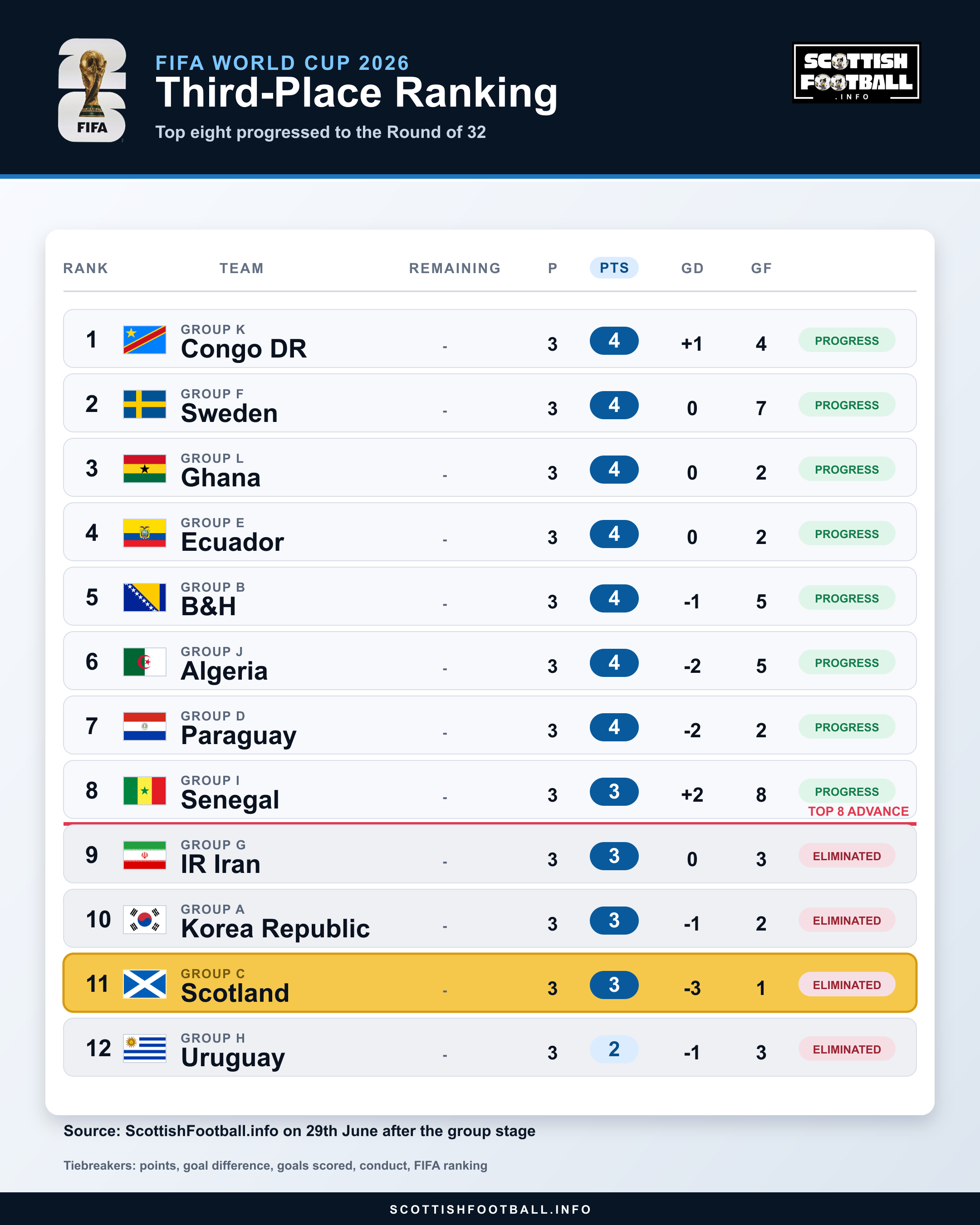
The reality is that Scotland were already out long before the final night, with the pendulum swinging dramatically from “should go through” to “probably out” after Scotland lost to Brazil and South Africa beat South Korea within a few hours of each other.
The threshold to be in the top eight rose on a daily basis, and in the end, for Scotland to go through with three points, they would have required a 5-0 victory against Haiti and two 1-0 losses against the top two seeds..
That is a better goal difference than the pre-tournament simulation models predicted, with most, including Opta Stats, expecting that three goals and even a slender negative goal difference would likely be good enough to progress in most scenarios.
New Format Issues
Part of the problem with the pre-tournament simulations was the change in format for this World Cup. The two main issues were firstly FIFA’s decision to tie-break the groups on head-to-head rather than goal difference for the first time, resulting in several final games where teams had nothing to play for.
For example, one of the results Scotland needed was Germany avoiding defeat to Ecuador, which would have resulted in one more team finishing below us in the third-placed rankings. However, the Germans were already assured of top spot with nothing to play for, courtesy of their head-to-head record against Ivory Coast. Ecuador, on the other hand, needed a victory or they’d face elimination, and so played like a team with everything to play for.
If we are honest, Scotland progressing at the expense of someone like Ecuador would have been a crime against football. The South Americans played like a team that needed a result against one of the top teams in the world, and truly believed they could get it. As a result, it is Ecuador, the team that lost the fewest World Cup qualifying matches in South America (2), that will have their last-32 showdown with hosts Mexico in Mexico City, while Scotland watch on from home, as usual.
The second issue with the new format was the timing of the last matches. FIFA have regularly scheduled the final match within each group to kick off at the exact same time, to reduce the chance of collusion within the group where two teams could play out a required result at the expense of another team in the group.
They continued with that this time, but importantly, all the groups still kicked off at different times and on different days. The outcome in many groups was already decided before the final game, and it was the ranking of third-placed teams that became more important, with the later groups knowing exactly what result was required to reach the last 32. This was a big disadvantage to Scotland, as we were the second group to finish and had no idea what the threshold was to progress. For this to be truly fair for all teams, all 24 final group-stage matches would have to kick off at the same time and on the same day, as happens in UEFA club competition.
The Group Was Difficult
Those defending Scotland’s tournament will ask: “What did you expect the team to do?” Many will state that beating the Pot 4 team before losing to Morocco and Brazil is probably about par for a country like Scotland. Furthermore, of all 12 groups, Group C was a very difficult group to progress from, as it was the only one to contain two teams within the top 10 of the FIFA rankings at the start of the tournament.
While that may be true, Scotland categorically did not have the “hardest” set of opponents. In fact, 23 teams had fixtures with a higher average FIFA ranking than Scotland’s.
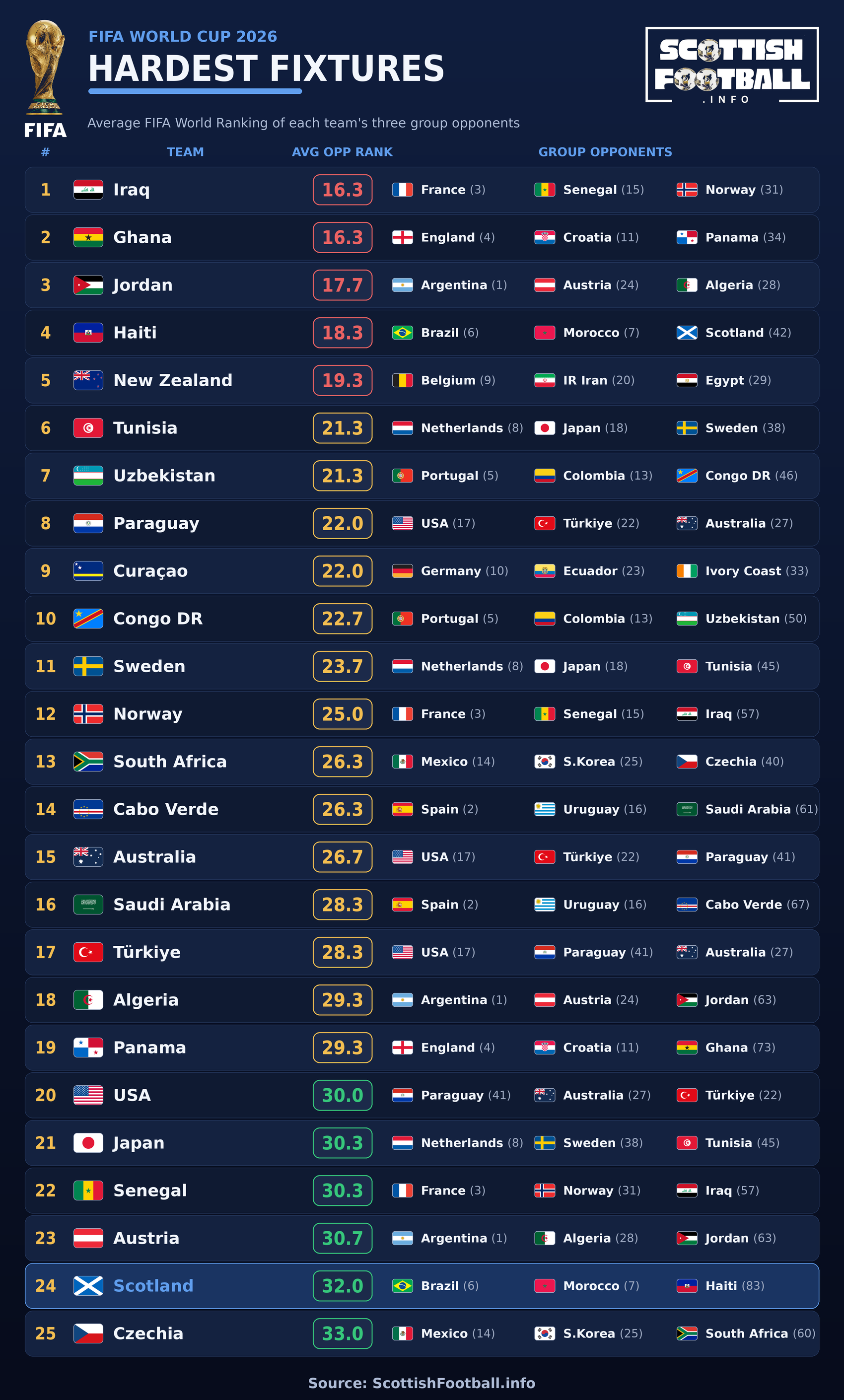
Those of us who think the fixtures were tougher than average would point to the fact the above “hardest fixtures” graphic is skewed by the average of our opponents being dragged down by Haiti, the second-lowest-ranked team in the tournament (83), behind only New Zealand (85).
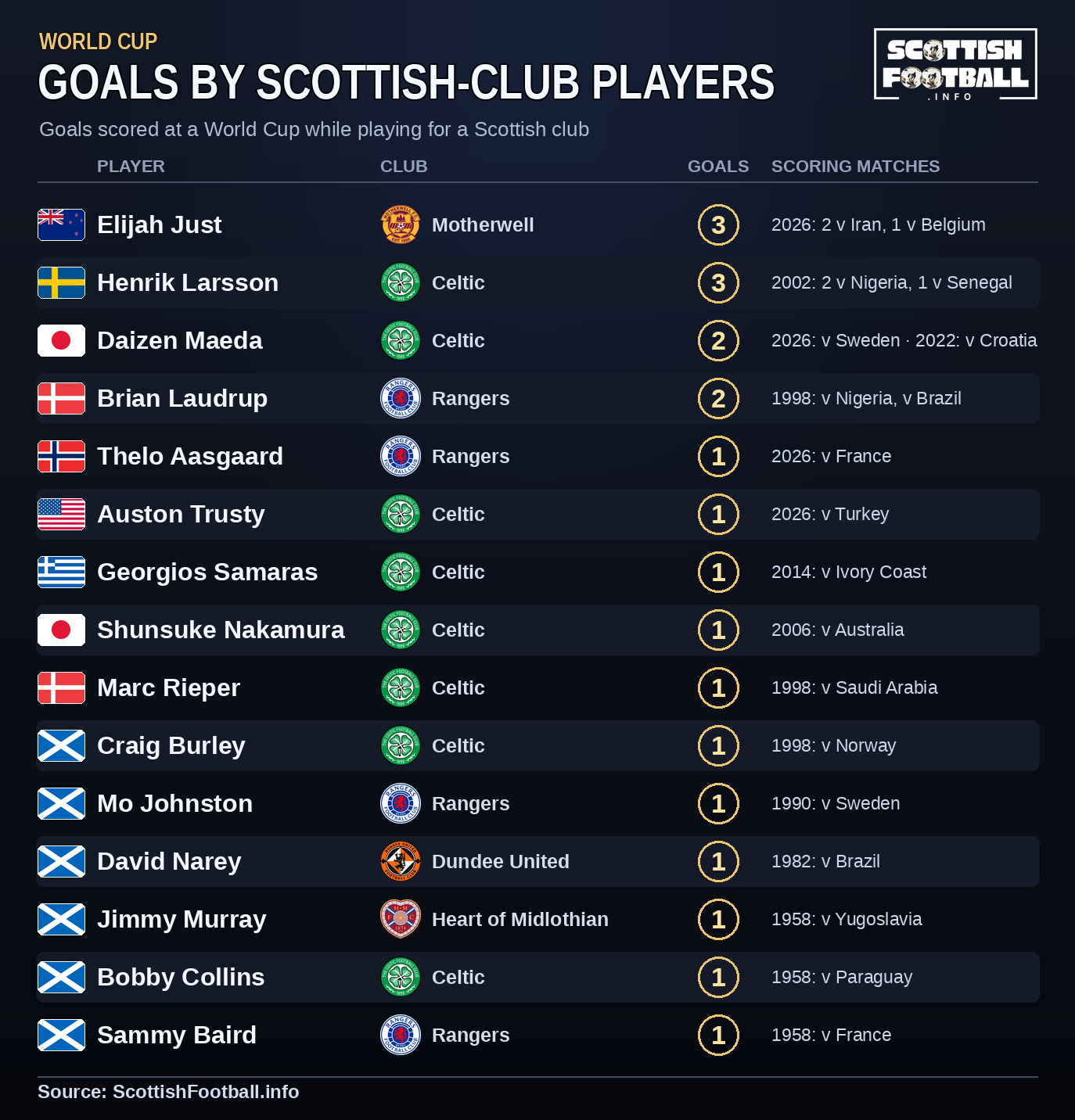
Incidentally, both Haiti (2) and New Zealand (3) scored more goals than Scotland, with Panama (0) the only team in the tournament to score less than us. Elijah Just scored all three goals for New Zealand, making him one of the joint-top World Cup scorers among players based at Scottish clubs.
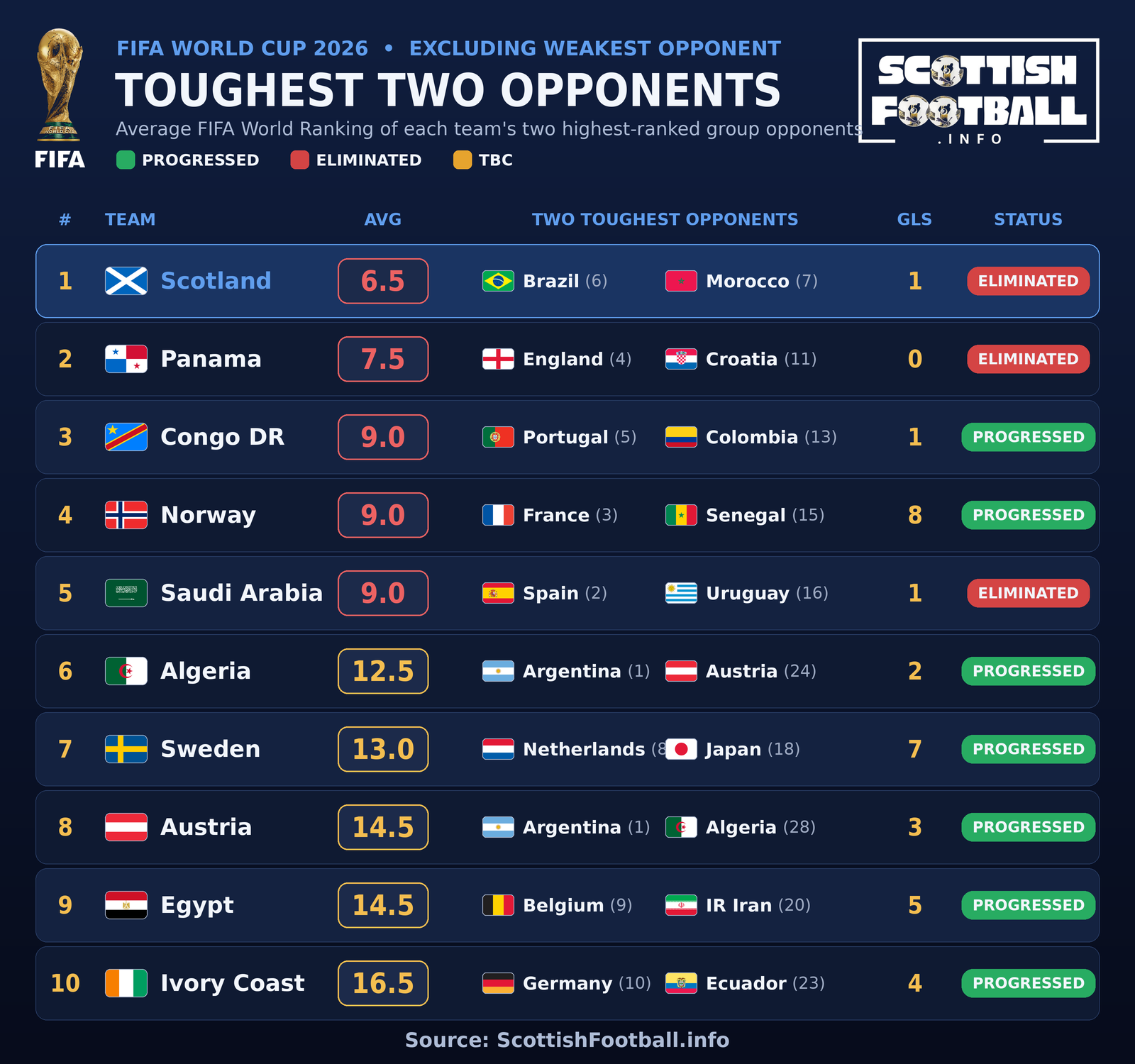
The average ranking of the three opponents doesn’t accurately reflect the fact that, in the end, only one third-placed team progressed with three points. Therefore, beating the Pot 4 team was not going to be enough for most sides. A further point was needed against one of the top two sides in the group.
This is where the difficulty of Scotland’s group is laid bare. When we remove the weakest opponent from each group, and look only at the top 2 sides faced, Scotland had the highest ranking average of top two opponents of any side in the tournament. Had Scotland’s top two sides been Belgium and Iran instead of Brazil and Morocco, then we might have stood more of a chance.
The Hosts Were In Pot 1
The last bowl of sour grapes I will serve you before moving on to Steve Clarke is the draw itself back in December. It is understandable that FIFA want the hosts to stay in the tournament as long as possible, and so putting them in Pot 1 probably makes sense.
However, the fact there were three hosts meant that placing them all in Pot 1 led to a great imbalance in some groups. There were 12 teams per pot and all three of the USA, Canada and Mexico were placed in Pot 1, despite none of them being an actual Pot 1 team based on FIFA ranking.
What this meant is that three teams that “should” have been Pot 1 (Croatia, Morocco and Colombia) were pushed into Pot 2. Any team in Pot 3 could then get fortunate and draw one of the hosts as their Pot 1 team, such as Canada, or get really unlucky and draw one of these “true” Pot 1 teams as their Pot 2 team, such as Morocco.
For instance, Switzerland topped a group including Canada, Bosnia & Herzegovina and Qatar. By contrast, Scotland were eliminated at the hands of Brazil and Morocco, when based on FIFA rankings we should only have faced one of these sides.
As an aside, UEFA doesn’t automatically assign the hosts to Pot 1, and so although Scotland’s 2028 matches will be at Hampden Park, we won’t automatically be a Pot 1 side. If FIFA did this too, and all teams were placed based on FIFA World Ranking, then the pots would look like this instead:
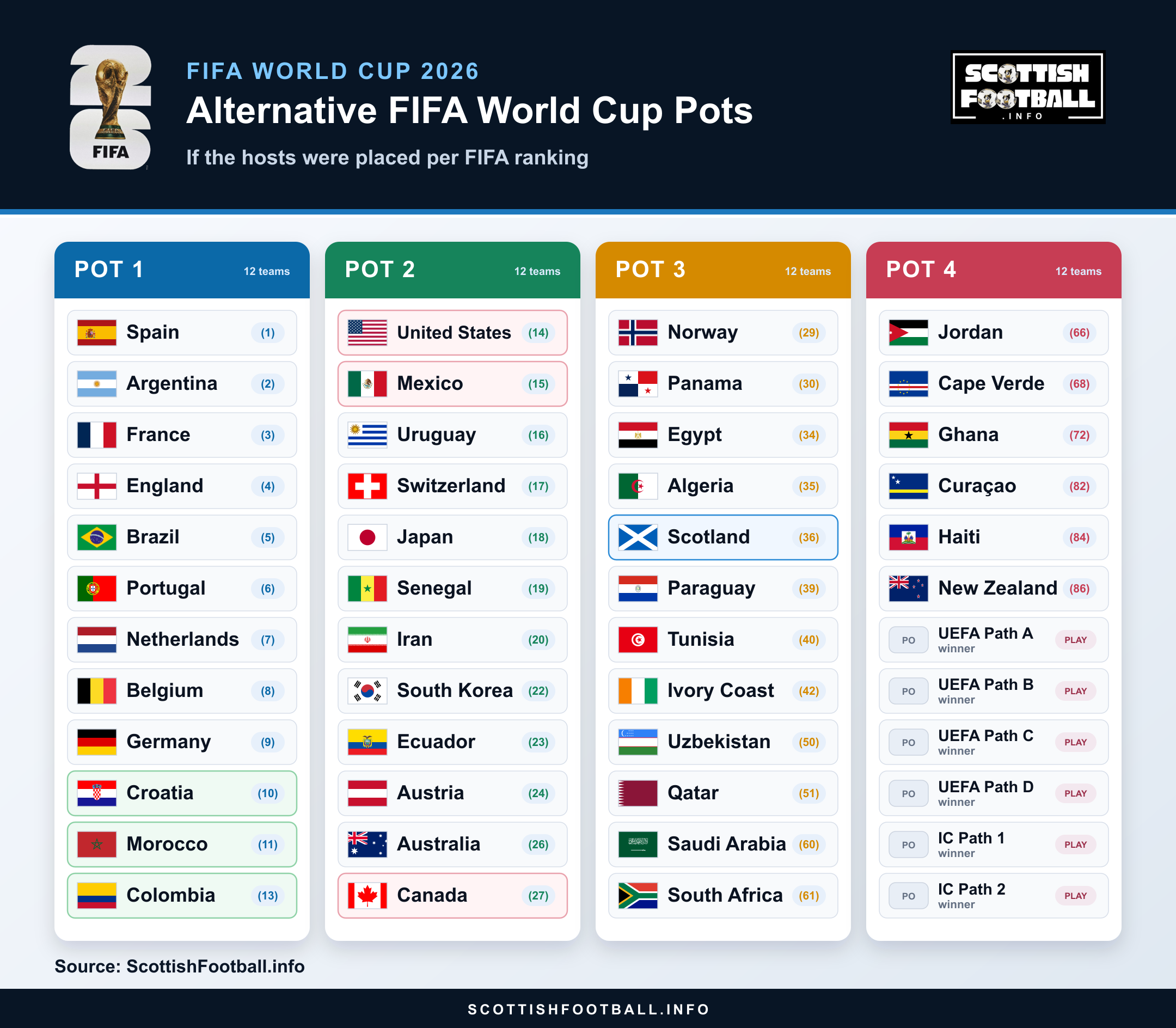
Scotland drew the 8th side in Pot 1, which was Brazil. If the hosts had entered Pot 2, as per their FIFA ranking at the time of the draw, the 8th Pot 1 side would have been Belgium. Similarly, Scotland drew the 2nd side in Pot 2, which was unlucky in itself, but this was Morocco, truly a Pot 1 team. Based on FIFA ranking, this would have instead been Mexico.
Of course, having the hosts in Pot 2 would not have guaranteed Scotland a draw against Belgium and Mexico, as there were many specific restrictions on which teams from which confederation could go in which groups. Scotland may have lost both of these games too, but the exercise shows that Scotland were disadvantaged by FIFA’s decision to push Morocco into Pot 2 to ensure the hosts were in Pot 1.
Was it an Under Performance?
In isolation, beating Haiti, losing to Morocco and Brazil, and missing out on goal difference feels about par.
The difficulty comes when viewed with the context that this is the third consecutive tournament where Scotland players have scored only one goal. At Euro 2024, Scotland scored twice, but one of those was an own goal, and in three of our last six tournament matches we had zero shots on target.
Cape Verde, with a population smaller than Glasgow’s, have progressed after going undefeated through a group that included both Spain and Uruguay. They scored more goals than Scotland and were more deserving of a place in the knockout rounds.
All nations in the top 10 of the FIFA rankings progressed, so we will look at the teams from 11th down, as that’s who we really want to measure ourselves against. This graphic shows the FIFA world ranking, progression status, goals scored and average opponent FIFA ranking.
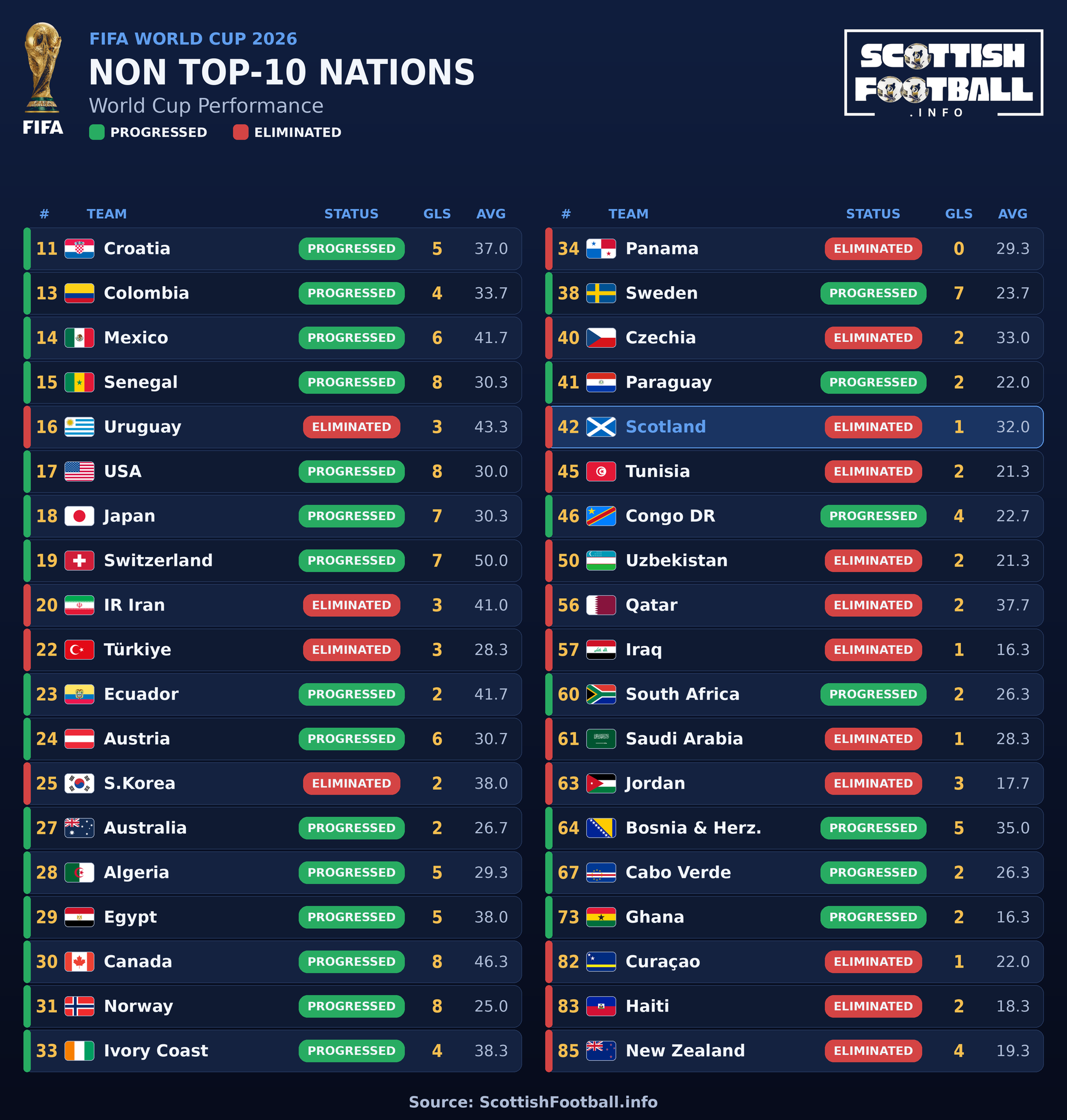
The likes of DR Congo, South Africa, Bosnia, Cape Verde and Ghana all showed that a team’s FIFA ranking didn’t have to determine its showing, as they all progressed to the next round and all scored at least one more goal than Scotland.
Steve Clarke
Now a look at Steve Clarke’s tenure, covering the records he’s broken, the players he’s used and the guys that have scored for him. You can read more about previous Scotland managers in an article on Clarke from last year.
Record Holder
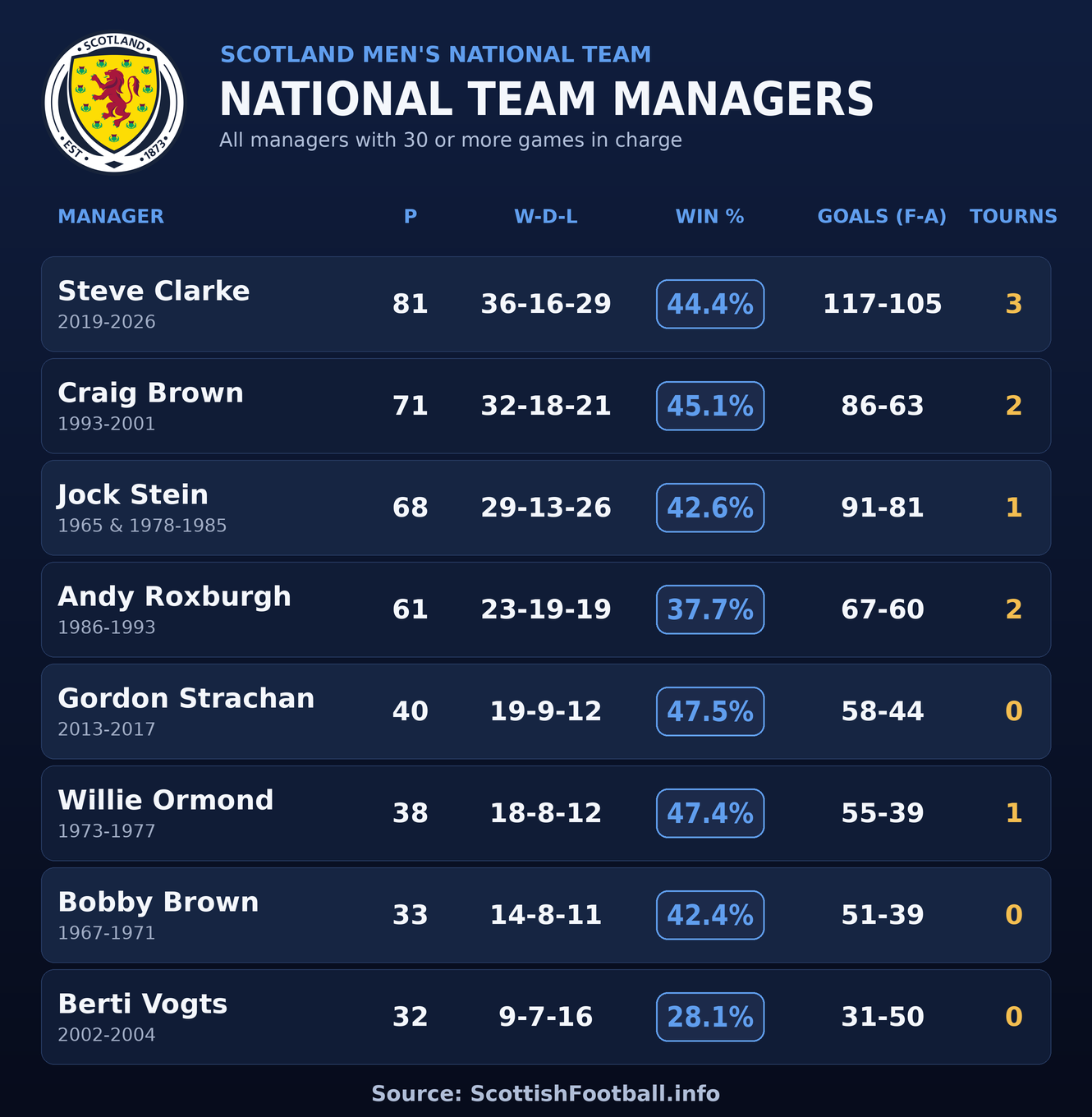
Steve Clarke is Scotland’s most successful manager ever. Regardless of your opinions on the man, the manager, or our performances at the major tournaments, the man is a record holder.
He’s managed his country for more games than anyone in history, recorded more wins than anyone in history and led the men’s team to more tournaments than any manager in history. I suspect history will be kinder on Steve Clarke than perhaps the emotional rawness of another failed campaign is right now, but what’s for sure is he has raised the bar for the next man coming in.
In 2018, Scotland had four games at Hampden in the autumn where attendances ranged between 17,000 and 21,000. When Clarke joined in 2019, expectations were low, given our major tournament drought. Apathy had set in amongst the Scotland support. The SFA have openly admitted the remit for Clarke was simply to qualify for a major tournament, by whichever means necessary.
He did that at the first attempt, reaching the delayed Euro 2020 through the “back-door” play-off earned by previous manager Alex McLeish in the Nations League. He then qualified in style for Euro 2024 by winning the opening five matches of that campaign. Clarke then did the truly unexpected by returning us to the World Cup after a long 28-year absence, while giving us probably the most memorable night in the history of Hampden Park with the last-gasp 4-2 win over the Danes.
The remit for the next manager will be to reach these tournaments regularly, then go one step further and progress beyond the group stages. Be it Postecoglou, Moyes, Hjulmand, McCann, Naismith, Fletcher or A.N. Other, Clarke has left big shoes to fill.
Loyalty
Keep reading with a 7-day free trial
Subscribe to Scotland's Coefficient to keep reading this post and get 7 days of free access to the full post archives.