
For 2026/27, I’ll be expanding the content available to subscribers on the websits, with emails grouped by subject.
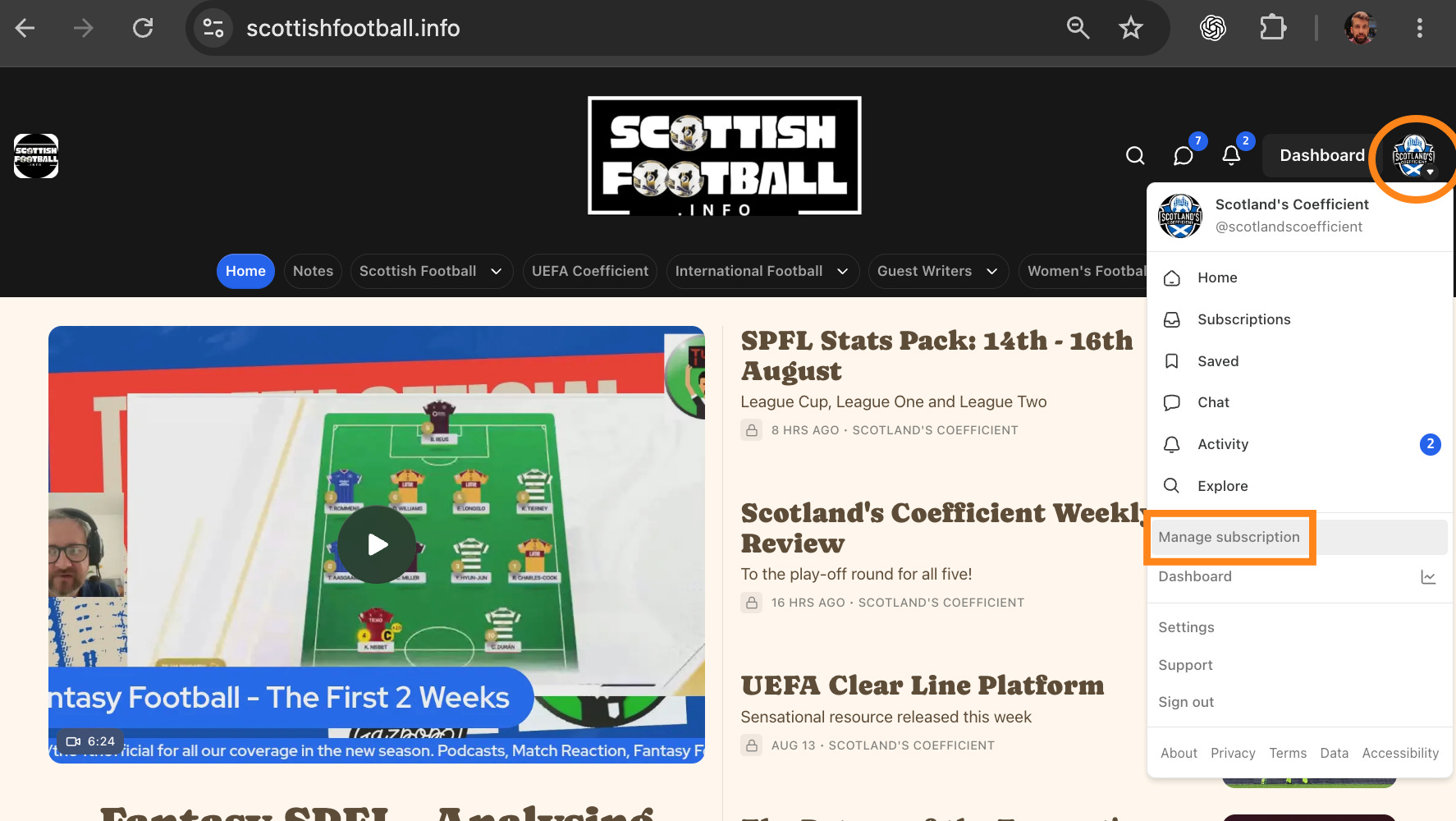
You can update your preferences at any time, so if you’re not interested in the Scotland national team, Women’s Premier League or other specific content, simply deselect those topics.
Go to ScottishFootball.info, click your profile picture in the top right, then Manage Subscription. From there, you can choose which subjects you want to receive by email.
This article will describe how the women’s league system works, a look at the history of the game including an embarrassing moment in time for the SFA, before ending with a preview of the 2026/27 SWPL season and Stats Pack cards for all fixtures, as I do for the SPFL games.
The League System
Scotland’s senior women’s pyramid has five levels and eight leagues that follow a traditional winter football calendar (starting in August). The top tier is the Scottish Women’s Premier League (SWPL), followed by SWPL 2.
A separate organisation, Scottish Women’s Football administers all the tiers below the top two, starting with the Championship (tier 3) and League One (tier 4). The fifth tier is four regional leagues; North, East, Central-West and South.
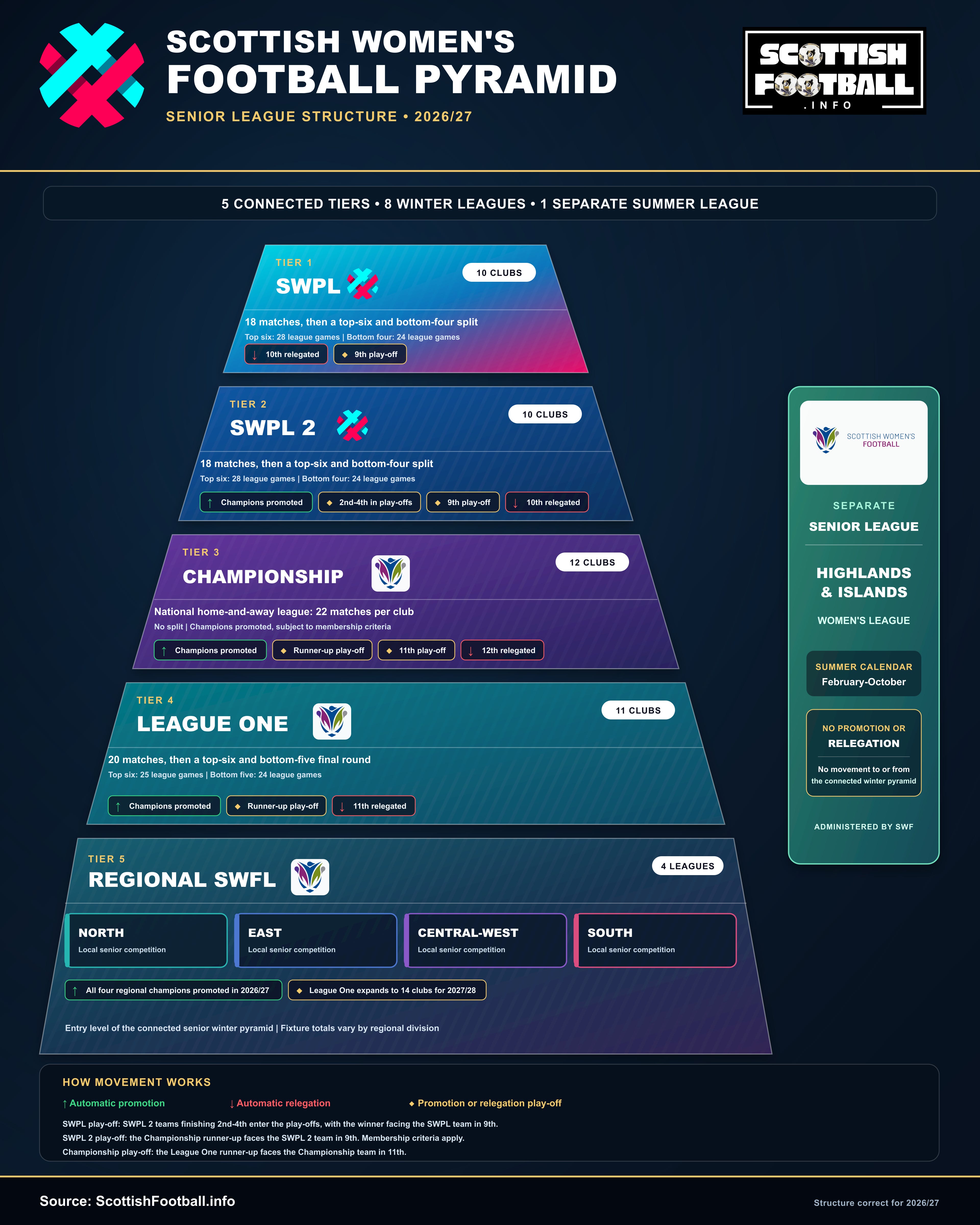
There is a ninth league, the Highlands and Islands League, but that operates with a summer season (February to October) and does not have promotion or relegation into the pyramid.
The SWPL
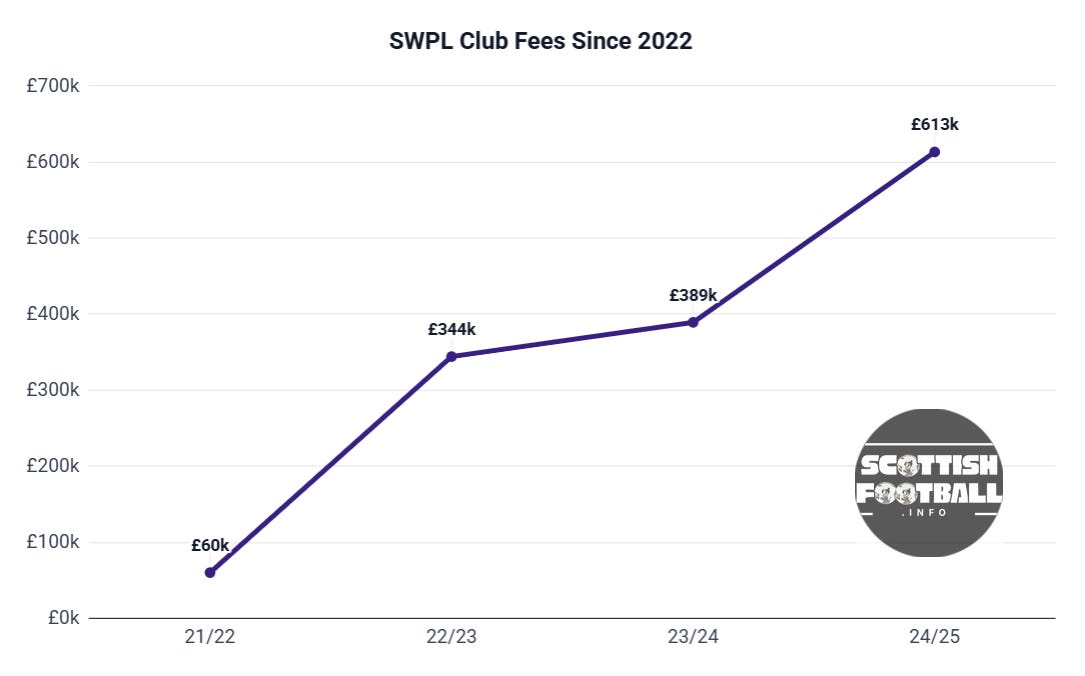
The top two divisions are run by the SWPL, which has been part of the SPFL structure since 2022, and now has turnover in excess of £1m per year. The Championship, League One and regional competitions are run by a separate organisation, Scottish Women’s Football.
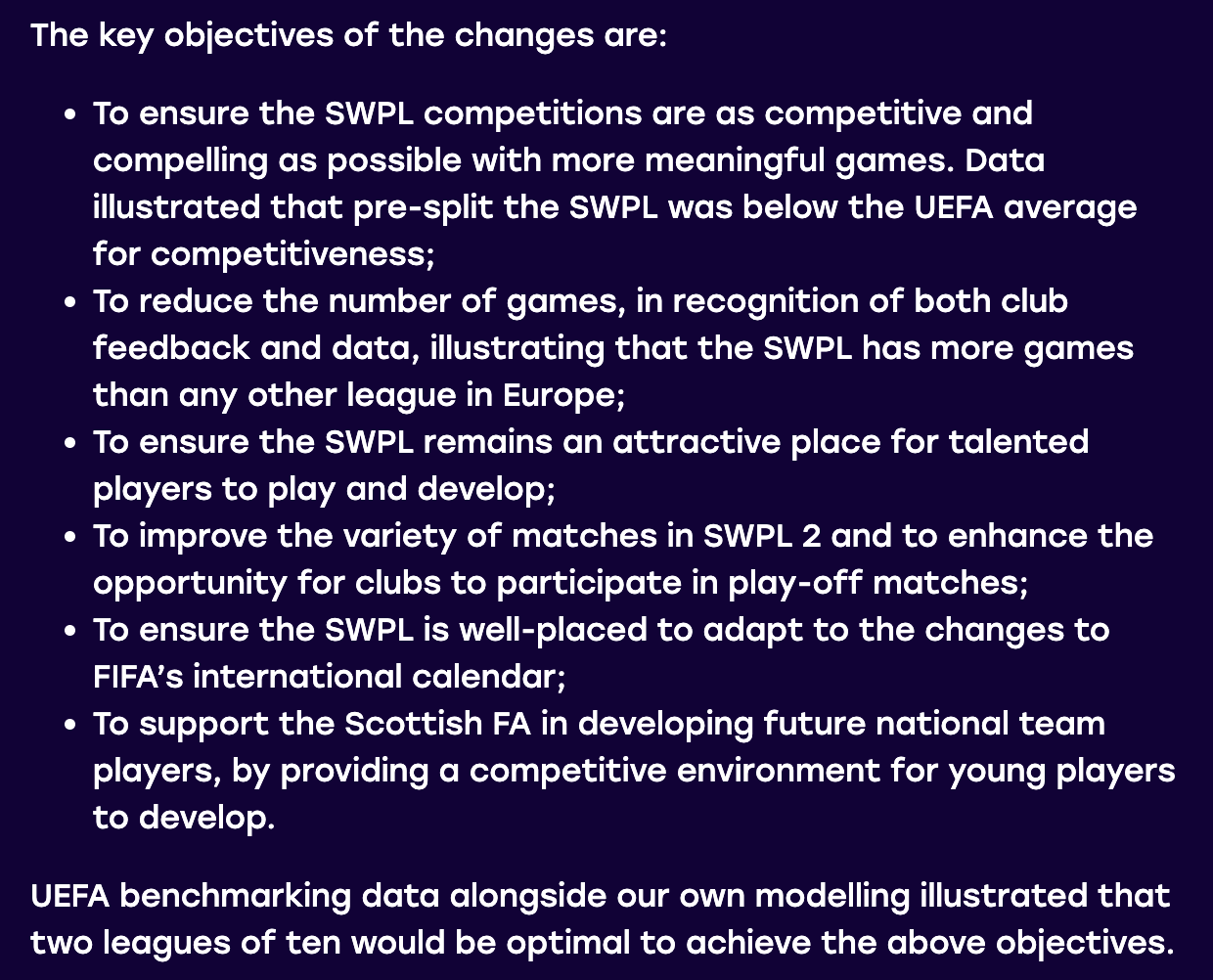
Both SWPL divisions have the same 10-team league structure, in which each team initially plays the other nine at home and away, for a pre-split total of 18 matches. Like the men’s top tier, the leagues then split, but into a top six and bottom four which ensures both halves have an even number of teams (splitting into an odd number means a team must sit out every week. This is the case in League One which will again operate as an 11 team league, discussed later).
The top-six clubs then play each other twice more to finish with 28 league games, while those in the bottom four only play a total of 24 matches. The split has only been in place since 2025/26 as part of a reconstruction, which was brought in to reduce the overall fixture burden and produce more competitive games. Prior to the reconstruction, the SWPL had more games than any other women’s league in Europe.
Promotion and relegation is very similar to the men’s game too; the SWPL 2 champions go up automatically and the bottom SWPL club goes down. Teams finishing second, third and fourth in SWPL 2 enter the promotion play-offs. Third hosts fourth, second hosts the winner, and the surviving club faces the team finishing ninth in the SWPL at a neutral venue.
At the other end of SWPL 2, the bottom club is relegated automatically to the Championship, with the Championship winners promoted automatically, subject to meeting SWPL membership criteria. The ninth-placed SWPL2 side faces the Championship runner-up in a play-off for a place in the second tier.
In terms of league position, the SWPL differs from the SPFL leagues in that teams level on points are separated by head-to-head record rather than overall goal difference, and indeed overall goal difference is only the EIGHTH tie-breaking criteria. This makes sense given some of the disparity in quality between the teams, with large scores often ranked up against the team in the bottom half.
Head-to-head points
Head-to-head goal difference
Head-to-head goals scored
Post-split goal difference
Post-split goals scored
Post-split wins
Overall wins
Overall goal difference
Overall goals scored
Below the SWPL
Scottish Women’s Football are an organisation separate to the SPFL group, and they administer all Scottish football below the top two tiers. The 12-team Championship (third tier) has a traditional home-and-away programme of 22 matches. The third tier champions gain promotion into SWPL 2, with the runners-up entering the play-offs.
League One was also meant to have 12 clubs, but Armadale Thistle withdrew and folded their senior team in July after player departures and the resignation of their management staff. It now operates with 11, so one club sits out each week. After an initial 20-match home-and-away fixture list, the division splits into a top six and bottom five for one further round of fixtures. Top-six teams will play 25 league games and bottom-five clubs will play 24.
There will be restructuring in League One (fourth tier) this season; the bottom club will be relegated, but the champions of all four regional SWFL divisions will be promoted. That will expand League One from 11 to 14 teams for next season, with the SWF’s longer-term ambition to establish two divisions at the fourth tier by 2030/31.
A history lesson; SFA Embarrassment
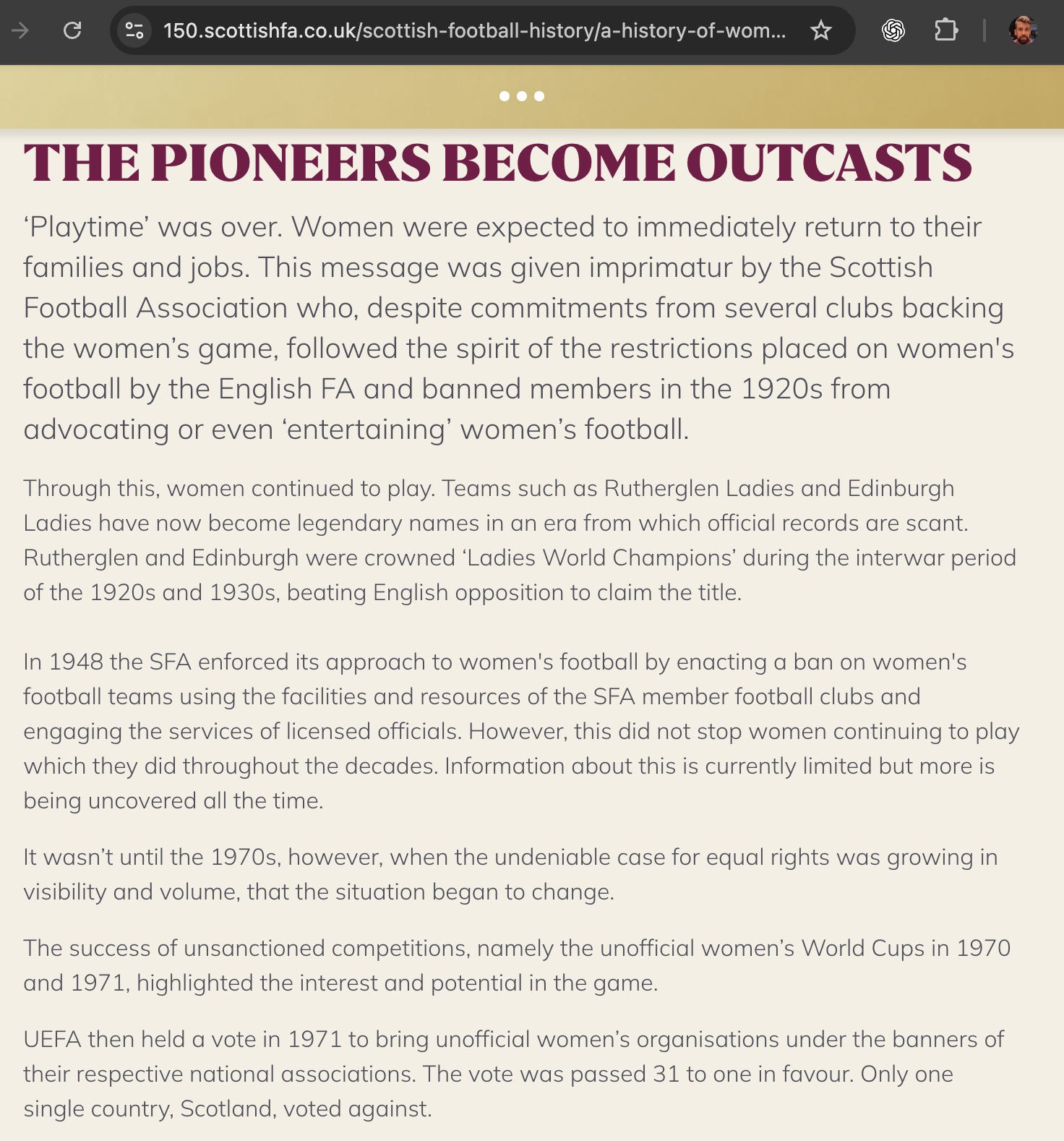
Women’s football in Scotland has roots stretching back to 1881, when a team of Scots beat England 3-0 at Hibernian Park in the first known women’s match played under association rules. Its development was then deliberately and undeniably held back by the men’s football establishment.
The English FA barred its clubs from supporting women’s football in 1921, and the Scottish FA followed suit before imposing its own formal restrictions in 1948. Women’s teams were denied access to affiliated grounds, club resources and licensed officials, forcing players to sustain the game themselves with none of the help that the men’s game received.
One of the most embarrassing episodes in Scottish football history came in 1971. UEFA voted 31-1 in favour of bringing women’s football organisations under their national associations, with Scotland casting the only opposing vote.
Six clubs responded by forming the Scottish Women’s Football Association in 1972, while the Scottish FA finally lifted its restrictions two years later in 1974. Full responsibility for the national team and formal affiliation with Scottish Women’s Football did not come until as late as 1998.
The modern structure, including the creation of the SWPL by the SWF in 2002, was built by generations of women who kept playing while football’s authorities placed barriers in their way. The SWF added a second division in 2016, but six years later the elite clubs then voted to leave SWF in 2022 and join a professional structure under the SPFL. The SWPL has been run under the SPFL umbrella since the 2022/23 season, while remaining subject to Scottish FA governance.
Season Preview 2026/27 - Managerial moves
Hearts ended last season as SWPL champions in almost anticlimactic fashion. They lost 2-0 to city rivals Hibernian at Meadowbank on the final afternoon, yet Rangers’ capitulation allowed Hearts to collect the trophy for the first time. A Hearts loss meant Rangers could have taken the title with a win, but suffered a 6-0 hammering away to third place Glasgow City to hand the title to Hearts.
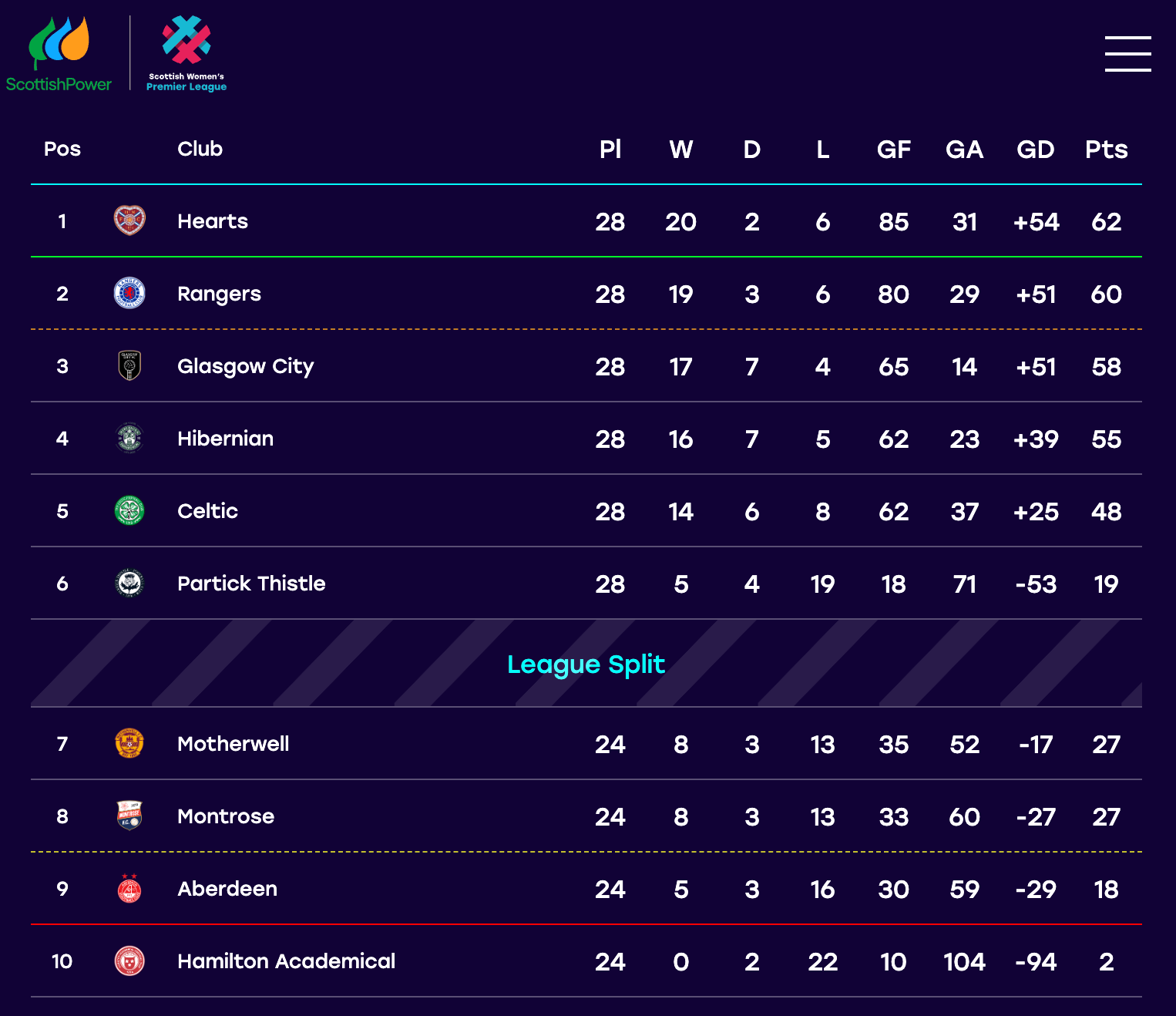
Hearts winning the title for the first time continues a remarkable sequence in the women’s game. Rangers won the league in 2022, followed by Glasgow City, Celtic, Hibernian and now Hearts. Five seasons have produced five different champions, ending the long period when Glasgow City dominated every year; winning 14-in-a-row stretching back to 2007/08.
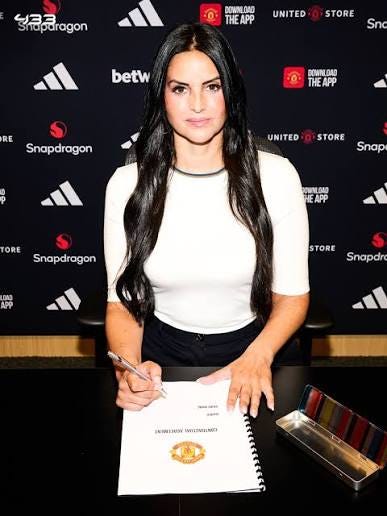
The challenge for title holders Hearts begins again tomorrow, when the 2026/27 Scottish Women’s Premier League season opens. They start with a new head coach after the departing Eva Olid left the club for Manchester United, having transformed the then recently promoted Hearts side since she took over in 2021.
Her successor is the new Hearts manager Andy Thomson, appointed on a three-year contract after working as assistant to Jo Potter and then Leanne Crichton at Rangers. Thomson previously coached alongside Shelley Kerr with Scotland and spent part of a 19-year playing career at Queen of the South, QPR, Partick Thistle and Falkirk.
Losing out on the league title to Hearts would have been disappointing for Rangers manager Leanne Crichton, who signed a three-year contract at the club in August 2025 after Jo Potter left for Crystal Palace. It was Crichton’s first senior head-coach position following spells on the coaching staffs at Motherwell and Glasgow City. Crichton’s older brother Colin replaced her as Motherwell assistant in 2024, before moving on to coach in Celtic’s academy with the under-17 girls. In March this year he joined Rangers in a temporary coaching role, but has now joined the club permanently - replacing the aforementioned new Hearts manager, Andy Thomson.
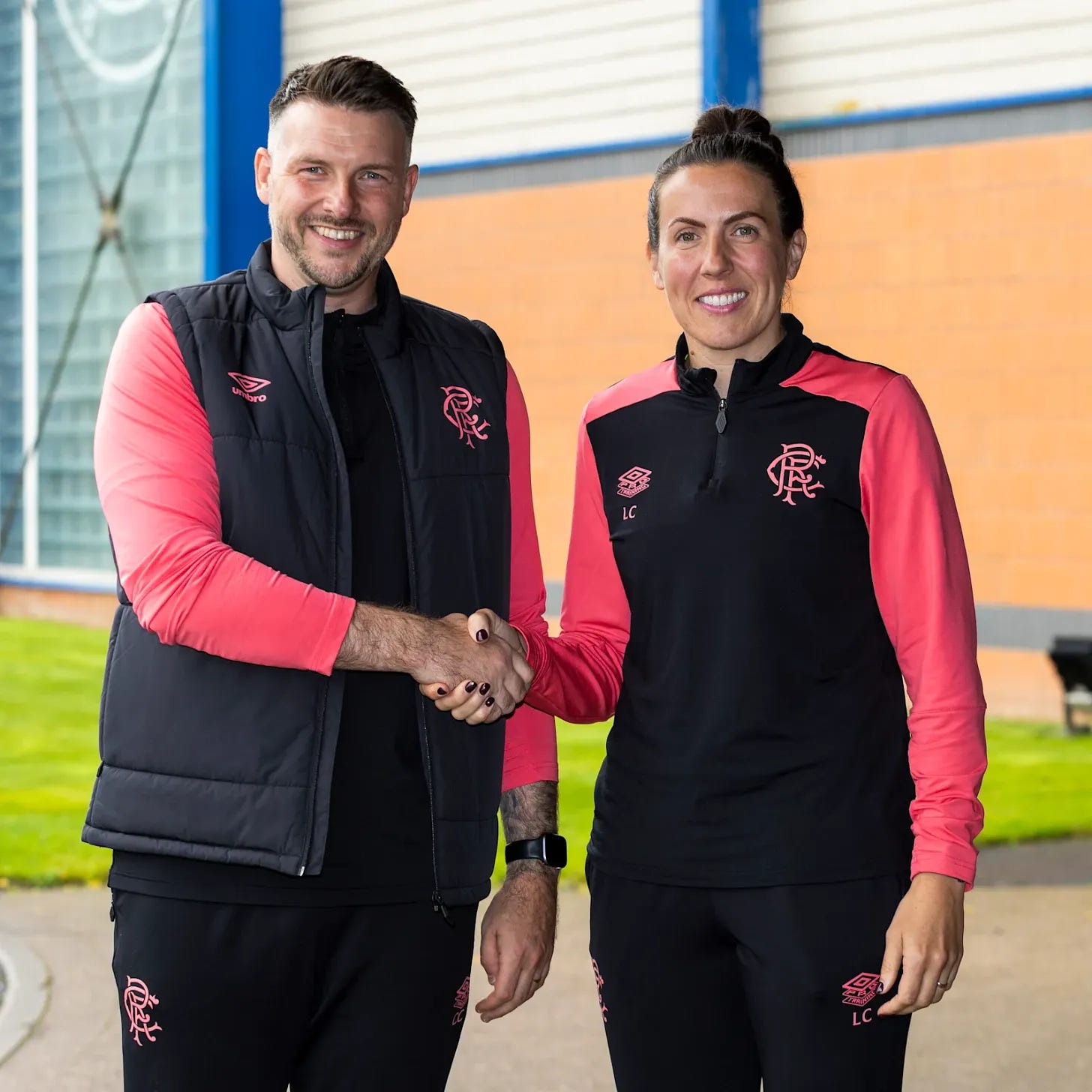
Last season, Celtic appointed Grant Scott as manager after Elena Sadiku’s departure for BK Häcken. Scott had previously won the 2024/25 title at Hibs, with Scott replaced as Hibs manager by their record appearance holder Joelle Murray.
Aberdeen have also changed direction. Scott Booth stepped down after keeping the club in the SWPL through the play-off, and Nathan Flight arrived as Aberdeen’s head of women’s and girls’ football. Flight had been working with HamKam in Norway, where he helped the club win promotion, and has been given responsibility for Aberdeen’s first team and academy pathway.
The season has already begun outside of the two SWPL divisions, though with the Championship (tier 3) and League One (tier 4) starting on 2 August. The redesigned Sky Sports Cup also started two weeks ago with a 14-team league phase, bonus points for drawn matches decided by penalty shoot-outs, and one combined table.
The Sky Sports Cup is open to the top two tiers only, and is one of several cup competitions including the Scottish Cup (for all clubs), the National League Cup (for tiers 3 and 4) and the Regional League Cup and Plate (for tier 5 teams).
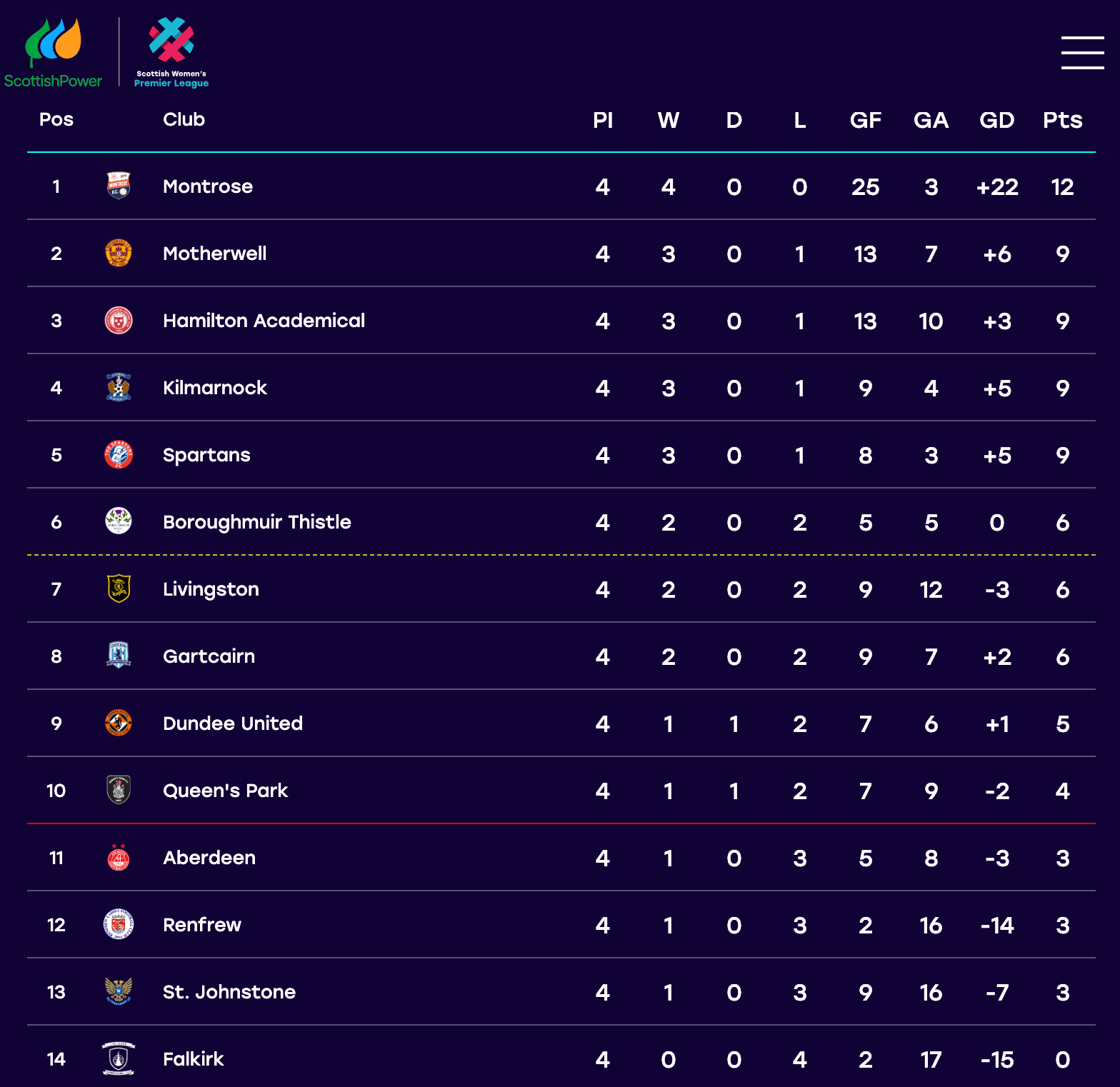
Every team played four league cup games, with the top 6 progressing to the next round, to be joined by the teams that finished 3rd-6th in the Premier League last season (the Champions, Hearts, & the runners-up, Rangers, will enter at the Quarter-Final stage). The teams that finished between 7th and 10th will compete in knockout play-offs for the remaining two spots, while the bottom four teams are automatically out.
As the women’s game has grown, TV viewership of the SWPL has increased too, reaching a record 2.4 million viewers in the 2024/25 season across nearly 60 games shown live on BBC ALBA, BBC Scotland and Sky Sports. There was record viewership for a single match too; 174,000 watched Celtic come from 2 goals down to draw 2-2 with Rangers on Sky Sports in October 2024, an 18% increase from the previous record of 147,000 set one year earlier. Figures for 2025/26 have not yet been released.
So the new SWPL season begins tomorrow, and the regular season runs until February, before the top two tiers both split in two. In addition to the Sky Sports deal, under which Sky must show a minimum of five SWPL or League Cup matches per season, at least 26 SWPL games per season will be shown live on BBC Alba. The BBC Alba’s agreement runs until 2027/28, alongside BBC Scotland’s live coverage and weekly highlights, while the Sky Sports deal runs alongside the SPFL deal until 2029.
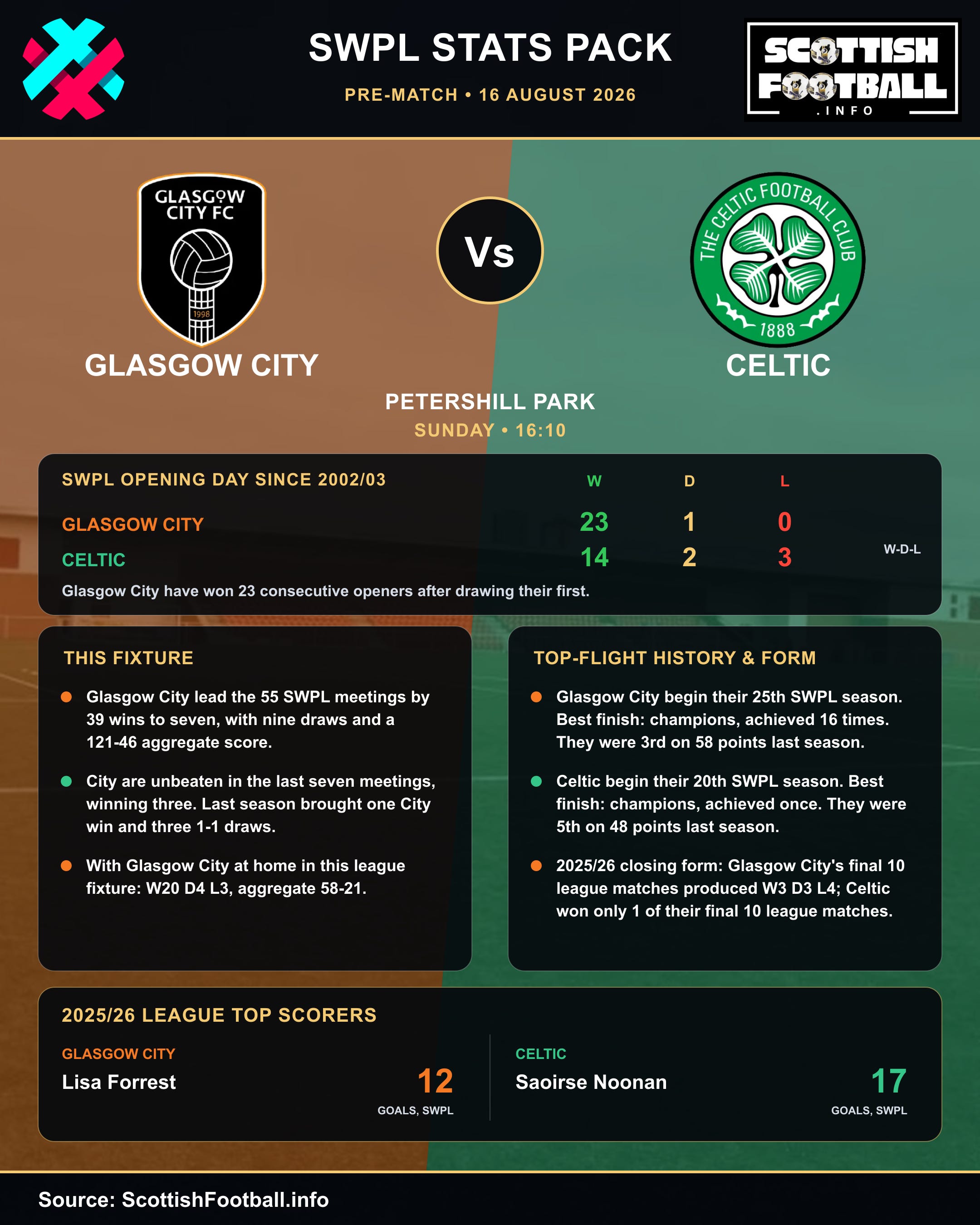
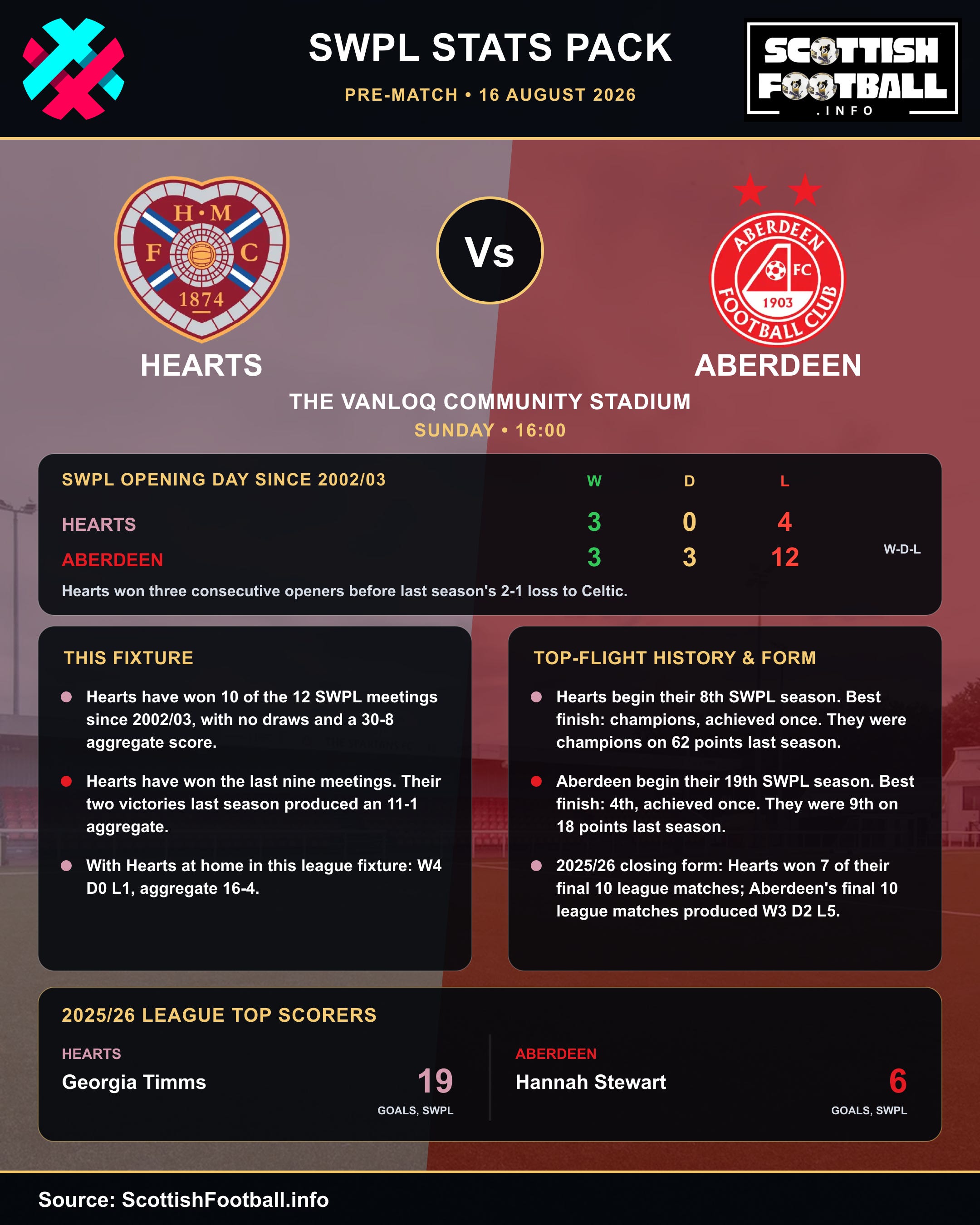
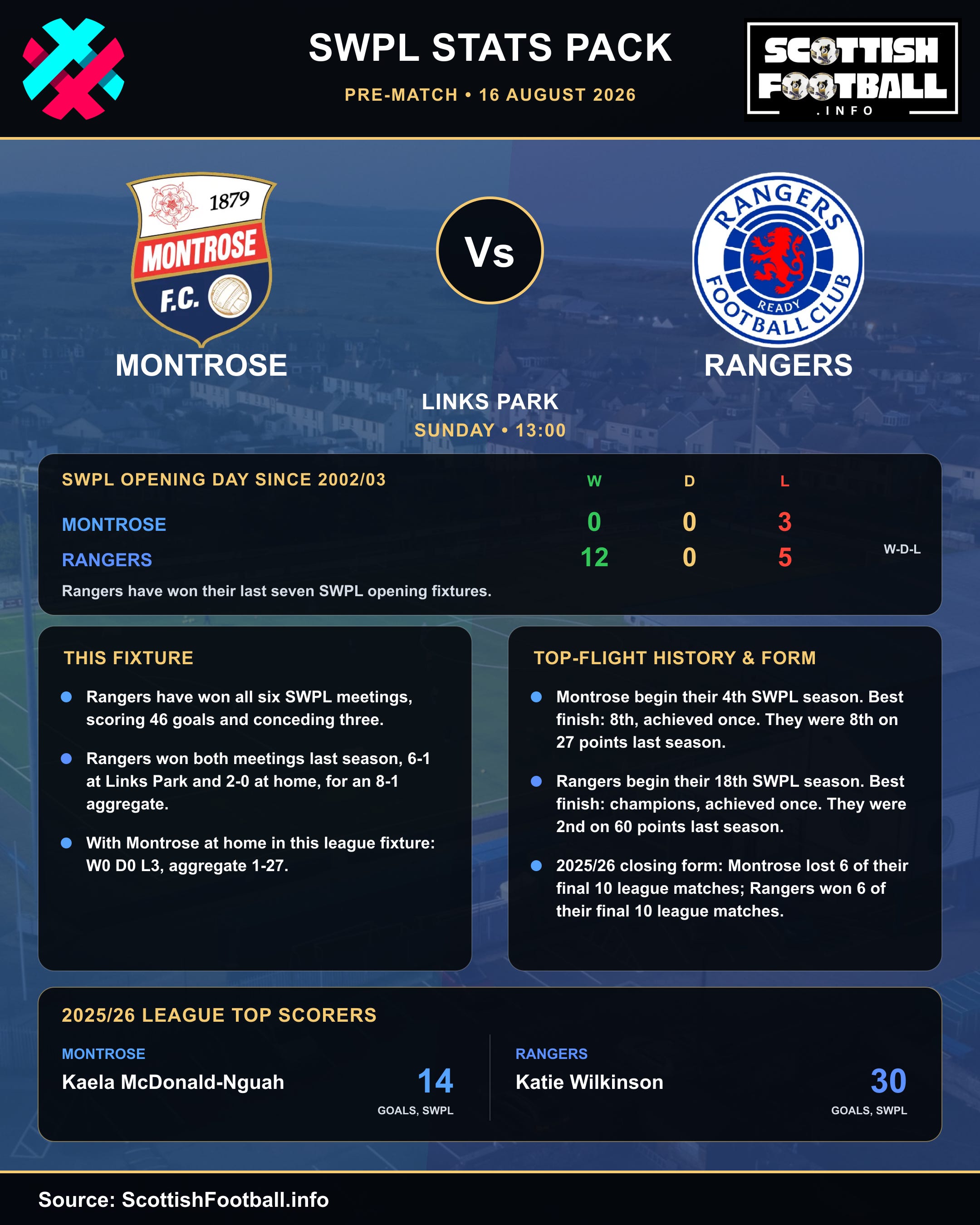
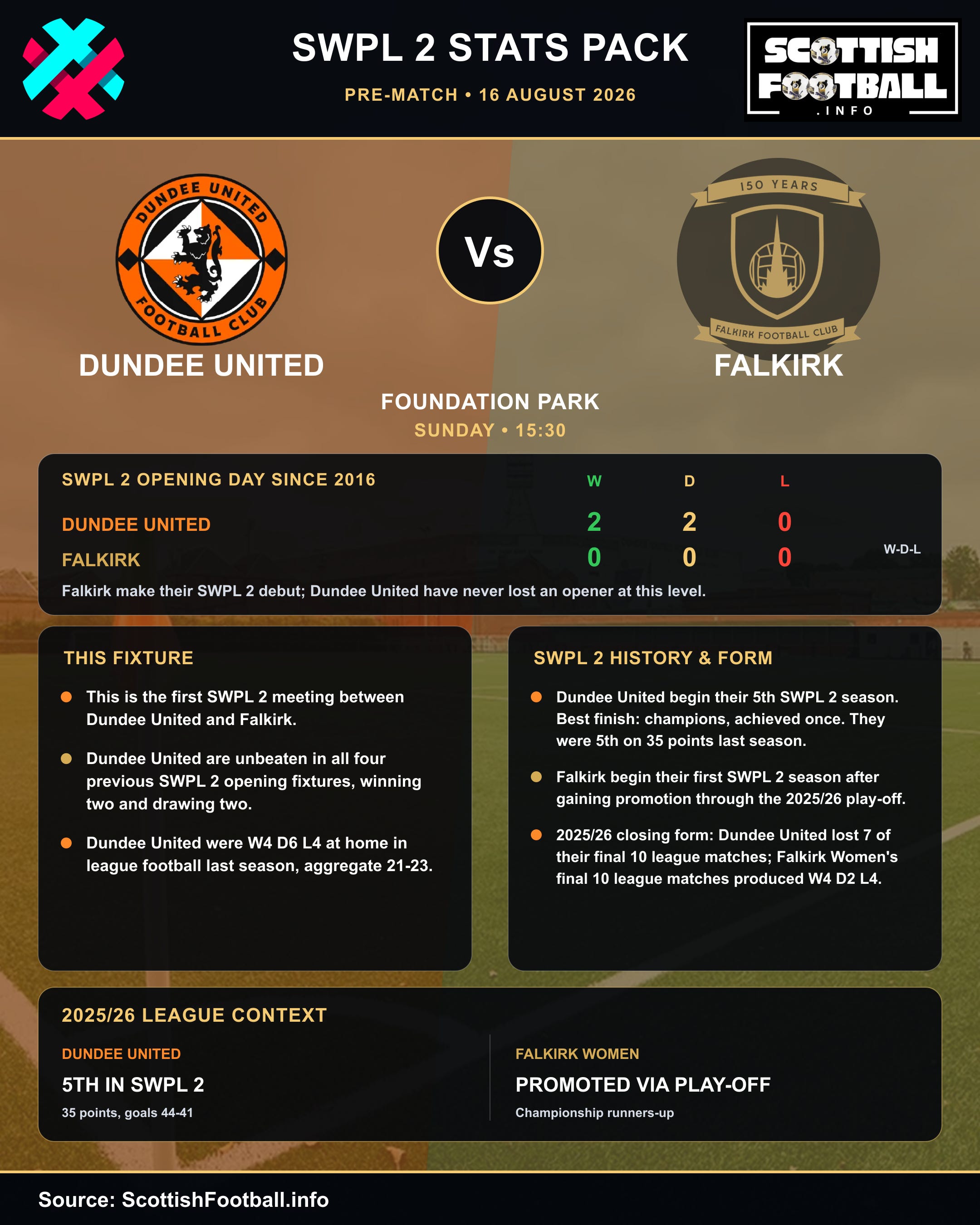
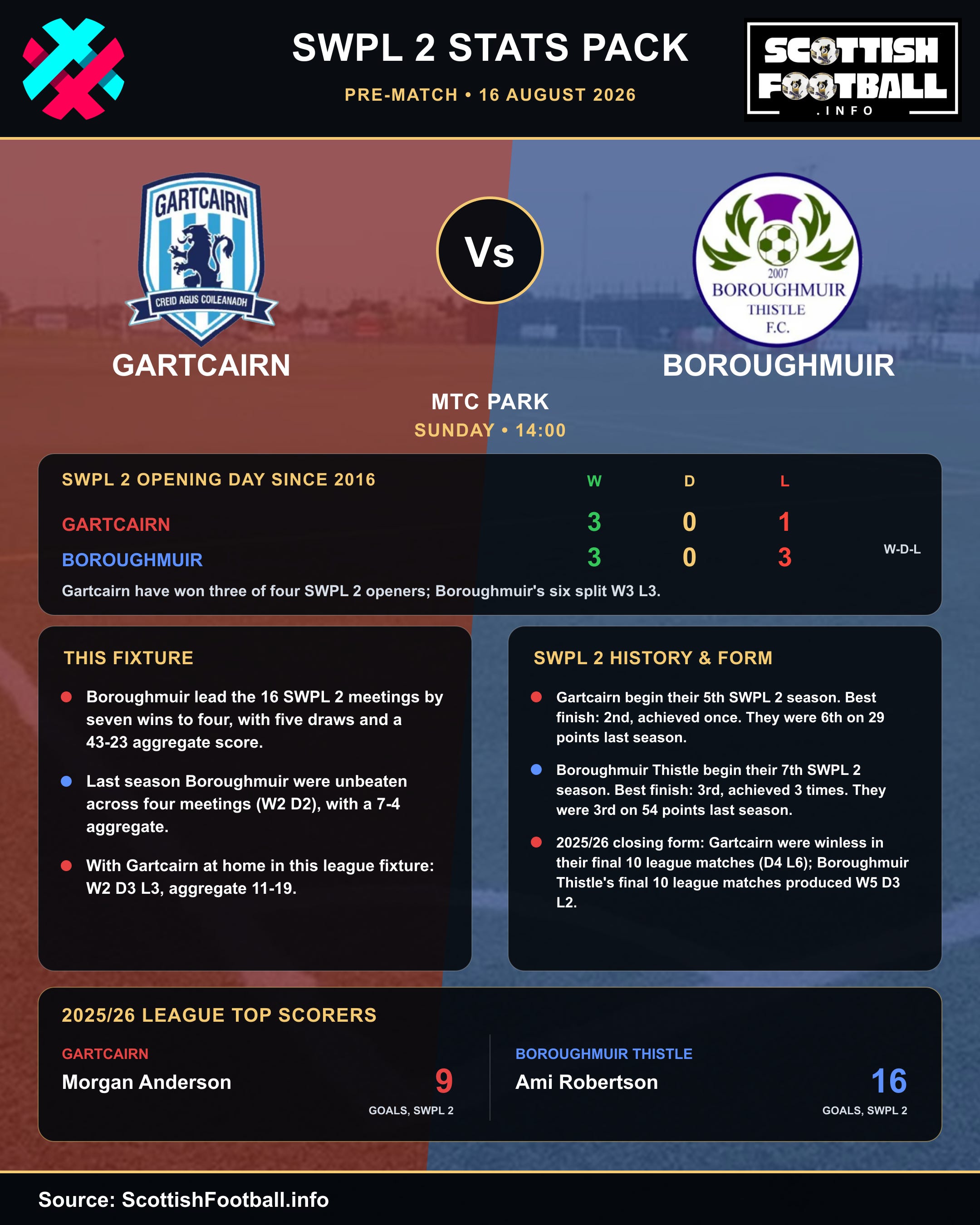
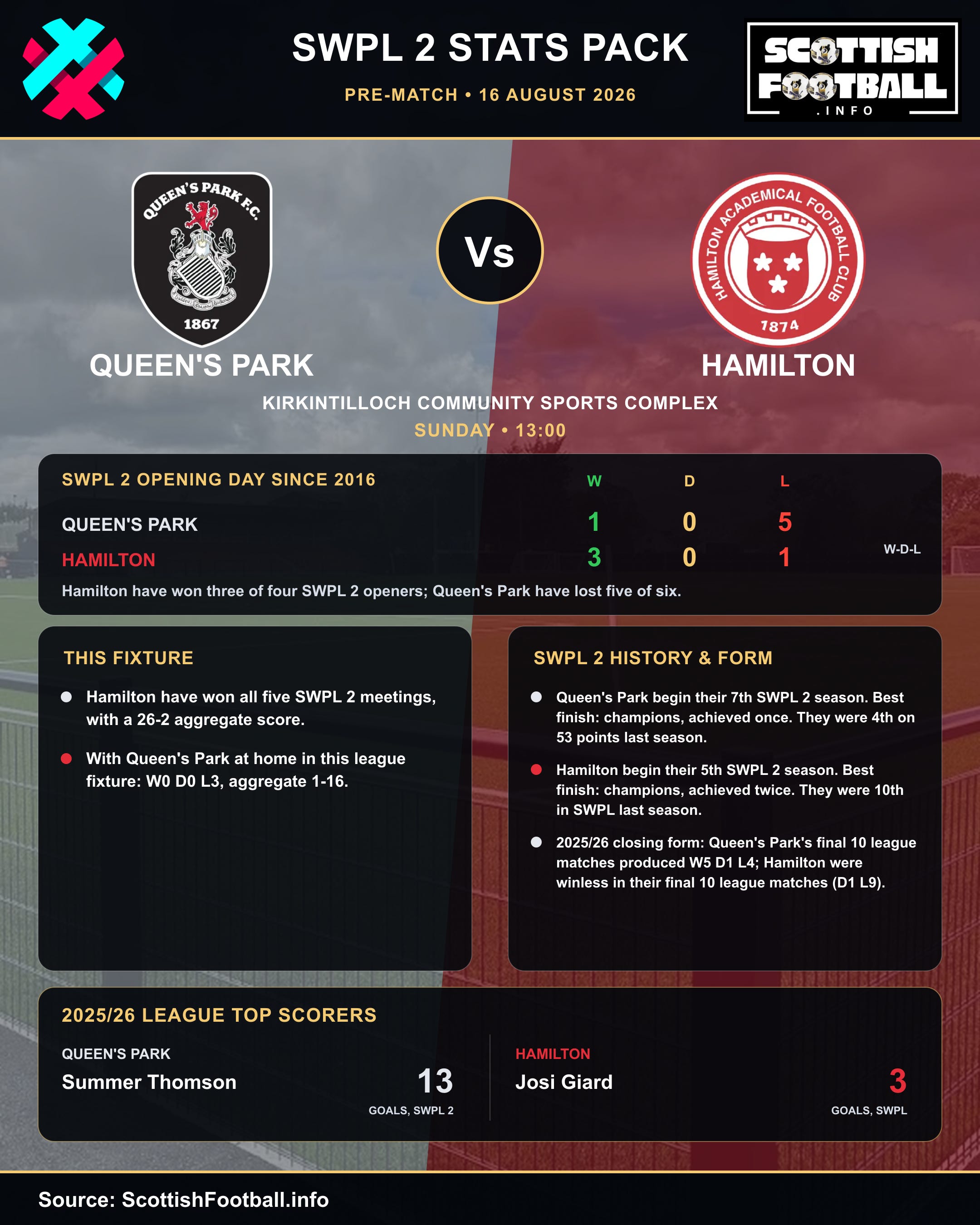
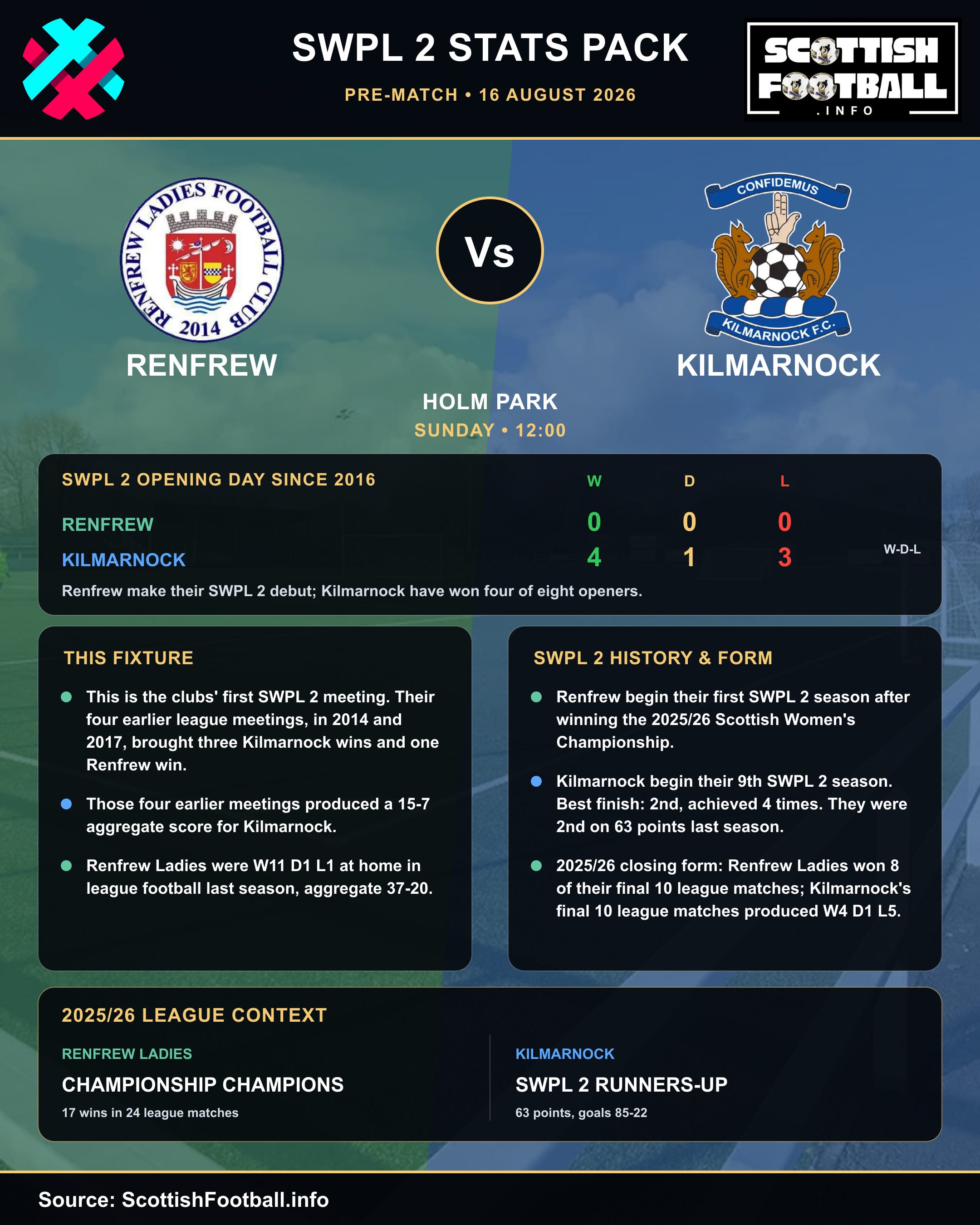
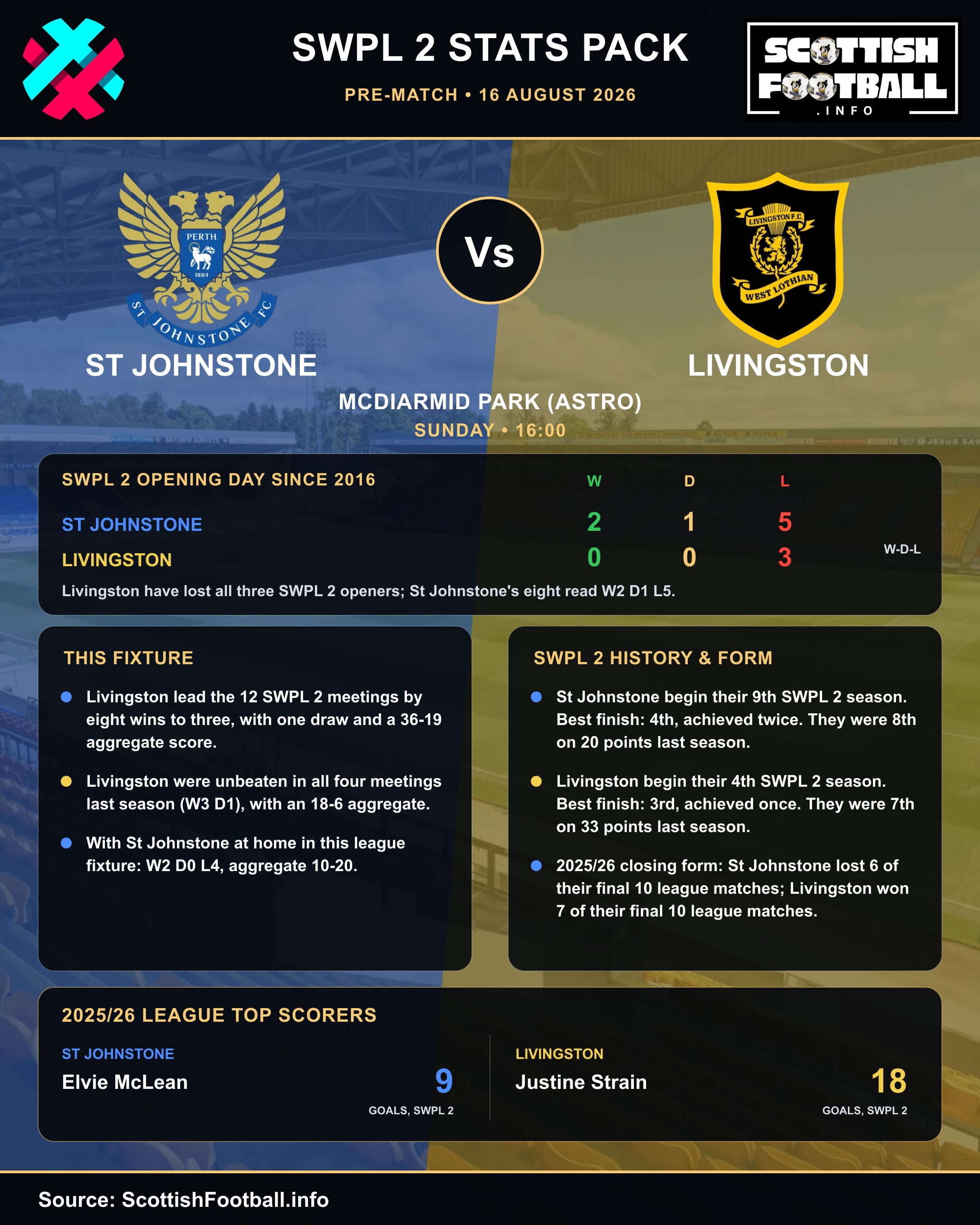
The following SWPL Stats Packs will be created and posted weekly, as I do for the men’s SPFL leagues. If you are interested in becoming a guest writer for the website covering the women’s game, then please get in touch by message or email: scotlandscoefficient@gmail.com
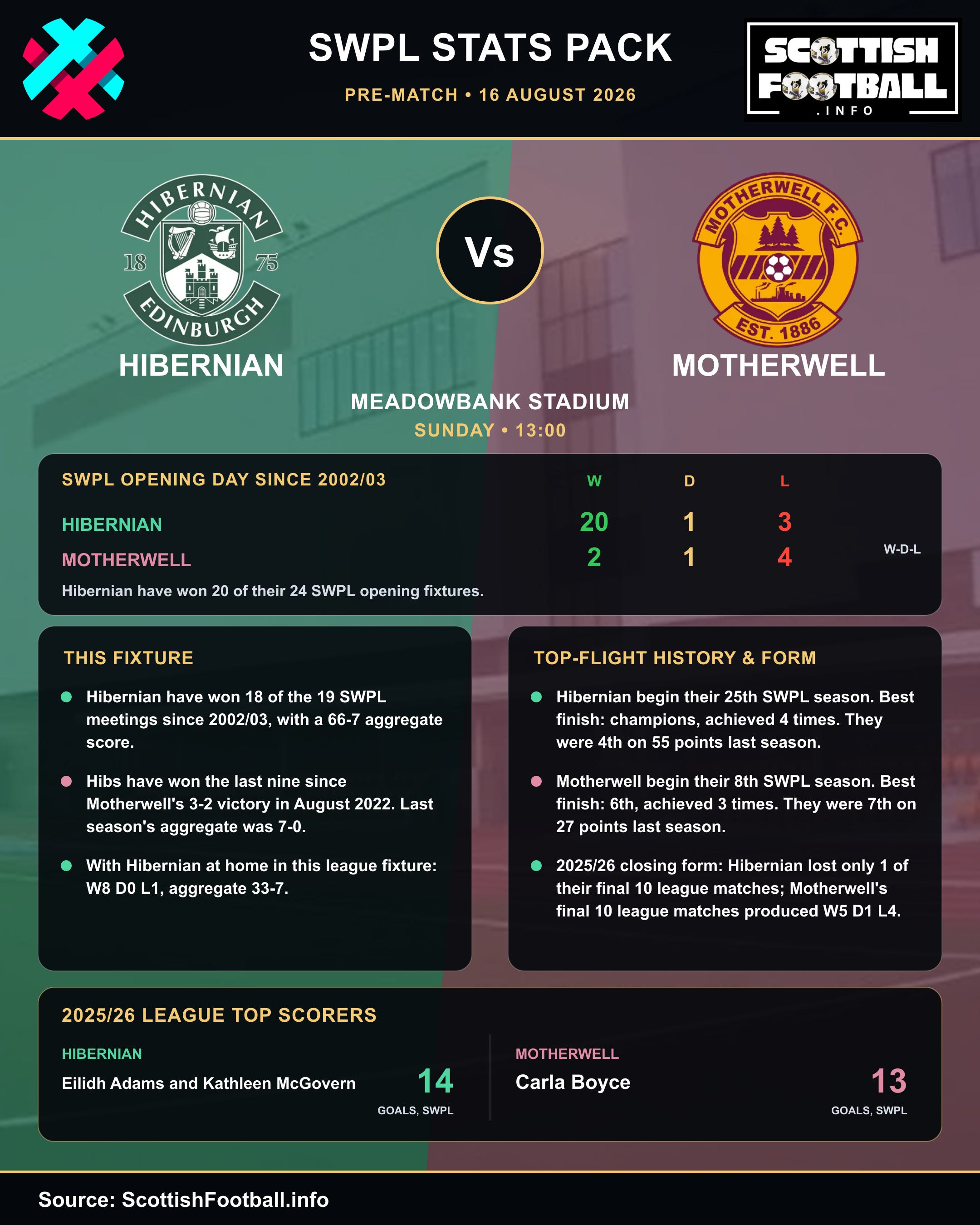
SWPL Stats Pack - Week 1
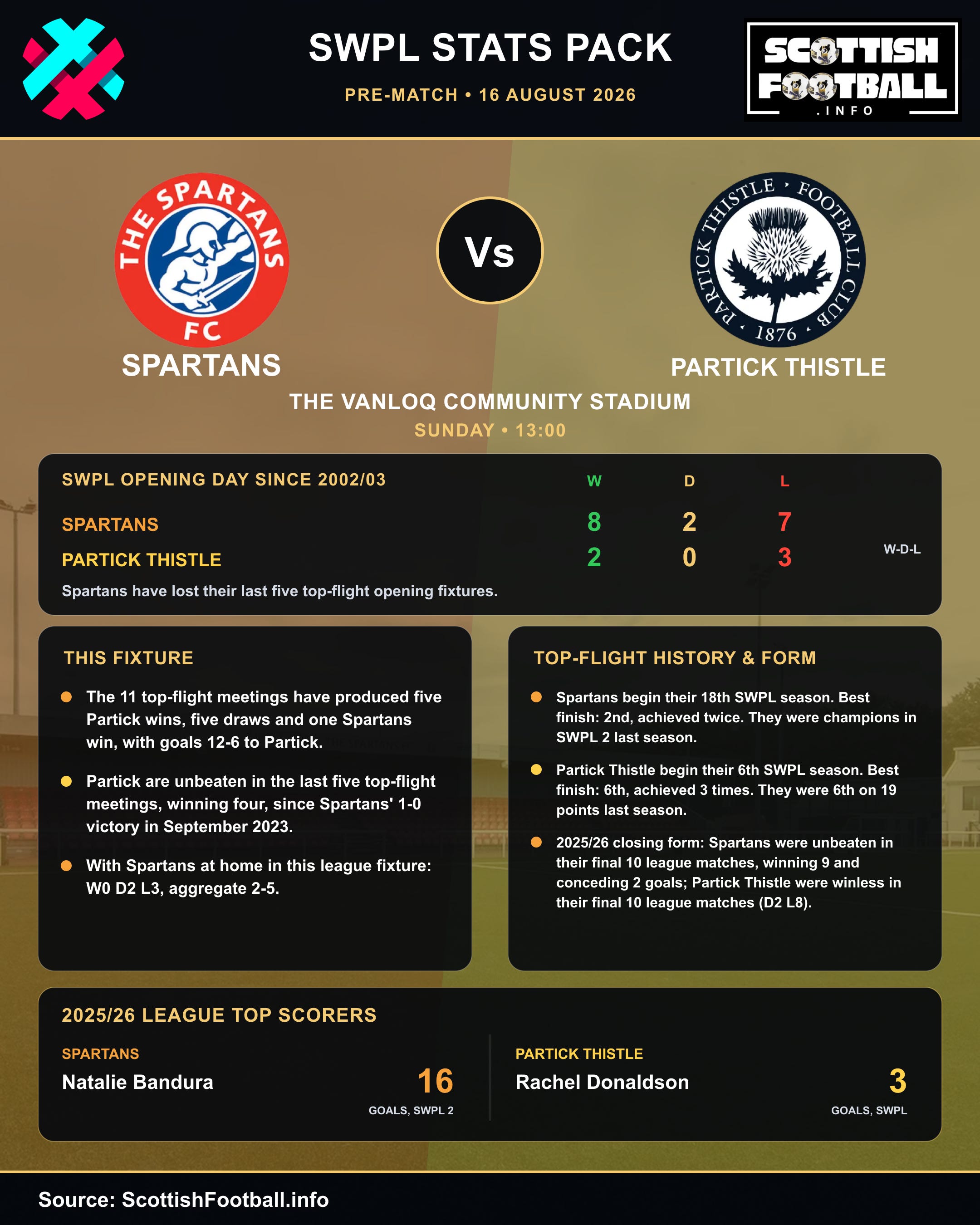
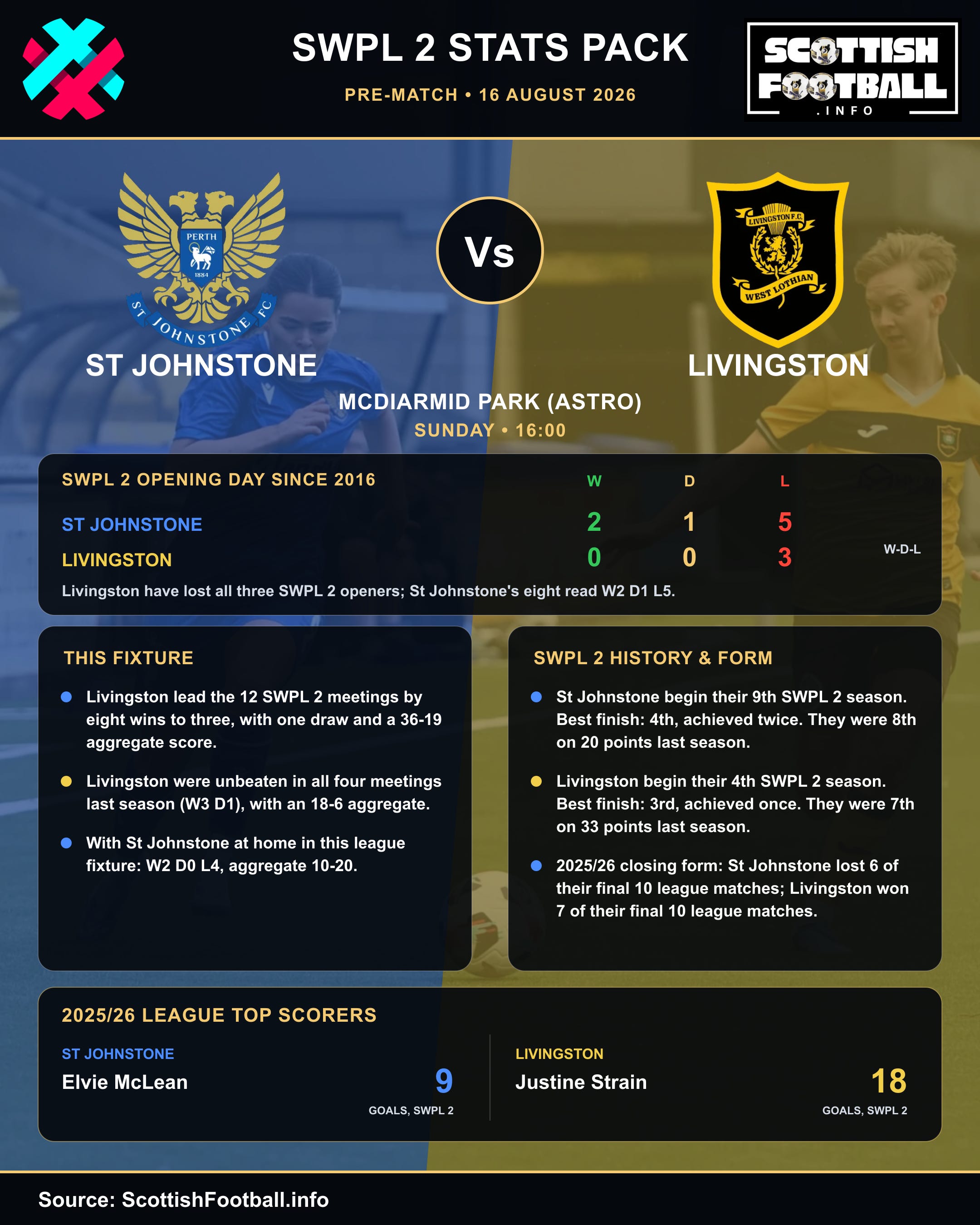
SWPL2 Stats Pack
Thanks very much for paying me for the time and effort that goes into this website. It’s greatly appreciated!