

The Motherwell Football And Athletic Club LTD: Annual Report - Year ending May 2025
A marginal loss for Motherwell in an overall positive financial year

Motherwell’s accounts for 2024/25 have been released, covering their fortieth consecutive year in top flight Scottish football. Only Celtic (130 seasons) and Aberdeen (101 seasons) have enjoyed a current longer consecutive stay in the top-flight. The accounts under review cover a year in which Motherwell finished eighth, with 17 losses and 49 points from 38 matches.
Dead rubber bottom six post-split fixtures were becoming a regular occurrence for the Well. Since 2016/17, Motherwell have finished in the bottom six in 7 of 9 seasons (78%), which is in stark contrast to the decade that came before - where they were top six regulars, including finishing 2nd (twice) and 3rd (twice).
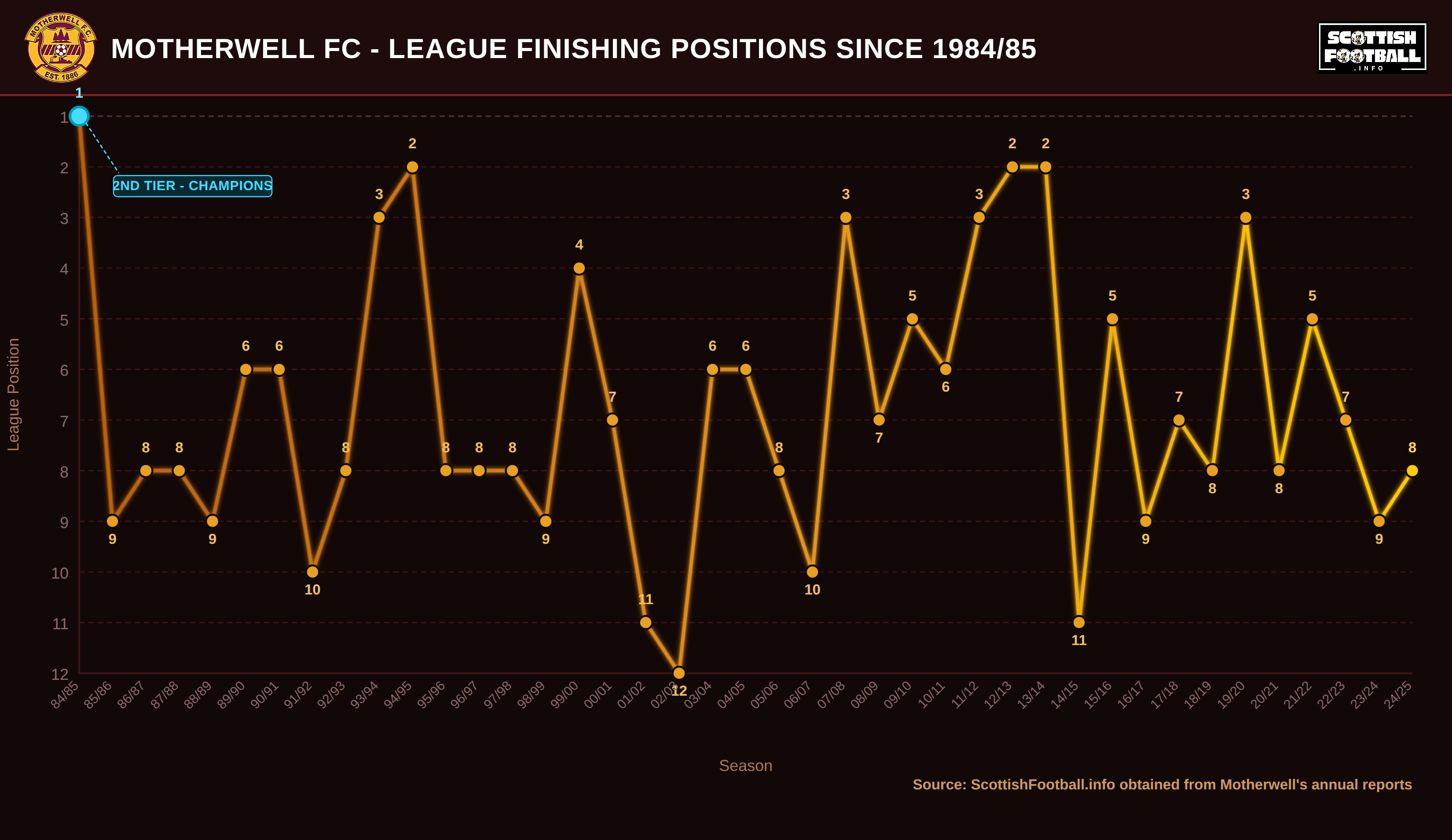
Nearly 25 years ago, Motherwell entered administration in 2002/03 and went on to finish 12th; being spared relegation on account of Falkirk falling foul of the SPL regulations requiring a 10,000 seater stadium. From the following season (2003/04) until 2015/16, Motherwell finished in the bottom six in only 3 of 13 seasons (23%). It’s quite a swing to then go from that to 7/9 seasons in the bottom half.
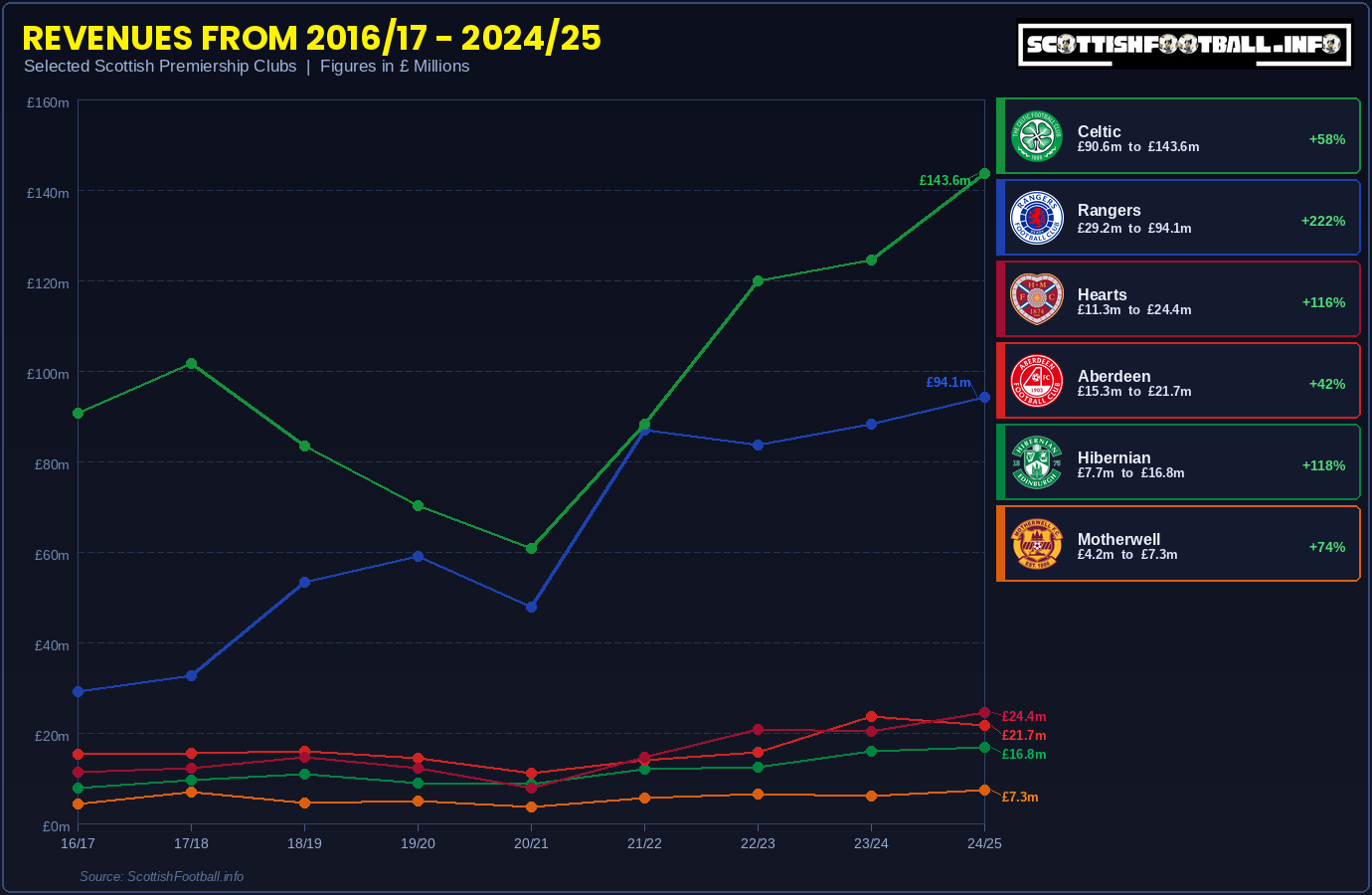
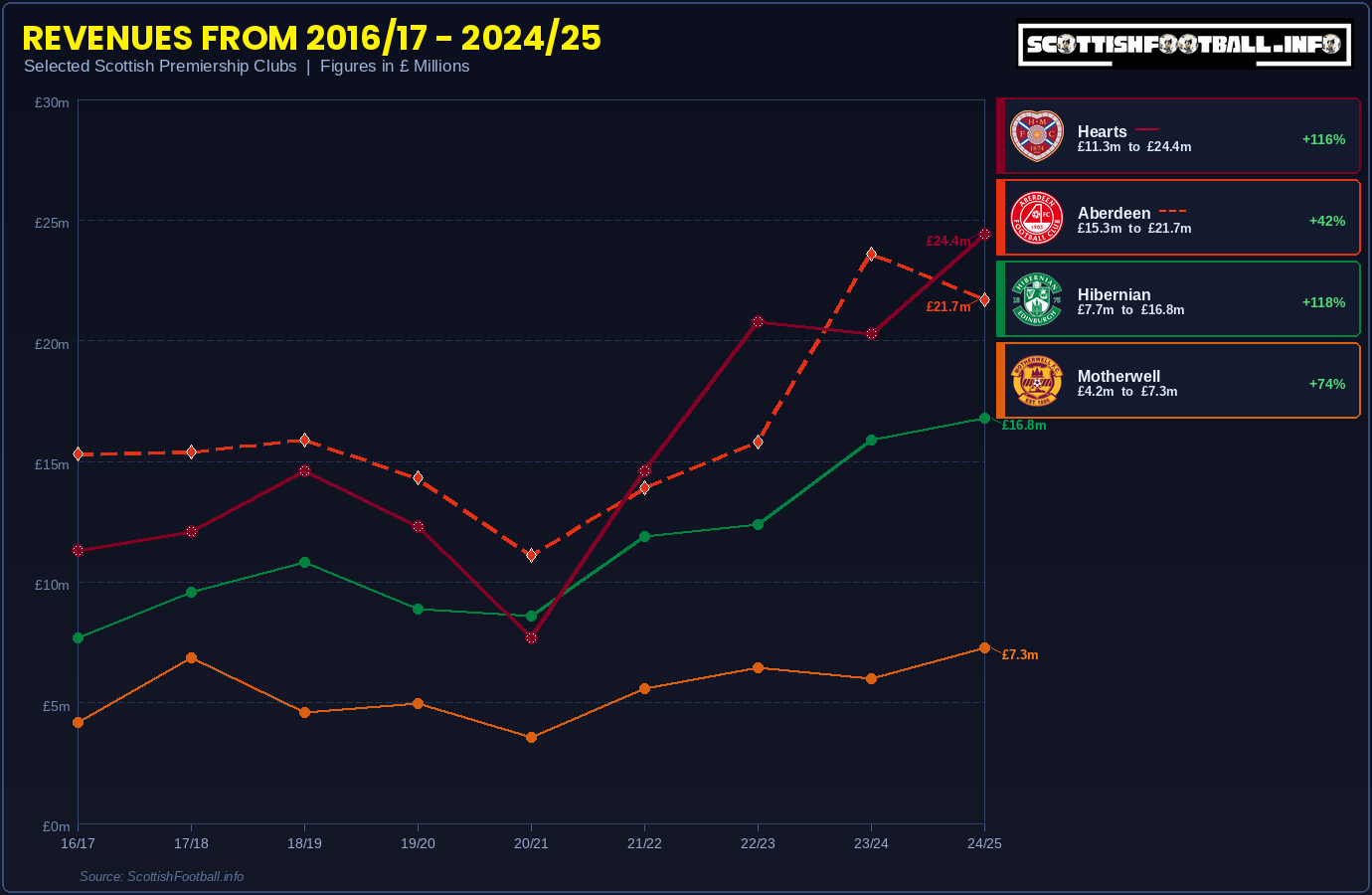
However the context to Motherwell’s decline in league finishes would be that the financial landscape has changed significantly over the last decade. The return of Rangers reduced the number of top six spots available straight away. But more than that, I wrote last summer about the growing gulf in the Scottish Premiership between the ‘big five’ and the rest of the league. This highlighted how the financial gap has widened between ‘smaller’ clubs like Motherwell and the ‘bigger’ clubs; Hearts, Hibs and Aberdeen. Despite the ‘Well seeing a 74% growth in revenue since 2016/17 - more than Aberdeen’s 42% growth over the same period - the actual £ difference between the two has grown from £11.1m to £14.4m.
The gap between Motherwell and Hearts has grown by £10m in less than a decade, with the difference rising from £7.1m to £17.1m. These figures demonstrate that for a fan owned community club - with the 9th highest budget in the division - avoiding relegation is a realistic base target, with anything else a welcome bonus. Breaking into the top six, while (likely) finishing above both Hibs and Aberdeen - is seriously impressive given the financial disparity.
These accounts run to the end of May 2025, just before Motherwell entered the new season under their third manager in six months, hoping they could outperform their budget and reverse this bottom six trend.
Of course one year later and Motherwell are winning plaudits across the country, as they currently sit 4th with 57 points, which is already their highest points total since 2014. Motherwell had five players voted in to the PFA team of the year - more than any other club, which is testament to the club’s performances this year.
While on the park things have had an almost extraordinary upturn, the current season was built from a relatively healthy set of financial accounts last year, which will now be analysed in considerable detail, including:
Revenue: SPFL, cups, UEFA solidarity & the fans
Expenses: a high wage/revenue %, but a small overall wage bill
Player Trading: reliant on this to break even, a potential risk
Future outlook: small loss likely to turn profit in coming seasons, thanks to Lennon Miller sale last year and improvement on the pitch this year
If you are not yet a member here, please consider taking out a 7-day free trial to read this and 350+ other articles & videos before deciding if you think £25 per year is fair value for money.
REVENUE
Motherwell list two revenue figures in their report, the standard turnover figure used by most clubs, but then an additional overall income figure which includes both other income & profit made on player sales. As far as standard turnover goes, this was a record season for Motherwell as they brought in £7.3m, a significant £1.3m (21%) increase from the previous year.
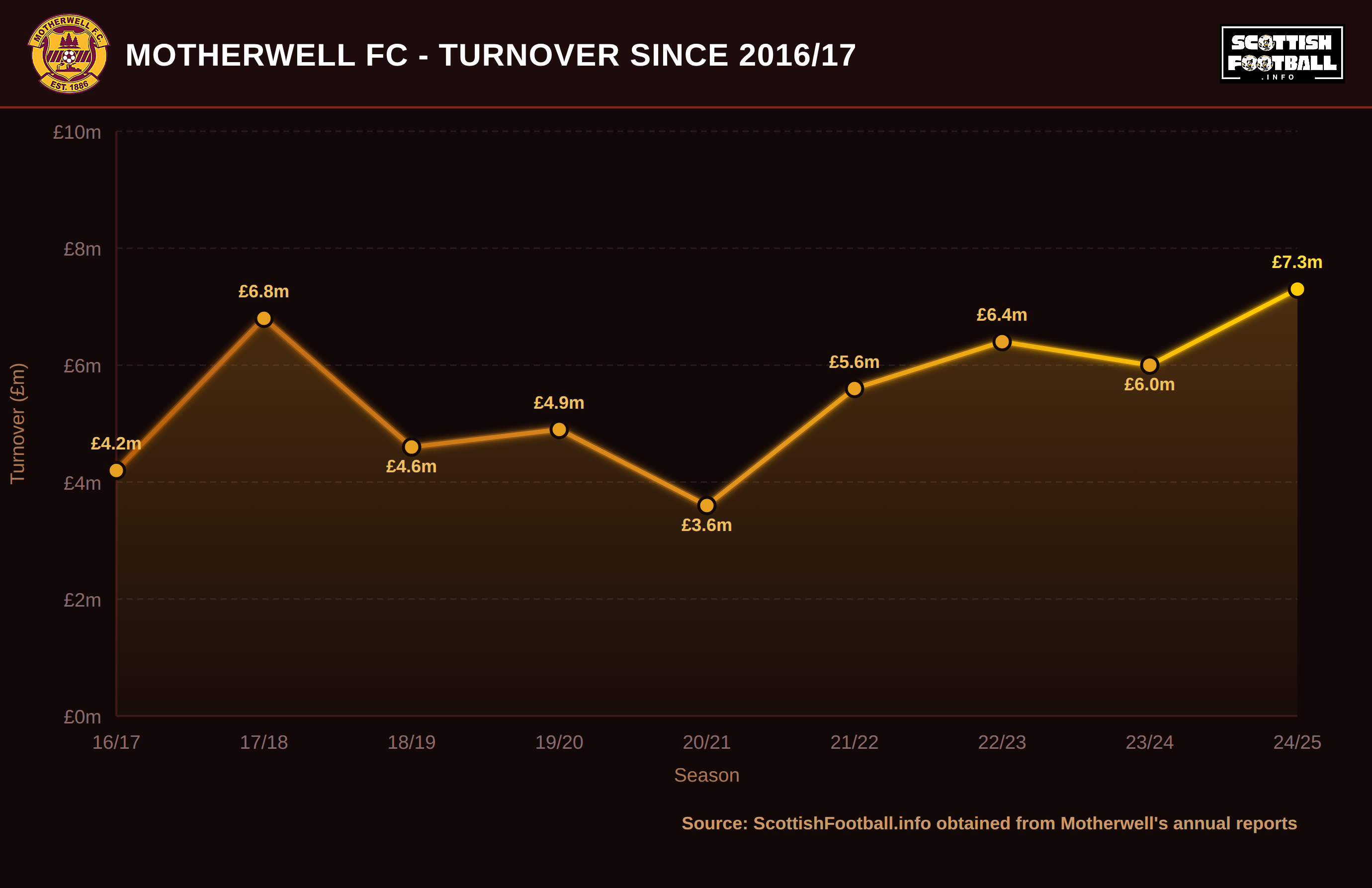
For overall income, their figure of £8.7m wasn’t quite a record year as it can be beaten by the £10.5m recorded in 2020/21 - the behind closed doors season where they registered £0m in gate receipts.
The 2020/21 number was thanks to
£1.5m from a £2.95m Scottish Government loan appearing as revenue (the rest went to the balance sheet)
£2.29m of business interruption insurance due to covid-19
£2.8m of transfer income (the bulk of which was from the the club record sale of David Turnbull)
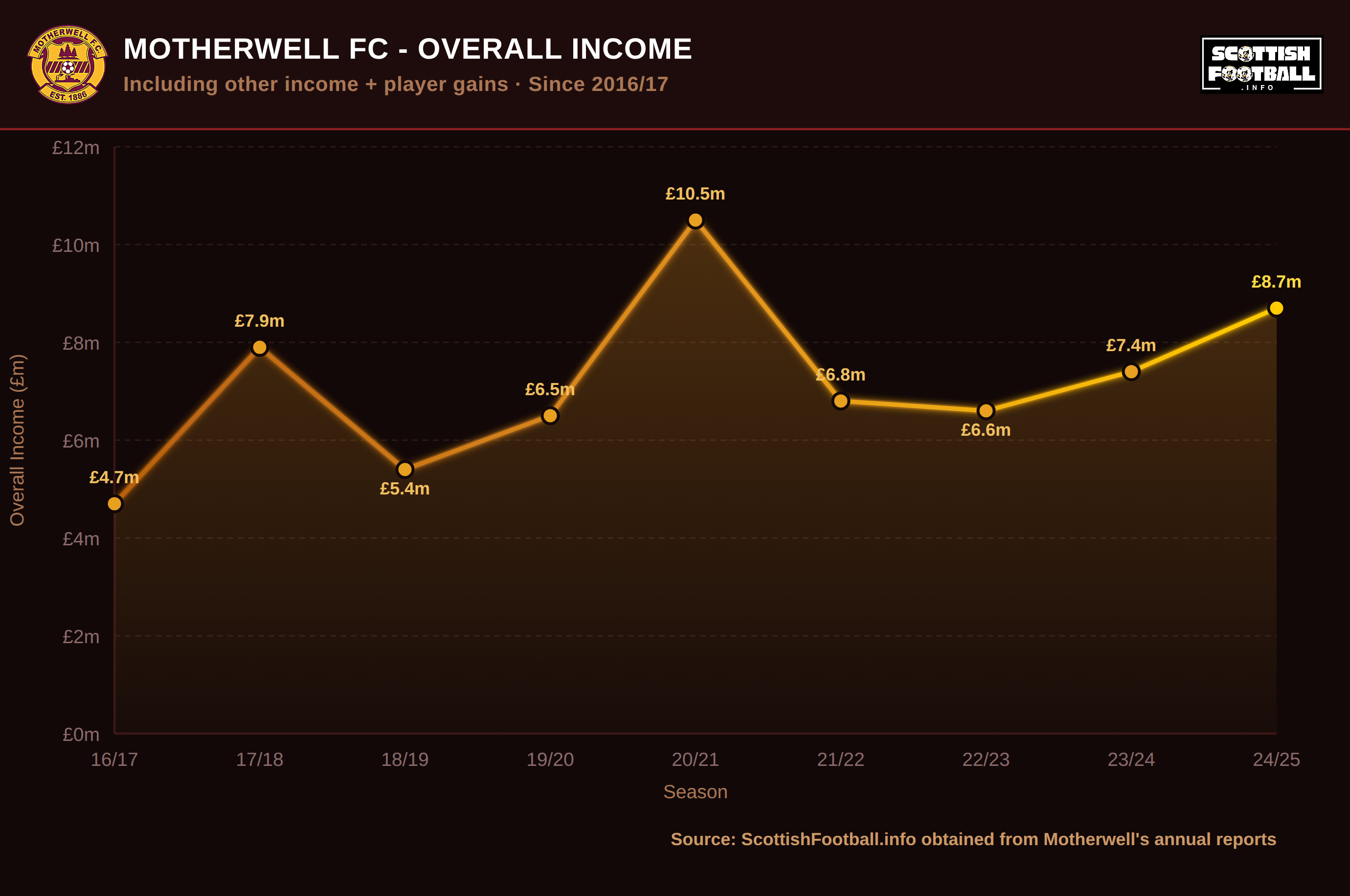
The growth in income in 2024/25 was welcome for Motherwell, and comes despite the fact that the main driver of financial growth amongst Scottish clubs has not been seen at Fir Park since 2022 - European football. Furthermore, Motherwell not only finished in the bottom six once again, missing out on one lucrative Old Firm visit to Fir Park, but they were also the unlucky team given just 18 home matches instead of 19, due to the SPFL’s post-split fixture balancing.
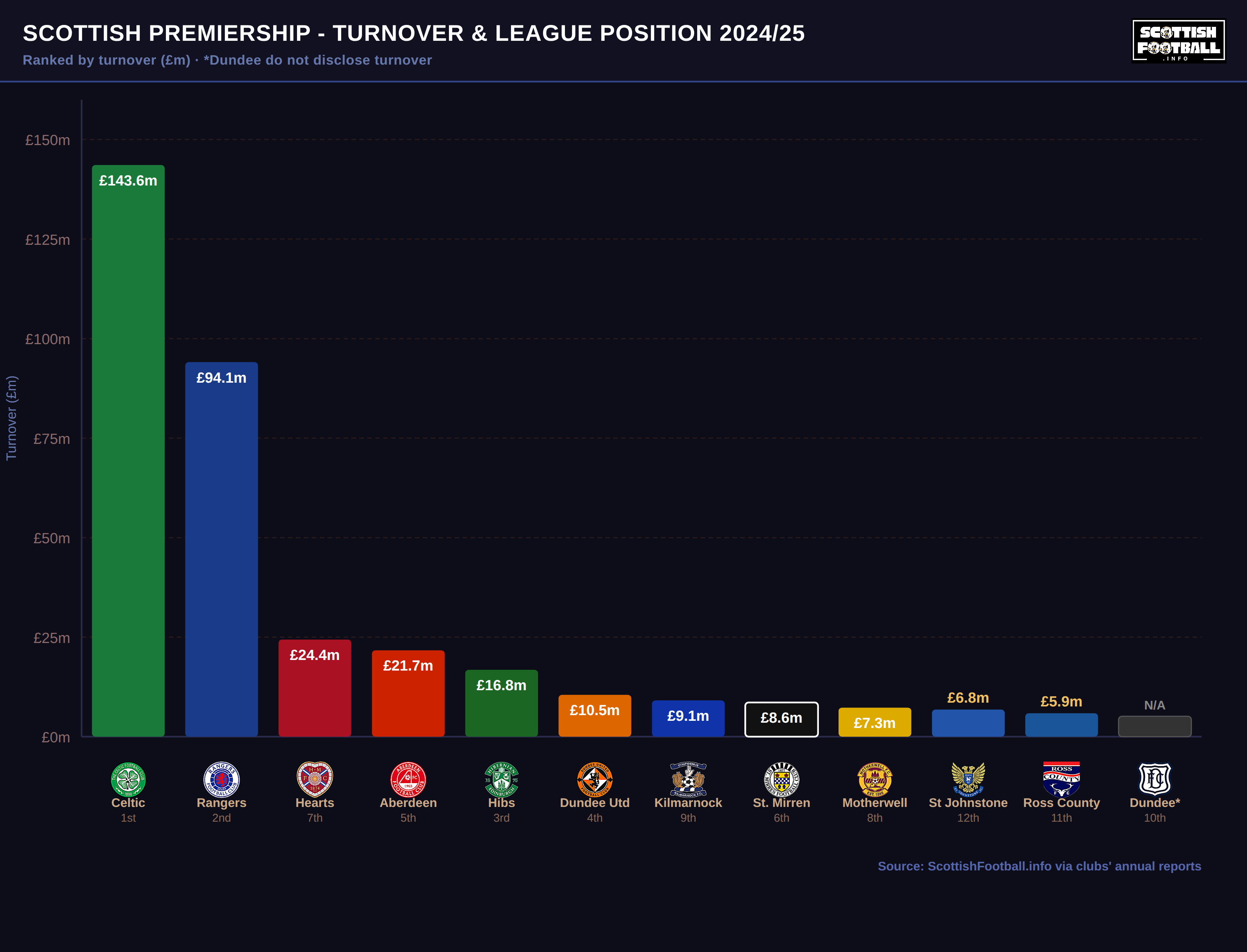
Despite the growth last season, Motherwell still had only the 9th highest turnover in the division, and so their 8th place finish was about as the finances would ‘expect’. It also makes the incredible upturn in performance in the current campaign (2025/26) all the more impressive.
The rise in turnover was driven by various different revenue streams, and we will now review the three biggest earners for Motherwell, 1.) prize money, 2.) solidarity payments and 3.) the fans.
I’ve teamed up with ‘Boot & Ball’ to promote their Scotland national team playing cards.
These will make a perfect addition to the sporrans, especially for the 8-hour upcoming flight for many of us in June!

1.) PRIZE MONEY EARNED
Although the performance levels last season under Stuart Kettlewell and Michael Wimmer weren’t as high as has been seen under Jens Berthel Askou this season; Motherwell’s league position still improved from the year before. SPFL prize money increases by league position and so Motherwell’s 8th place finish - one higher than the previous year’s 9th - meant a greater financial prize. The SPFL have continued to grow the overall pot year-on-year and so Motherwell earned £1.93m for finishing 8th, an increase of nearly £200k from the £1.76m received a year earlier for finishing 9th.
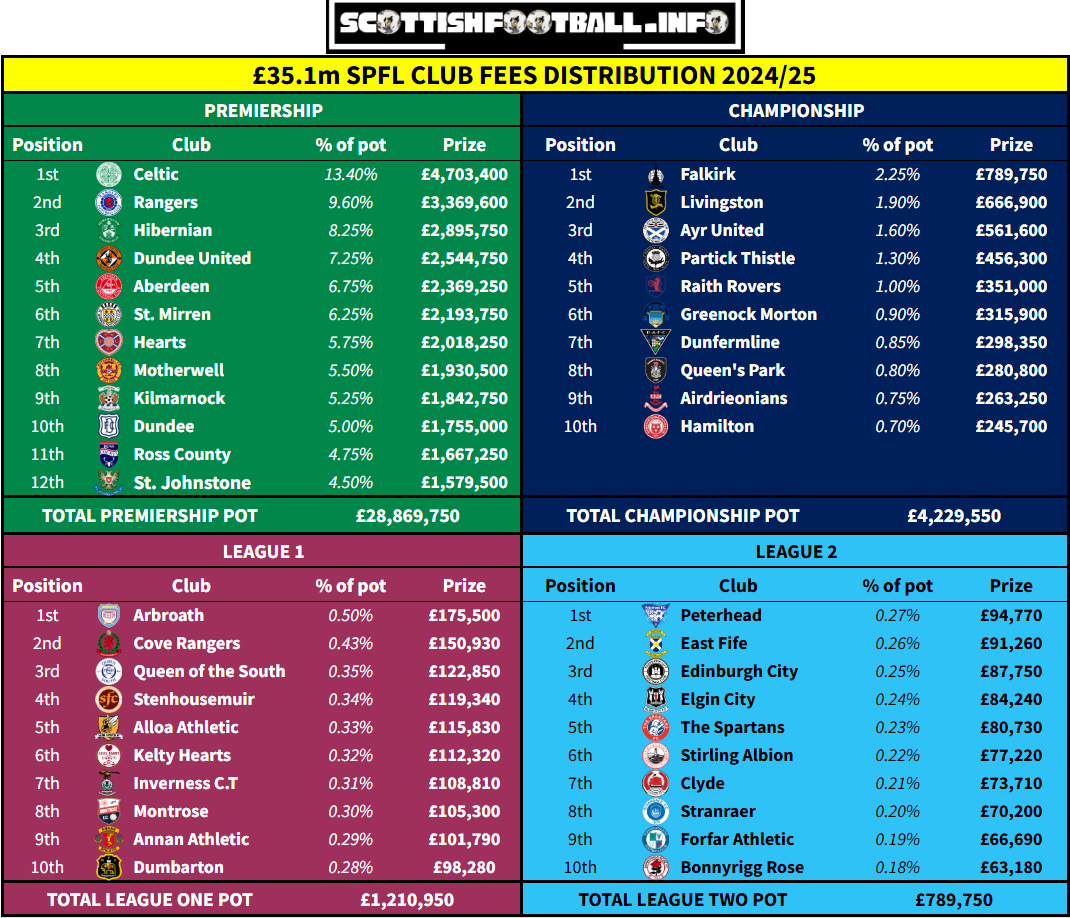
Motherwell state that broadcasting income rose by £278k, thanks to the increase in SPFL club fees laid out above, but also due to the new income stream from the Premier Sports facility fees - which I calculated to be worth £75,000 + VAT per club.
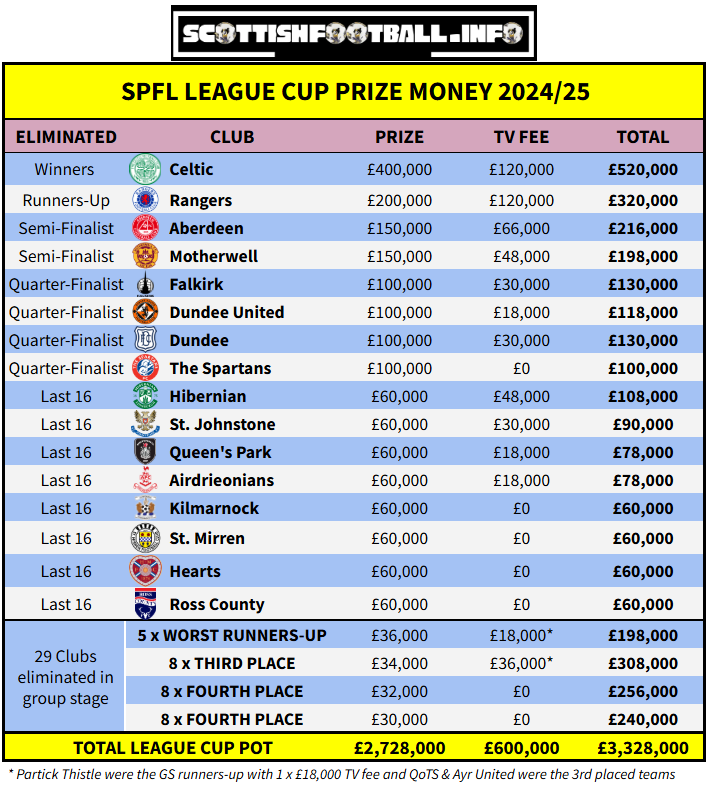
In the domestic cups, the League Cup was relatively successful as the Steelmen reached their first Semi-Final since 2017/18, where they lost out 2-1 to Rangers, after leading 1-0 at half time through an Andy Halliday goal. This brought a little under £200k in prize money, which comprised their Semi-Final elimination payment (£150k) and the £48k in TV money for their two televised fixtures (Vs Partick Thistle & Vs Rangers).
In the Scottish Cup, Motherwell lost 1-0 at the first hurdle at McDiarmid Park as St Johnstone progressed to the last 16. Their elimination payment from the SFA was only £23,000, with no TV facilitation payment; meaning total domestic cup revenue of £221,000.
The value in a cup run is not just the elimination payments though; the ticket sales from two additional home matches and the Semi-Final gate sharing would have more than doubled this figure. The gate receipts from the two Semi-Finals are pooled and split equally between the four clubs, after costs have been deducted. Therefore, two Semi-Finals of Motherwell Vs Rangers and Celtic Vs Aberdeen are actually ideal for a club like Motherwell, at least from a financial point of view - as it maximises revenue when both Semi-Finals are sold out.
If we look in the current season (to be reflected in next year’s accounts), in which Motherwell again made the Semi-Final of the League Cup, a Motherwell Vs St Mirren tie resulted in 30,000 unsold seats - and so less ticket money for all four sides.
Furthermore, as with most things in football, the costs associated with staging games at Hampden have increased too. More police officers are drafted in for cup Semi-Finals than would be needed at Fir Park for a normal league match for example, and the clubs bear the cost of this. Therefore despite Motherwell reaching the same stage, of the same tournament, playing in front of the same number of Motherwell fans - it’s likely Motherwell generated over £100k less this year compared to last.
2.) SOLIDARITY PAYMENTS
One of the biggest boosts to turnover was the money received from UEFA. Firstly, the “UEFA Club benefits programme”, which is money paid to all clubs in Europe for releasing players to UEFA national team competitions. The figure disclosed by UEFA in 2025 stated Motherwell received over €300k, covering two Nations League campaigns, all European Qualifiers and EURO 2024. I previously calculated a payment of €174k to Motherwell, thanks to Liam Kelly signing a short-term contract before re-joining Rangers, to ensure Motherwell would receive the UEFA compensation.
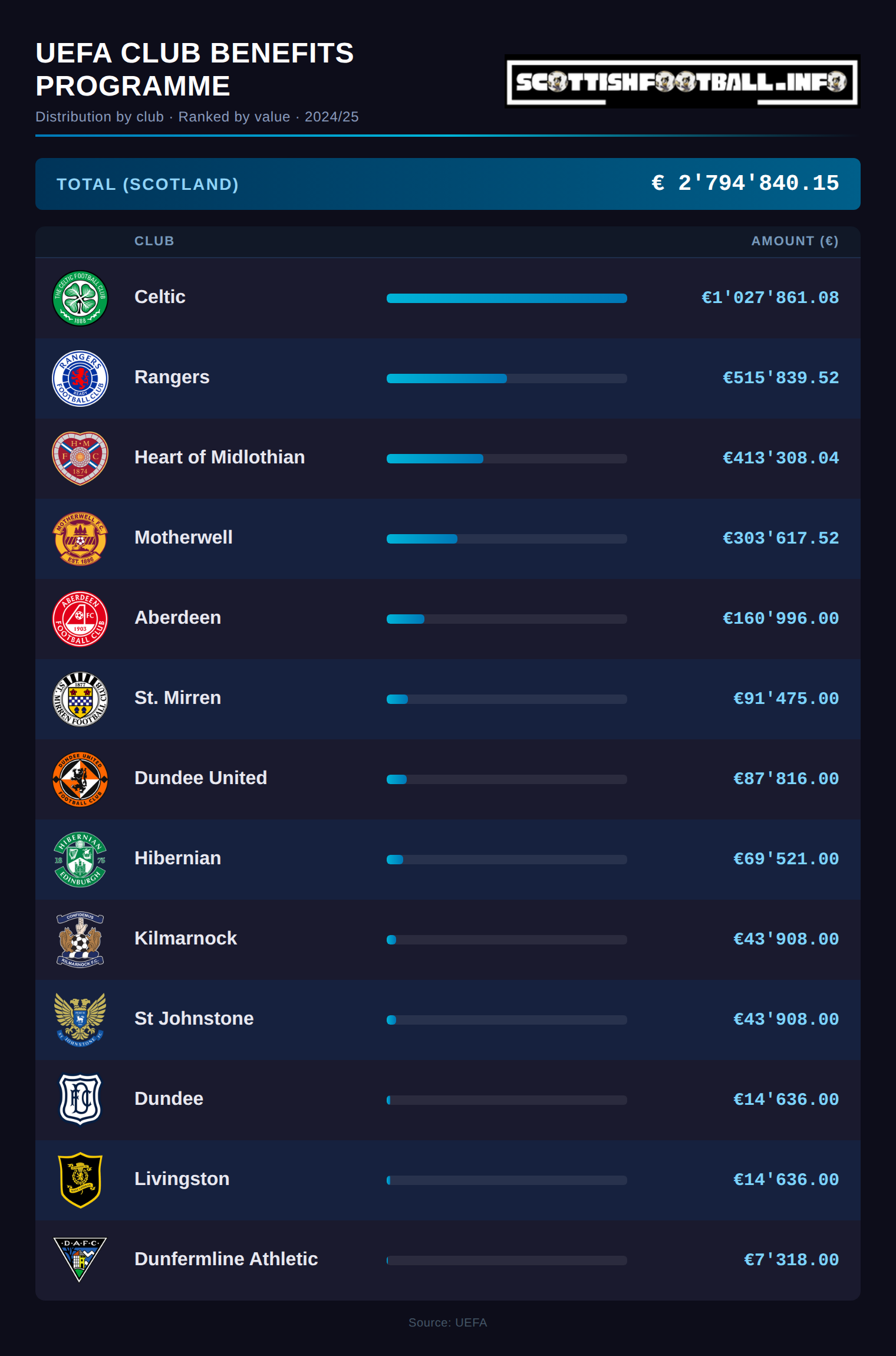
Motherwell account for this under “SFA licensing & IPP (International Player participation)”, which brought in £136,560 in 2024/25. This is the highest such payment since the £264k received in 21/22 when Stephen O’Donnell and Declan Gallagher were in Scotland’s Euro 2020 squad. In the two previous financial years Motherwell recorded IPP of £45k and £78k, giving a three year total of £259k (€300k).
One thing to note however is the €300k received from UEFA will not all be pure profit, as occasionally the clubs don’t always retain all of the payments. For example, if a player is loaned out then a common caveat in any loan agreement would be that the club taking the player on loan would be the beneficiary of any such payments for releasing the players.
Similarly, and especially in the modern game, a players’ agent will always represent the best interests of the player. This may mean that for example in the case of Liam Kelly signing a new contract, a percentage of UEFA’s fee to Motherwell may have gone directly to the player as part of the agreement to sign a short-term deal. Therefore although Motherwell did receive the full €300k payment over three years from UEFA, some of this will then flow directly to other parties.
Note - no such fees exist for releasing players for AFCON, so Motherwell will receive no payments for losing Tawanda Maswanhise for 4 weeks earlier this season, for example.
Even more lucrative than the Liam-Kelly-Scotland-Euro-2024 money was UEFA’s solidarity payments - which are distributed via the SFA to all Scottish Premiership clubs that don’t play in UEFA group stage football. Last year I told that there would be record solidarity payments for Scottish clubs, as part of UEFA’s reformatting of European competition, resulting in two separate payments. This will have resulted in the largest ever solidarity payments of a little over £1m per eligible club.
