

St. Mirren F.C Annual Report - Year ending May 2025
A modest profit reported by the Saints - thanks largely to their European campaign

St. Mirren’s accounts for 2024/25 have been released, covering a year in which Stephen Robinson’s men achieved a historic third consecutive top-six finish. It can’t be understated just how big an achievement this was for the Buddies.
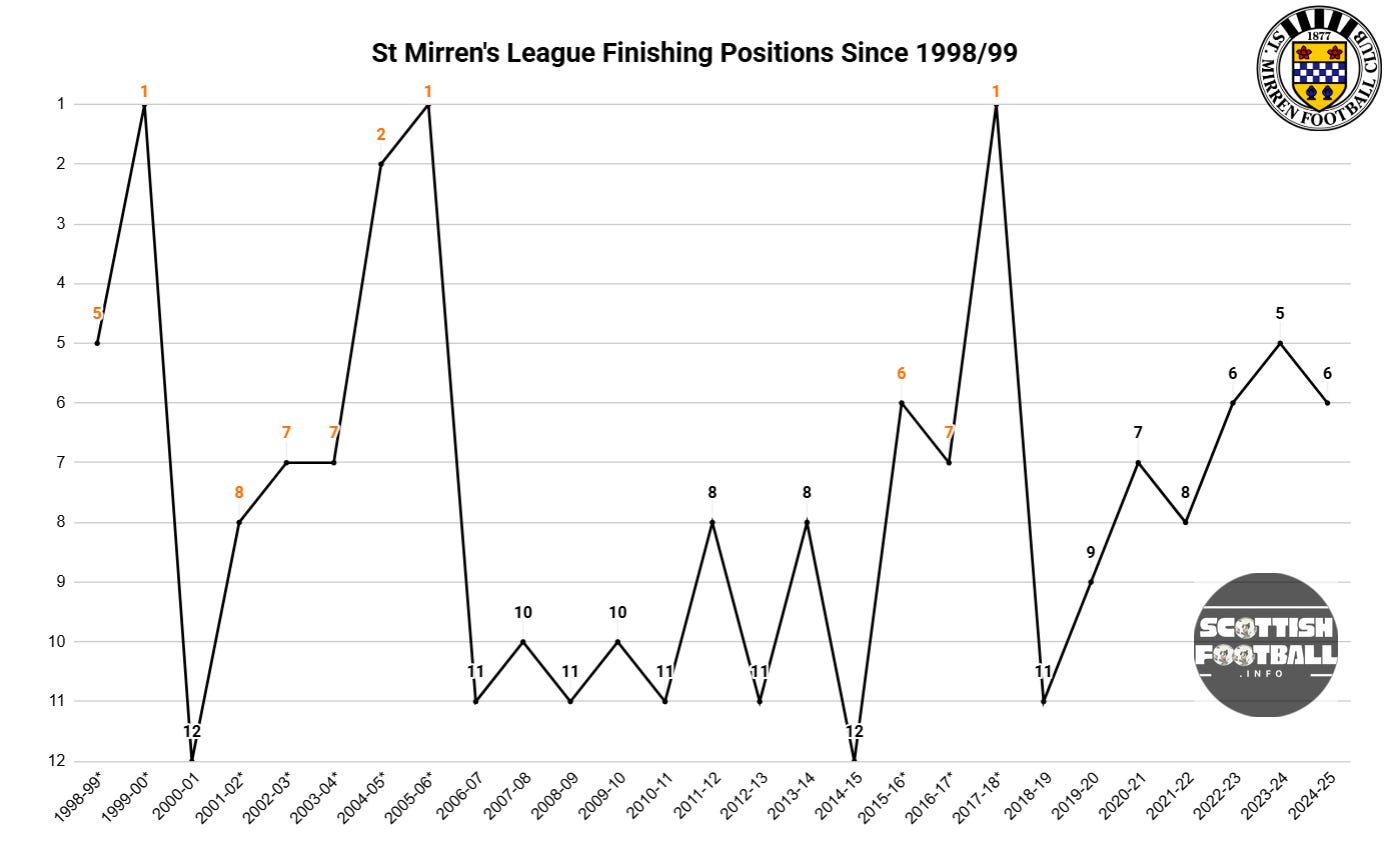
After finishing sixth in 2023 - their best top flight finish since 1985 - they went one better in 2024 when they reached fifth; qualifying for Europe for the first time since 1988. Last season’s sixth place finish was then secured ahead of Hearts and Motherwell, meaning St. Mirren became the only team outwith Rangers and Celtic to finish in the top six in each of the past three seasons.
It’s a remarkable performance on the park, but it’s clear even from the layout of the annual report that this isn’t the only focus of the club. Have no doubt, St. Mirren are serious about helping their community.
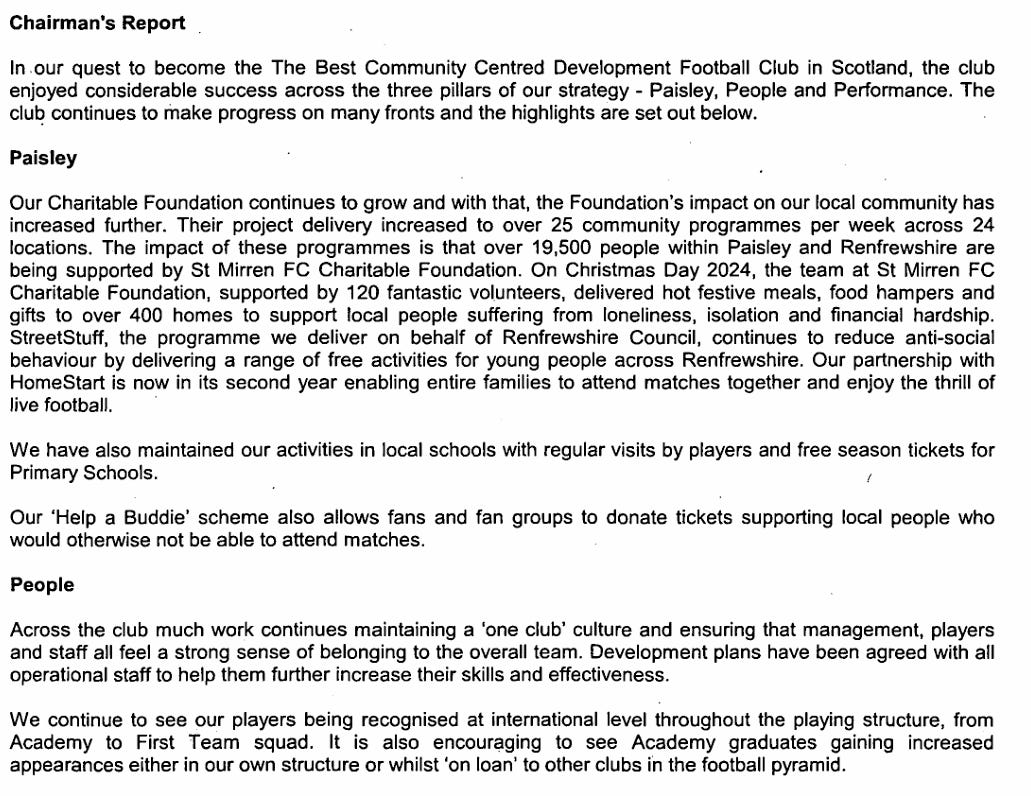
Most Chairman’s Statements begin with a review of the results on the pitch, or highlight any financial success stories off the park. Instead, St. Mirren’s John Needham starts by reiterating their desire to become “the best community centred development football club in Scotland”. St Mirren’s strategy has three pillars; Paisley, People and Performance; with performance mentioned last.
Financially, the Buddies are a well run club that lives within their means. and this analysis will now examine the accounts in more detail including:
Revenue: SPFL, cups, UEFA & the fans
Expenses: rising but under control
Player Trading: consistent but not transformative
Profits: record profit, unlikely to be repeated
Robinson’s parting gift: A trophy & Aberdeen compensation
The Nutmeg World Cup special offers an unparalleled 196-page blend of quality writing, fine design and wonderful photography. Offering nostalgic tales from new angles and unique insight on modern times, it is the perfect escape from the everyday before the tournament gives us many more.

Click here to buy your copy.
If you are not yet a member here, please consider taking out a 7-day free trial to read this and 300+ other articles & videos before deciding if you think £25 per year is fair value for money.
REVENUE
St. Mirren have posted record revenues for the fourth straight year now - a welcome trend in Scottish football that several clubs are achieving post-pandemic. The turnover of £8.6m was a massive 34% increase from the £6.4m recorded the year before.
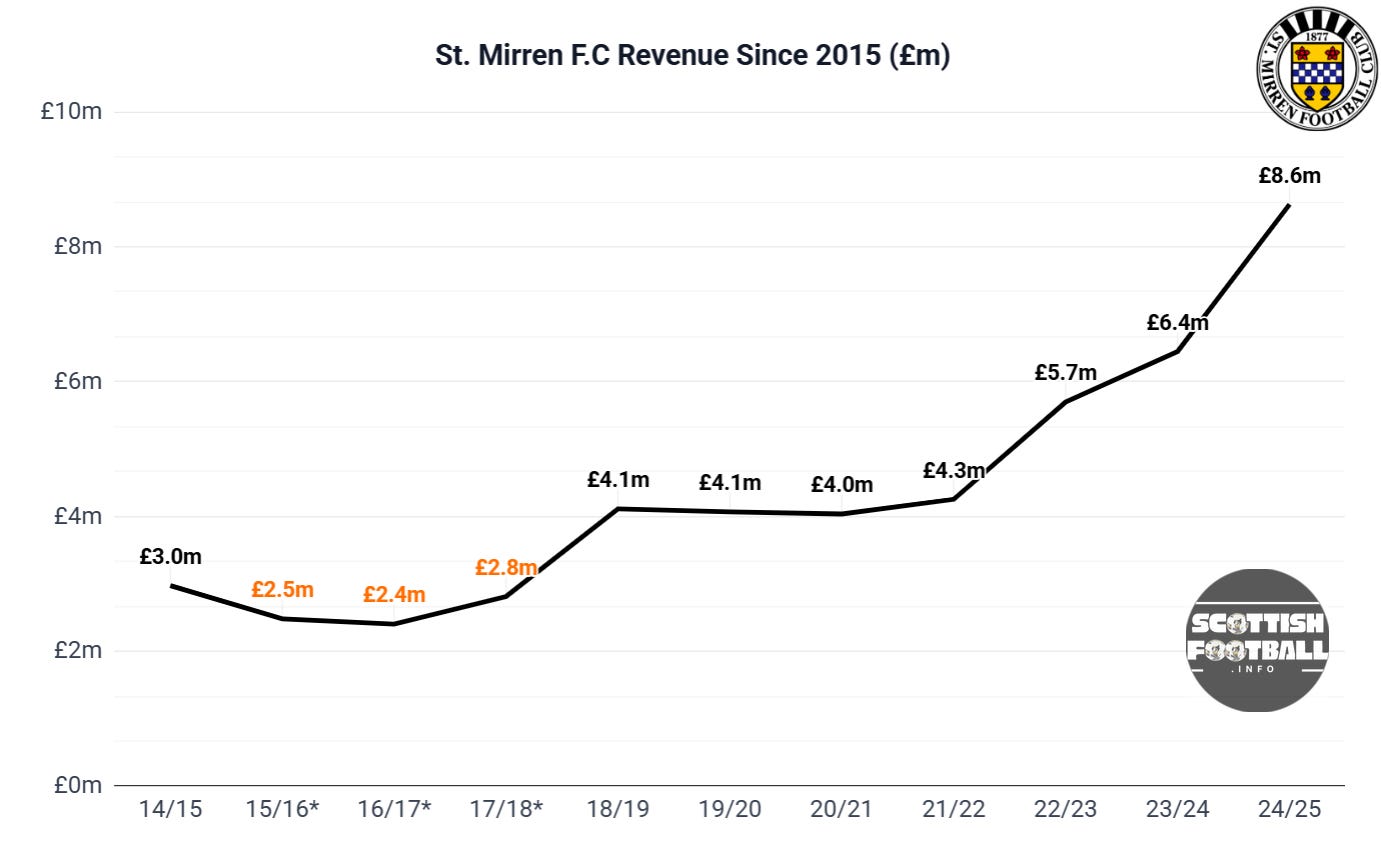
While very impressive turnover figures for a club of St. Mirren’s size, it’s a number unlikely to be repeated in the short term. As I’ll show in this article, much of the increase was driven by UEFA payments that will be significantly reduced in the next set of accounts.
However, even with turnover which was inflated above what St. Mirren can expect in a ‘normal’ season, finishing in 6th ahead of Hearts (who had triple the turnover) was still a fantastic achievement.
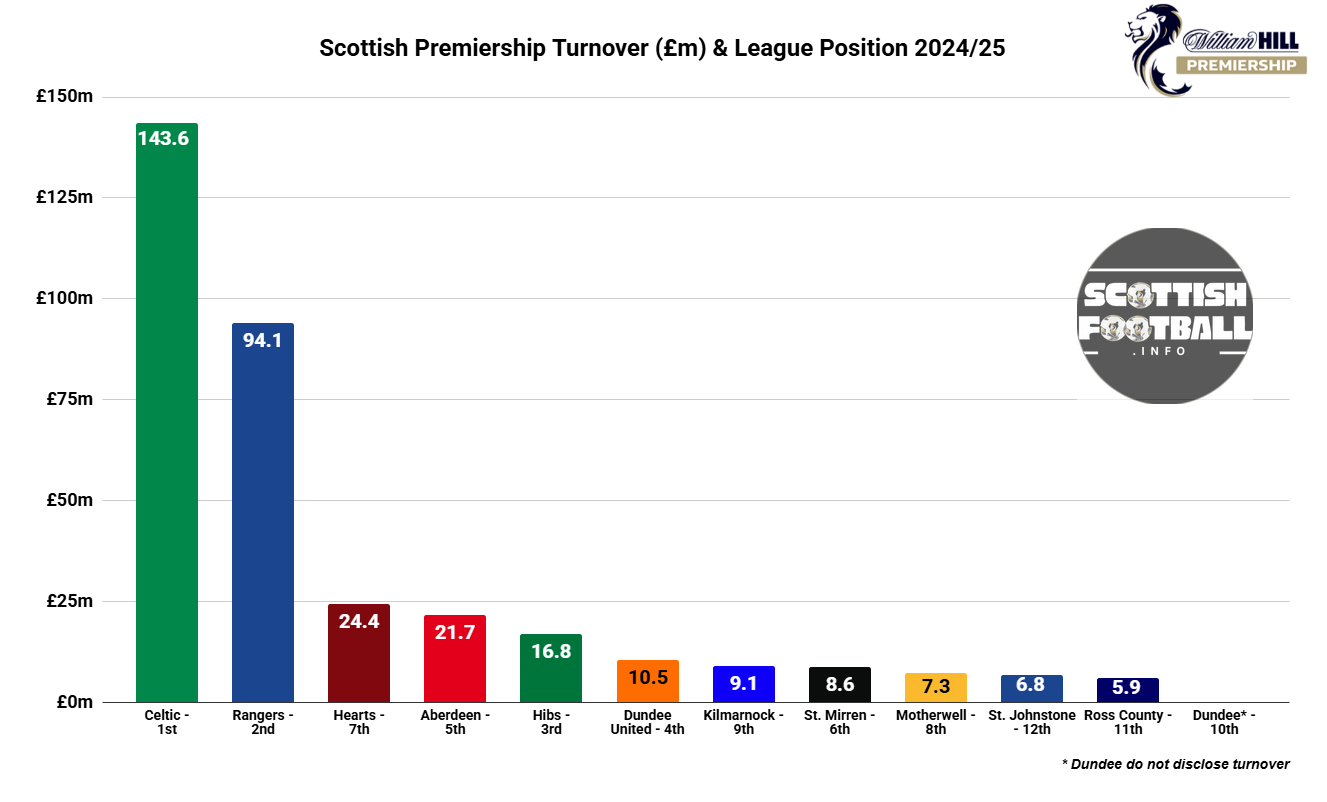
SPFL prize money increases by league position and so St. Mirren achieving a third straight top six finish was hugely beneficial financially. The SPFL have continued to grow the overall pot year-on-year and so St. Mirren’s 6th place finish was worth £2.19m - only a slight decrease on the £2.27m received for the fifth place finish in 2023/24, thanks to the growth in the SPFL pot.
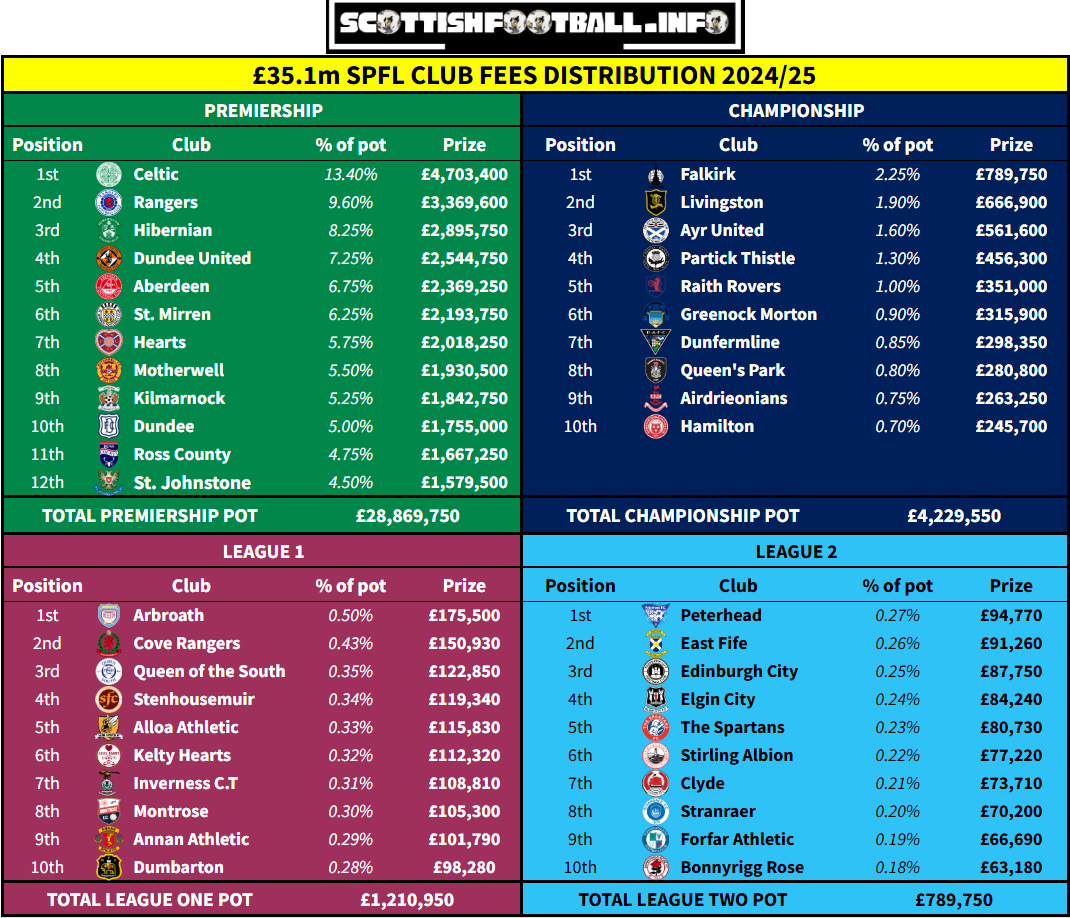
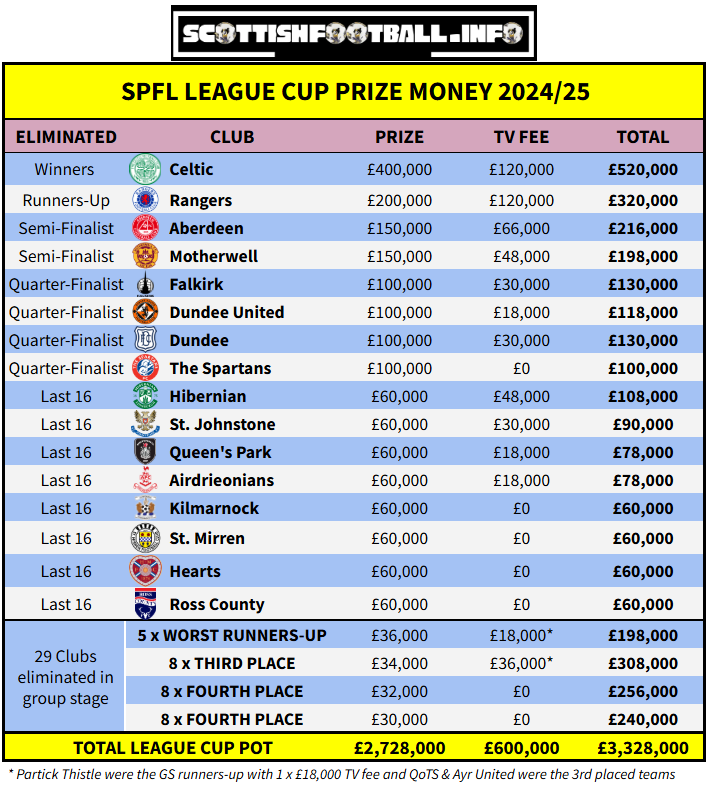
Although St. Mirren’s league campaign yet again delivered more than expected SPFL prizemoney, the domestic cup earnings were disappointing. In the League Cup, St. Mirren were paid just £60k; less than The Spartans, St. Johnstone, Queen’s Park and Airdrieonians. This was because the Buddies had the double whammy of being knocked out in the first hurdle at Tannadice in the last 16, but also the fact that it was a non-televised match.
St. Mirren also fell at the last 16 in the Scottish Cup, losing at home on penalties in a televised match against Hearts. Their last 16 elimination payment from the SFA was £52,000, while they received a further £24,000 TV facilitation payment; meaning total domestic cup revenue of £136,00.
Of course the main driver of a record year of turnover in Paisley was European football. Despite ultimately falling 4-2 on aggregate to an impressive Brann side from Norway, the enjoyable 4-1 victory over Icelandic side Valur earned St. Mirren over £800,000.
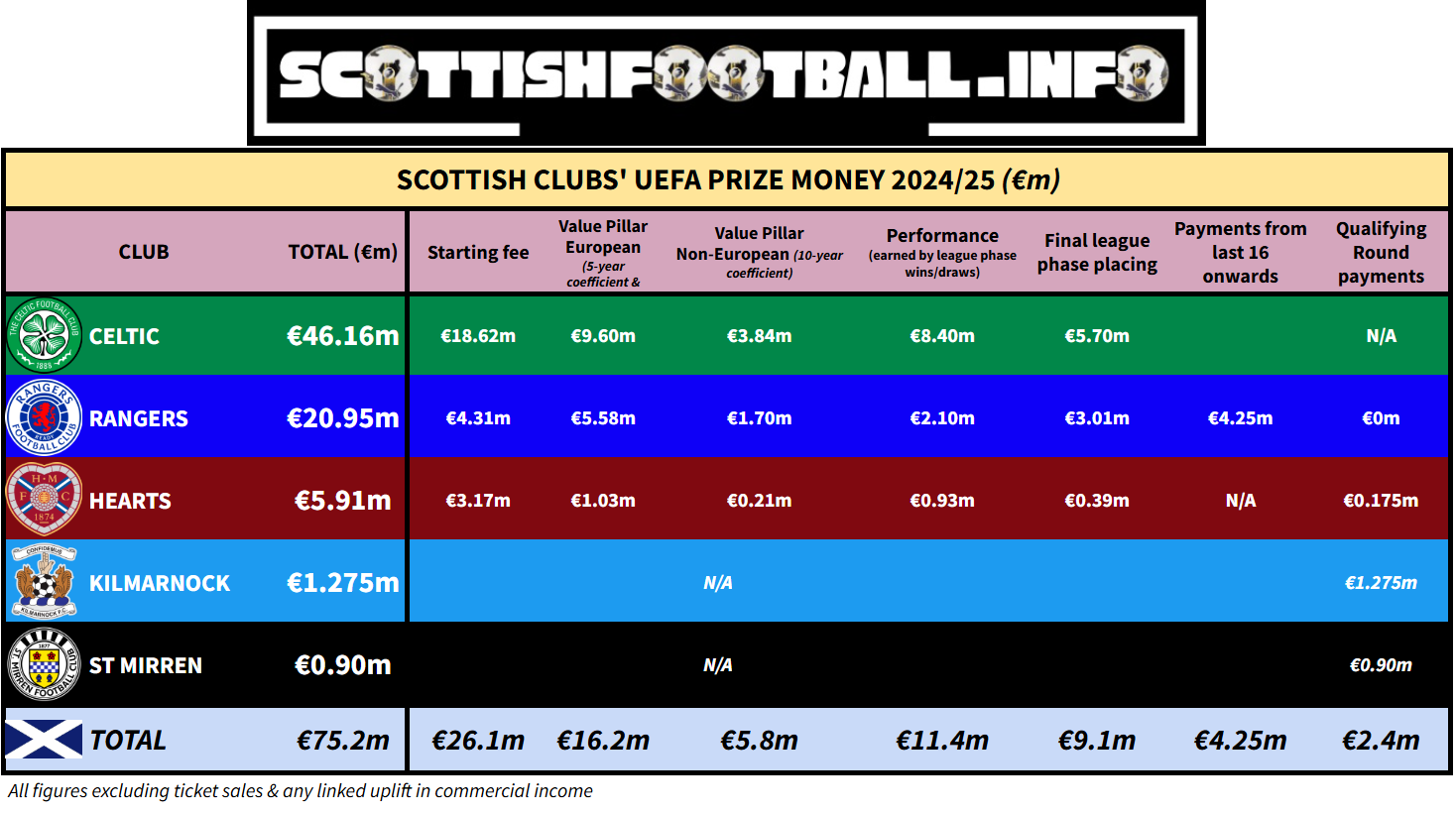
This was a drop in the ocean compared to the gigantic sums Celtic (£40m) and Rangers (£17m) earned from European football, but it shows how even featuring in the qualifiers is huge for a club like St. Mirren.
Although failing to reach the group stages was disappointing, it meant that St. Mirren were also eligible to receive UEFA’s solidarity payments. These are distributed via the SFA to all Scottish Premiership clubs that don’t play in group stage football. Last year I told that there would be record solidarity payments for Scottish clubs, as part of UEFA’s reformatting of European competition, resulting in two separate payments. This will have boosted St. Mirren’s revenue significantly as the solidarity payments were worth around ~£1m.
The risk to St. Mirren is that the UEFA cheques will definitely be reduced in the next set of accounts in a years time, for three reasons. Firstly, St. Mirren didn’t play any European football this season and so that €900,000 Conference League elimination fee won’t be repeated.
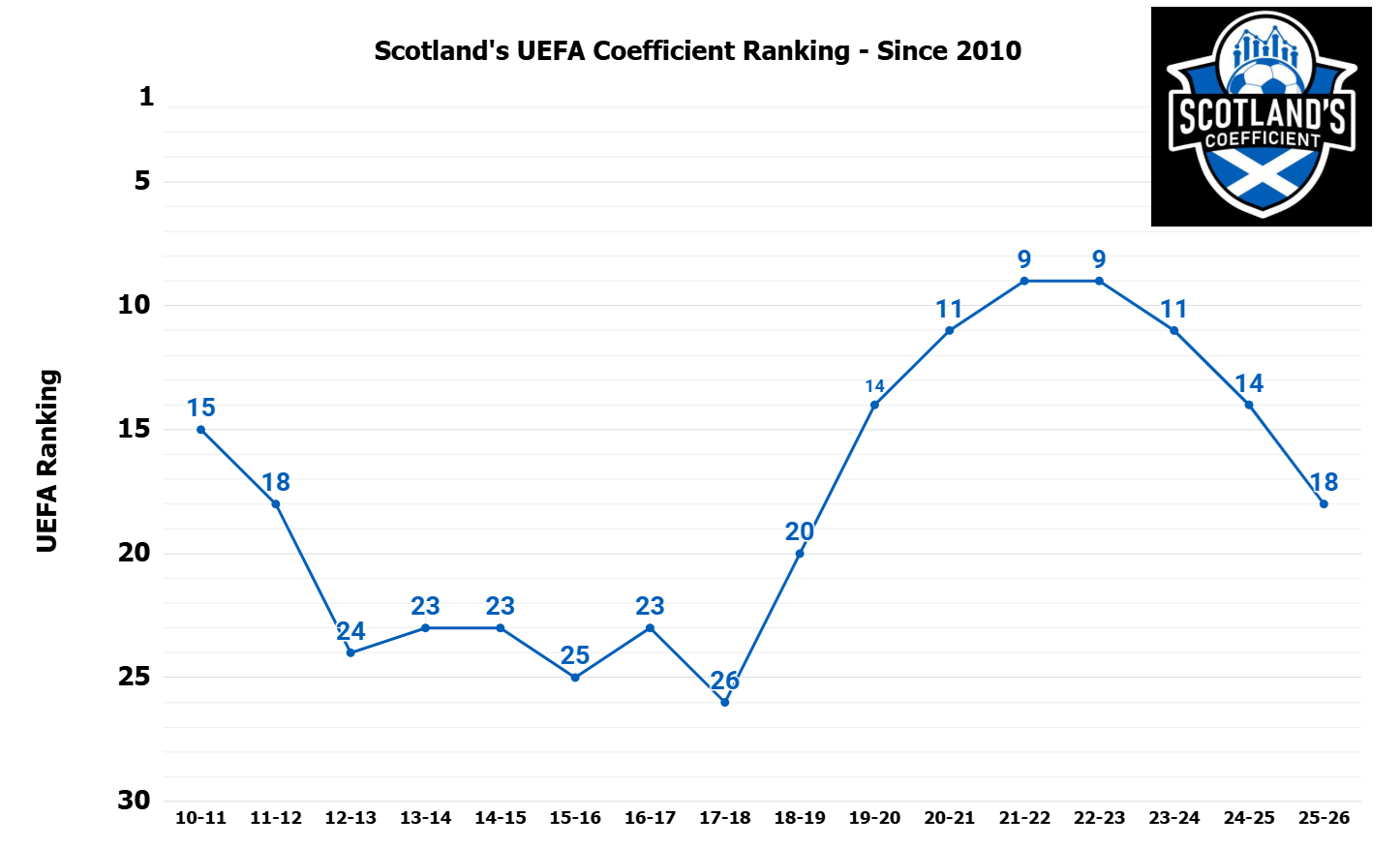
Additionally, the solidarity payments rise with a nation’s coefficient ranking and increase further if one of its clubs reaches the Champions League phase. Scotland has been ranked as high as 9th recently, and such a high coefficient meant the Champions were guaranteed direct entry into the Champions League for three straight years.
Unfortunately though, Scotland’s coefficient has since fallen and both Rangers and Celtic were eliminated in Champions league qualifiers this season. This means solidarity payments to Scottish clubs will be reduced this season by around a third, because of our lower ranking and no club in the UCL.
Reviewing all of the above shows that over £5.5m of St. Mirren’s income can therefore be traced to prizemoney for their performance on the field and the revenue from UEFA. However with total income at nearly £8.6m, the importance of the club reaching and connecting with it’s loyal fanbase cannot be understated. The fans are - and will always be - the single most important revenue stream to the club; regardless of on field performance.
THE FANS
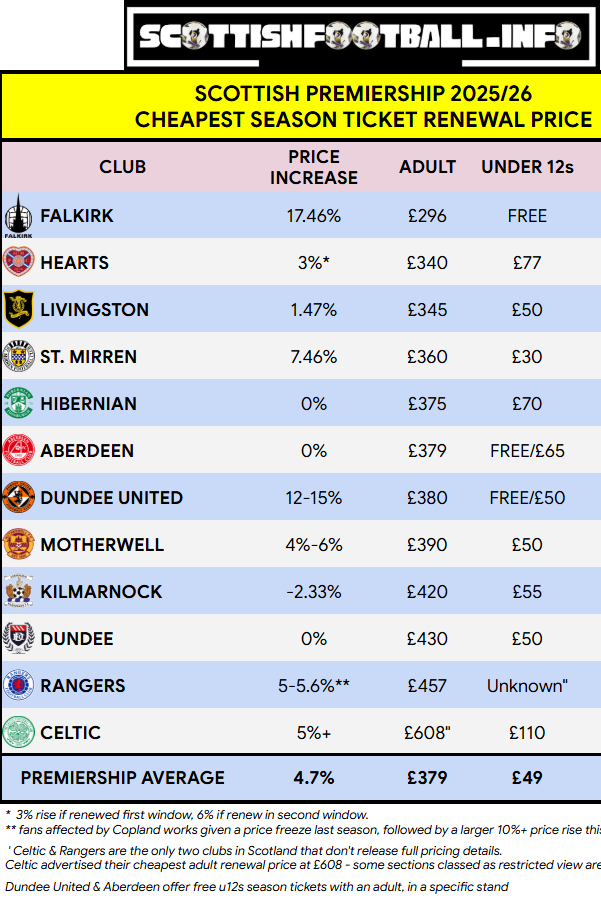
At the start of the current season, the cheapest price for an adult renewal at The SMiSA Stadium was £360, which was the 4th cheapest in the division, beaten only by the two promoted clubs and Hearts. Under 12s could get a season book for thirty quid, which is an essential strategy to ‘future proof; the club. The low price was even despite the 7.46% increase from 2024/25, and it’s that season which falls into the financial accounts under review.
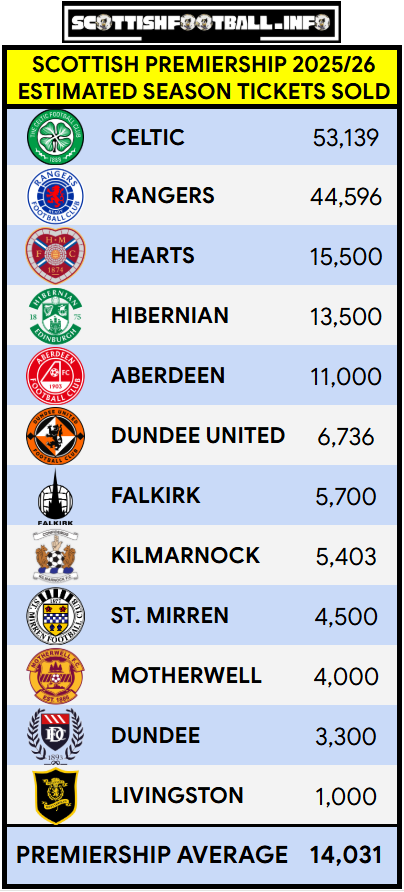
With a core season ticket base of around 4,500, St. Mirren’s attendances have been impressive for several years now; in 23/24 they had the least empty seats in the division, as a % of the capacity. This is despite the club restricting away fans to one stand, a move which the Black and White Army showed actually increased home support by 53%.
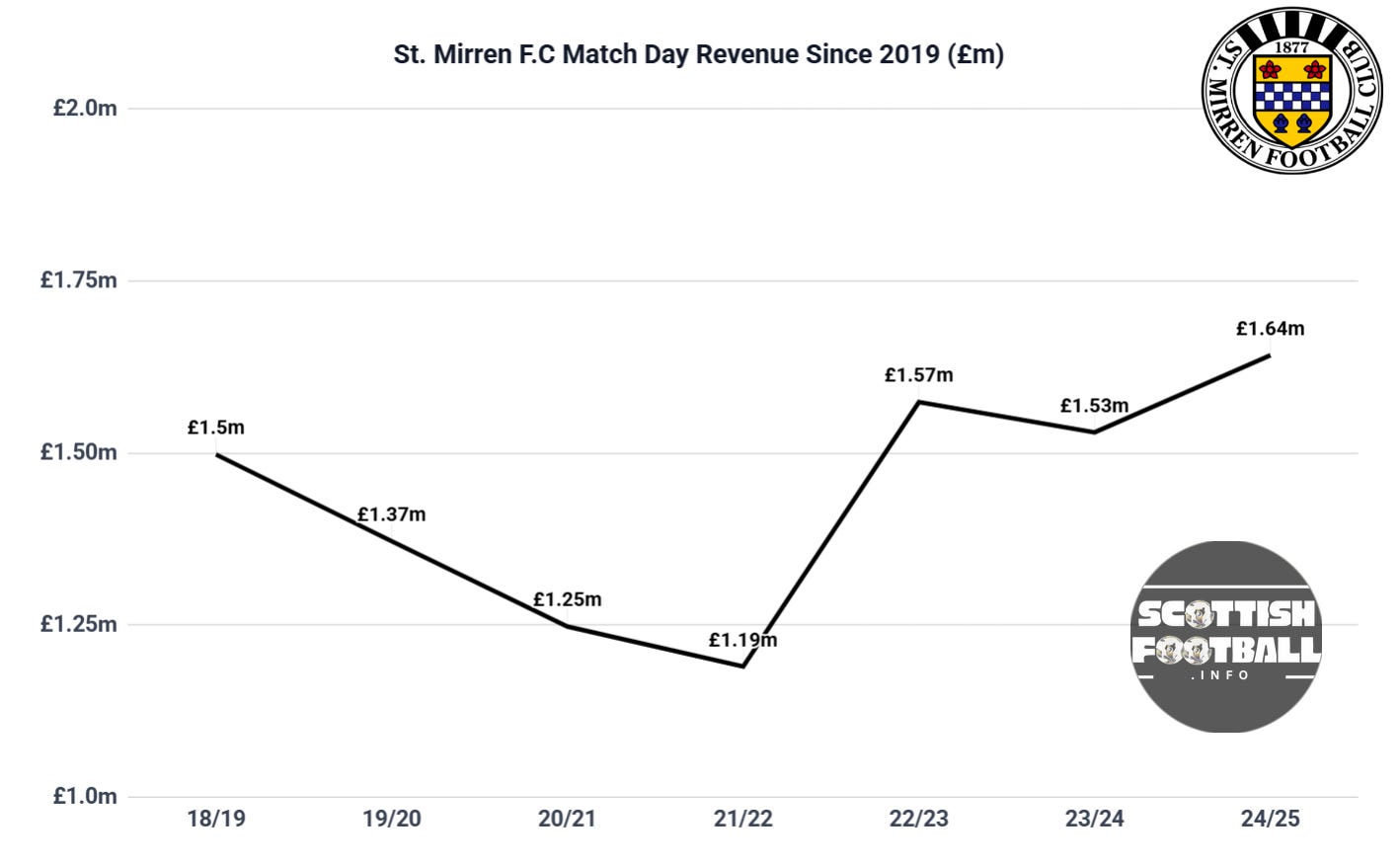
Regularly recording attendances of 7,000, coupled with the two home European games resulted in 24/25 matchday revenue of £1.64m - a club record.
The recent UEFA landscape report stated that the Scottish Premiership’s percentage of income that comes from ticket money (36%) is by far the highest in Europe, considerably more than the likes of England (14%), Germany (14%), Portugal (13%) and Denmark (11%).
With the fourth lowest season ticket base in the division, St. Mirren’s ticket sales will contribute slightly less to their total income than the 36% national average. However, when St. Mirren’s money generated from commercial revenue (£665,000) and sponsorship (£464,000) is well below many teams in the league, the value of the fans is huge.
EXPENSES
What St. Mirren have done better than many clubs in Scotland is effective cost control. Their revenue has risen steadily since returning to the top flight in 2018, but the expenses never ballooned out of control. In 21/22 when the gap between revenue (£4.3m) and expenses (£6.3m) was too big, adjustments were made to bring the costs down for the next year.
